Average Atomic Mass Calculator
Calculate average atomic mass from isotope masses and percent abundances, or find an abundance or isotope mass from Ar, with NIST data for common elements.
Calculator
Its relative isotopic mass, in u (amu). A mass number such as 24 also works, and gives an answer good to about one decimal place.
The percentage of the element’s atoms that are this isotope. For a mass spectrum, divide each peak height by the total of the heights and multiply by 100 first.
Isotope 2 takes whatever share isotopes 1 and 3 leave of 100 percent, shown under the answer, so it has no abundance field.
Ignored while isotope 3’s abundance is 0.
Set it to 0 for an element with two isotopes, such as chlorine, copper or boron.
In u, the unit US courses call amu. The relative atomic mass, Ar, is the same number without a unit.
Working, with your numbers
- a2 = 100 - a1 - a3
- = 100 - 78.99 - 11.01 = 10 %
- Ar = (m1 x a1 + m2 x a2 + m3 x a3) / 100
- = (23.985042 x 78.99 + 24.985837 x 10 + 25.982593 x 11.01) / 100
- = (1894.578 + 249.8584 + 286.0683) / 100
- = 2430.505 / 100
- = 24.3051 u
Values are converted into the units the equation is worked in before the arithmetic.
- Isotope 2 abundance 100 percent minus the abundances of isotopes 1 and 3. With isotope 3 at 0, the two abundances of a two-isotope element are isotope 1’s and this.
- 10%
- Most abundant isotope With two isotopes the average always lies nearer the mass of the more abundant one, which makes a quick check on the answer.
- Isotope 1, 78.99%
Citing this tool
Last updated . Add the date you accessed it as well, which a citation of a page that can change asks for. If a specific result matters, cite the permalink from the tool’s share row instead of this page: it reproduces the exact parameters.
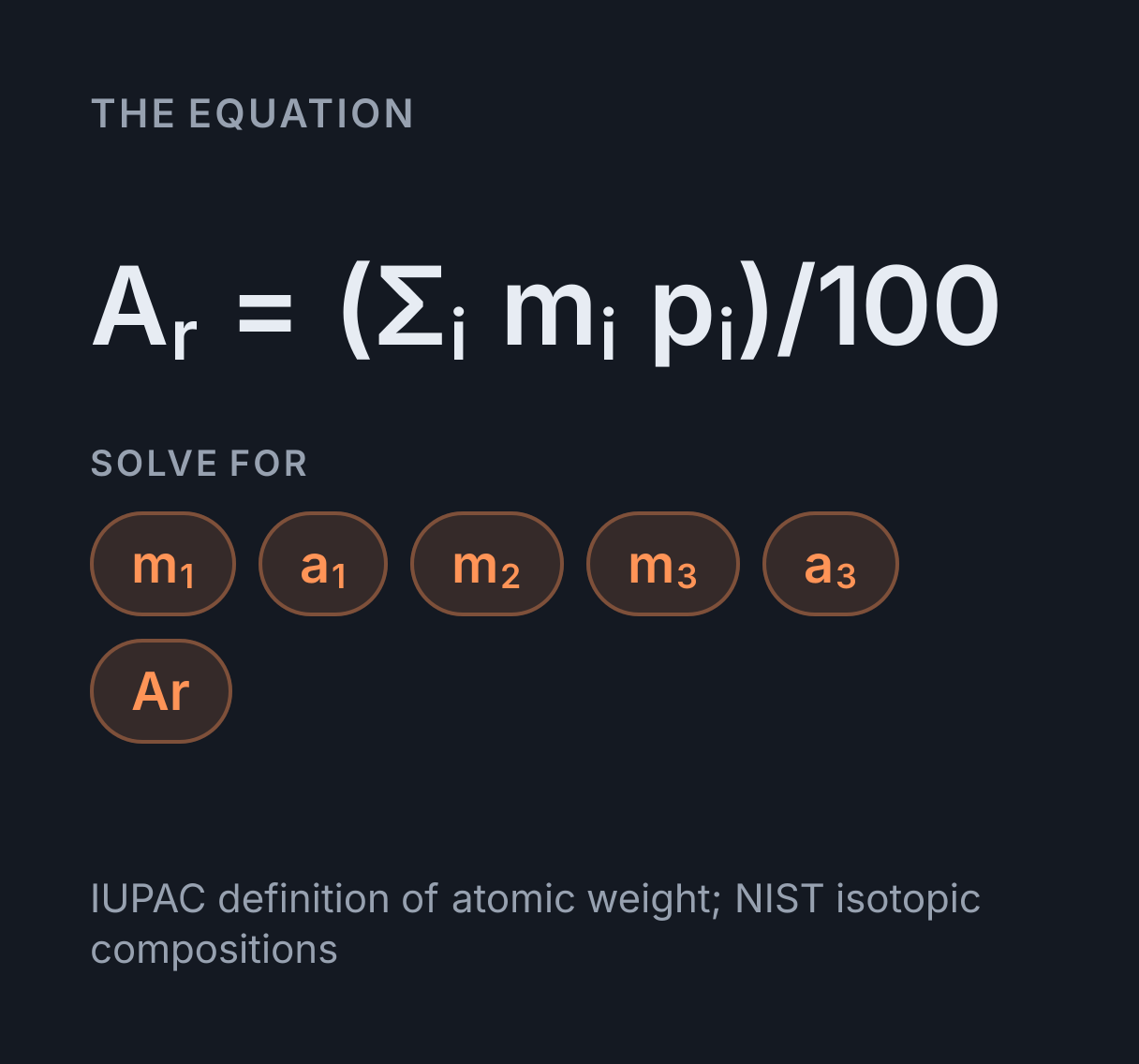
The equation
IUPAC definition of atomic weight; NIST isotopic compositions
What is the average atomic mass formula?
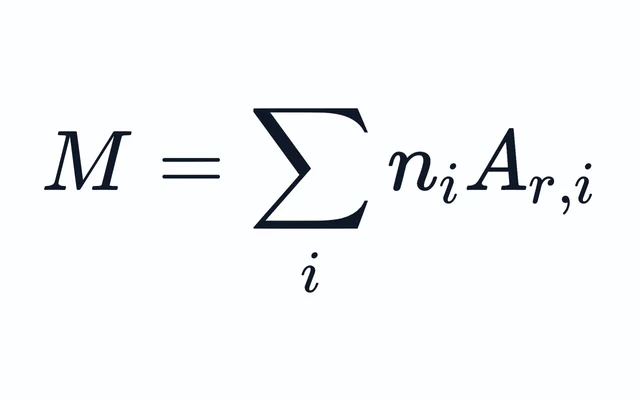
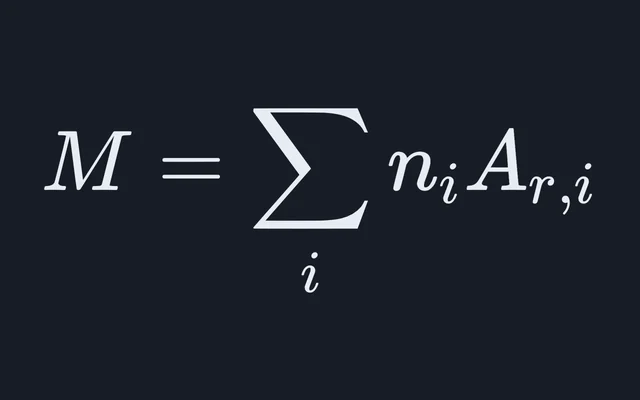
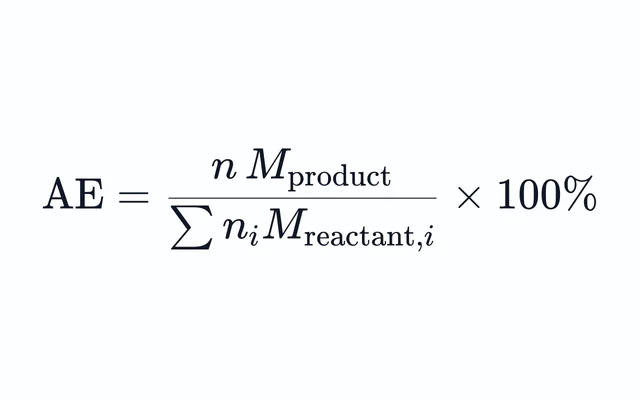
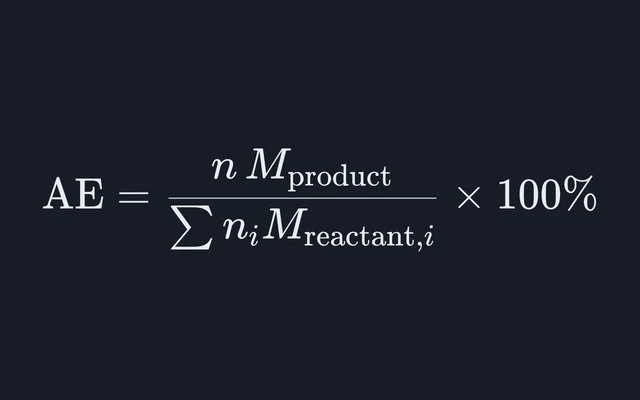
Average atomic mass = Σ(isotope mass × percent abundance) ÷ 100, summed over every isotope of the element. Each isotope counts in proportion to how common it is, which is why chlorine’s value is 35.45 and not 36, halfway between its isotopes of mass 35 and 37. The result is the relative atomic mass, Ar.
How the calculator handles the abundances
The abundances add up to 100 percent, so the calculator asks for two of them and works out the third: isotope 2 takes whatever isotopes 1 and 3 leave, shown under the answer. For an element with two isotopes, such as chlorine, copper or boron, set isotope 3’s abundance to 0. It opens on magnesium, whose three isotopes give 24.305.
School questions often give mass numbers, 35 and 37, and college questions isotope masses such as 34.96885 u. Either works. Every stable isotope’s mass is within 0.1 u of its mass number (the largest gap, tin-118’s, is 0.098 u), so mass numbers give an average good to about one decimal place. A mass spectrum gives relative abundances as peak heights, which need not add up to 100, so turn them into percentages first: boron’s peaks at 10 and 11 in a ratio of 1 to 4 are 20 and 80 percent, which give 10.8.
Finding percent abundance from atomic mass
With two isotopes the average fixes the split, because once the abundances must add up to 100 only one unknown is left. Choose isotope 1’s abundance as the value to solve for, with isotope 3 at 0. Chlorine with isotopes of mass 35 and 37 and an average of 35.5 gives (35.5 − 37) ÷ (35 − 37) = 0.75, so 75 percent chlorine-35 and 25 percent chlorine-37.
The split is sensitive to rounding in the average. Every 0.01 in chlorine’s Ar moves it by half a percentage point, because the two masses are only 2 apart, so use the average to as many figures as the question gives. With three isotopes, one average cannot settle two unknown abundances, so a question has to give one of them; enter it as isotope 3 and solve for isotope 1.
Isotope data for common elements
NIST’s representative isotopic compositions, the makeup of the material most often met in a laboratory, with each isotope’s relative atomic mass. The average is worked by the calculator above, and the standard atomic weight beside it is the abridged IUPAC value the molar mass calculator and the periodic table use. Natural samples vary a little around these compositions, which is why IUPAC gives lithium, boron, carbon, nitrogen, oxygen, magnesium, silicon, chlorine and bromine an interval rather than a single atomic weight.
| Element | Isotopes: mass and abundance | Average from these (u) | Standard atomic weight |
|---|---|---|---|
| Lithium | ⁶Li: 6.0151228874 u, 7.59% ⁷Li: 7.0160034366 u, 92.41% | 6.94004 | 6.94 |
| Boron | ¹⁰B: 10.01293695 u, 19.9% ¹¹B: 11.00930536 u, 80.1% | 10.811 | 10.81 |
| Carbon | ¹²C: 12 u, 98.93% ¹³C: 13.00335483507 u, 1.07% | 12.0107 | 12.011 |
| Nitrogen | ¹⁴N: 14.00307400443 u, 99.636% ¹⁵N: 15.00010889888 u, 0.364% | 14.0067 | 14.007 |
| Oxygen | ¹⁶O: 15.99491461957 u, 99.757% ¹⁷O: 16.9991317565 u, 0.038% ¹⁸O: 17.99915961286 u, 0.205% | 15.9994 | 15.999 |
| Neon | ²⁰Ne: 19.9924401762 u, 90.48% ²¹Ne: 20.993846685 u, 0.27% ²²Ne: 21.991385114 u, 9.25% | 20.18 | 20.18 |
| Magnesium | ²⁴Mg: 23.985041697 u, 78.99% ²⁵Mg: 24.985836976 u, 10% ²⁶Mg: 25.982592968 u, 11.01% | 24.3051 | 24.305 |
| Silicon | ²⁸Si: 27.97692653465 u, 92.223% ²⁹Si: 28.9764946649 u, 4.685% ³⁰Si: 29.973770136 u, 3.092% | 28.0855 | 28.085 |
| Chlorine | ³⁵Cl: 34.968852682 u, 75.76% ³⁷Cl: 36.965902602 u, 24.24% | 35.4529 | 35.45 |
| Potassium | ³⁹K: 38.9637064864 u, 93.2581% ⁴⁰K: 39.963998166 u, 0.0117% ⁴¹K: 40.9618252579 u, 6.7302% | 39.0983 | 39.098 |
| Copper | ⁶³Cu: 62.92959772 u, 69.15% ⁶⁵Cu: 64.9277897 u, 30.85% | 63.546 | 63.546 |
| Gallium | ⁶⁹Ga: 68.9255735 u, 60.108% ⁷¹Ga: 70.92470258 u, 39.892% | 69.7231 | 69.723 |
| Bromine | ⁷⁹Br: 78.9183376 u, 50.69% ⁸¹Br: 80.9162897 u, 49.31% | 79.9035 | 79.904 |
| Rubidium | ⁸⁵Rb: 84.9117897379 u, 72.17% ⁸⁷Rb: 86.909180531 u, 27.83% | 85.4677 | 85.468 |
| Silver | ¹⁰⁷Ag: 106.9050916 u, 51.839% ¹⁰⁹Ag: 108.9047553 u, 48.161% | 107.868 | 107.87 |
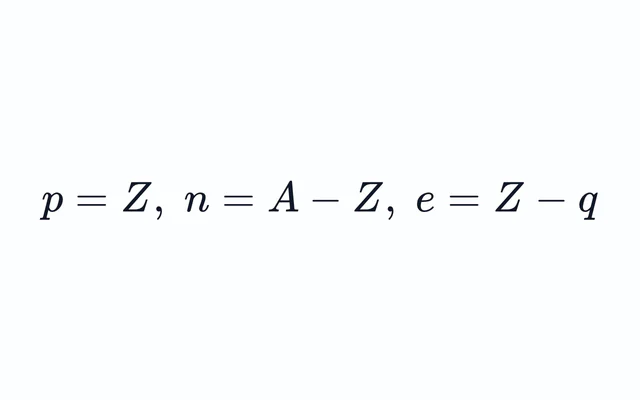
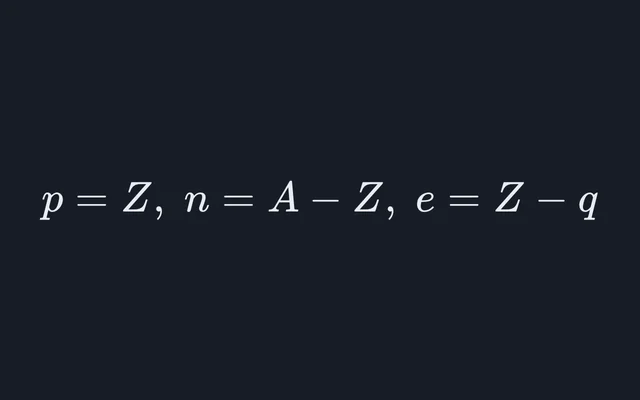
The protons, neutrons and electrons calculator gives the neutron count for any of these isotopes from its mass number.
Common mistakes
- Averaging the masses without weighting them. The mean of 35 and 37 is 36, which ignores that three in four chlorine atoms are chlorine-35. Each mass counts in proportion to its abundance.
- Forgetting to divide by 100. 35 × 75 + 37 × 25 is 3550, which is the average times 100 when the abundances are percentages.
- Leaving out an isotope. If the abundances in a question add up to less than 100, the rest belongs to an isotope that is missing. Here the remainder goes to isotope 2, so check that its share under the answer is the one the question gives.
- Rounding the average before solving for an abundance. Solving from 35.5 rather than 35.45 moves chlorine’s split by more than two percentage points.
How to calculate average atomic mass
- Write down the formula:
Ar = (m₁a₁ + m₂a₂ + m₃a₃) ÷ 100, with a₂ = 100 − a₁ − a₃ -
Gather the values it needs. The calculator above starts with these:
- Isotope 1 mass: m₁ = 23.985 u
- Isotope 1 abundance: a₁ = 78.99 %
- Isotope 2 mass: m₂ = 24.9858 u
- Isotope 3 mass: m₃ = 25.9826 u
- Isotope 3 abundance: a₃ = 11.01 %
-
Substitute them and work through the arithmetic:
- a2 = 100 - a1 - a3
- = 100 - 78.99 - 11.01 = 10 %
- Ar = (m1 x a1 + m2 x a2 + m3 x a3) / 100
- = (23.985042 x 78.99 + 24.985837 x 10 + 25.982593 x 11.01) / 100
- = (1894.578 + 249.8584 + 286.0683) / 100
- = 2430.505 / 100
- = 24.3051 u
-
To find one of the other values instead, rearrange the formula for it:
- Isotope 1 mass:
m₁ = (100 Ar − m₂a₂ − m₃a₃) ÷ a₁ - Isotope 1 abundance:
a₁ = [100(Ar − m₂) − a₃(m₃ − m₂)] ÷ (m₁ − m₂) - Isotope 2 mass:
m₂ = (100 Ar − m₁a₁ − m₃a₃) ÷ a₂ - Isotope 3 mass:
m₃ = (100 Ar − m₁a₁ − m₂a₂) ÷ a₃ - Isotope 3 abundance:
a₃ = [100(Ar − m₂) − a₁(m₁ − m₂)] ÷ (m₃ − m₂)
- Isotope 1 mass:
Worked examples
Each one runs through the calculator above, so the arithmetic here is the arithmetic it does.
What percent of chlorine is chlorine-35 if its relative atomic mass is 35.5?
- 100 x Ar = m1 x a1 + m2 x (100 - a1)
- a1 = 100 x (Ar - m2) / (m1 - m2)
- = 100 x (35.5 - 37) / (35 - 37)
- = 100 x (-1.5) / (-2)
- = 75 %
75 percent chlorine-35, which leaves 25 percent for chlorine-37, shown under the answer as isotope 2’s abundance. Isotope 3 is set to 0 because chlorine has two isotopes. With NIST’s isotope masses and an Ar of 35.45 the split is 75.9 to 24.1, which shows how much a rounded Ar moves the answer.
What is the average atomic mass of boron from peaks at 10 and 11 in a 1 to 4 ratio?
- a2 = 100 - a1
- = 100 - 20 = 80 %
- Ar = (m1 x a1 + m2 x a2) / 100
- = (10 x 20 + 11 x 80) / 100
- = (200 + 880) / 100
- = 1080 / 100
- = 10.8 u
10.8. A ratio of 1 to 4 splits the atoms into five parts, so 20 percent boron-10 and 80 percent boron-11. Peak heights go in as percentages, because isotope 2 takes whatever isotope 1 leaves of 100.
What is the mass of gallium-71 if gallium-69 (68.9256 u, 60.108%) gives an Ar of 69.723?
- a2 = 100 - a1
- = 100 - 60.108 = 39.892 %
- m2 = (100 x Ar - m1 x a1) / a2
- = (100 x 69.723 - 68.9256 x 60.108) / 39.892
- = (6972.3 - 4142.98) / 39.892
- = 2829.32 / 39.892
- = 70.924497 u
70.9245 u, within 0.0003 u of the 70.9247 u NIST gives. Solving for a mass divides by the other isotope’s share, here 39.892 percent, so every figure of Ar counts: half a unit in its last place moves the answer by about a thousandth of a u.
Common questions
Why is the atomic mass on the periodic table not a whole number?
Because it is an average over the element’s isotopes, weighted by how common each one is, and the isotopes have different masses. Chlorine is about three quarters chlorine-35 and one quarter chlorine-37, so its average is 35.45. Even the mass of a single isotope is not a whole number, apart from carbon-12, which defines the scale, because the mass of an atom also depends on how tightly its nucleus is bound.
What is the difference between relative atomic mass and average atomic mass?
None in value: both are the abundance-weighted average of an element’s isotope masses, given without a unit as the relative atomic mass, Ar, and in u (amu) as the average atomic mass. Atomic mass on its own usually means the mass of one isotope, such as 34.969 u for chlorine-35, and the standard atomic weight on a periodic table is IUPAC’s value of Ar for normal samples on Earth.
Can you find percent abundance from the average atomic mass?
Yes, for an element with two isotopes. Call the first abundance x, so the second is 100 − x and the average is (m₁x + m₂(100 − x)) ÷ 100, then solve for x. Copper, with isotopes of 62.930 u and 64.928 u and an average of 63.546, is 69.2 percent copper-63 and 30.8 percent copper-65. Here, solve for isotope 1’s abundance with isotope 3 at 0.