Hearing, Vision and Reaction Time Self-Tests
Find the highest pitch you can hear, map your blind spot, time a ruler catch, and plot a night’s sleep cycles and your caffeine. None is a medical test.
6 tools in 2 groups
Hearing and vision
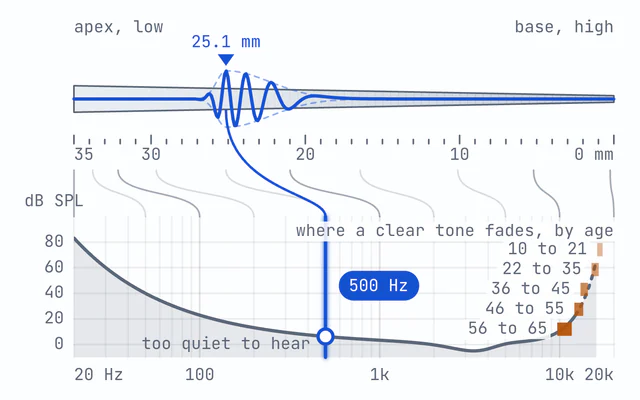
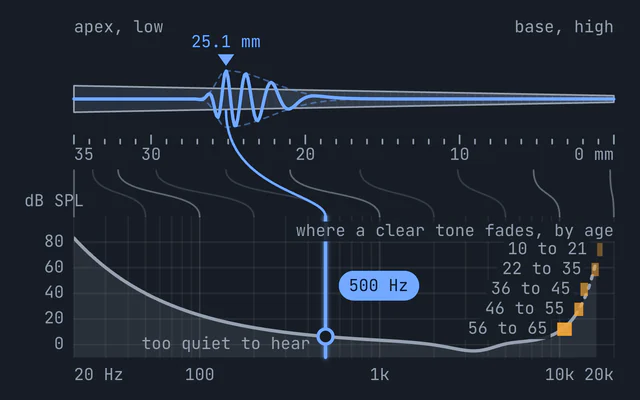
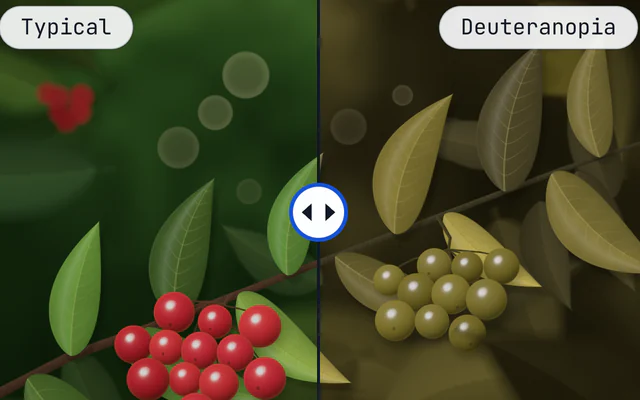
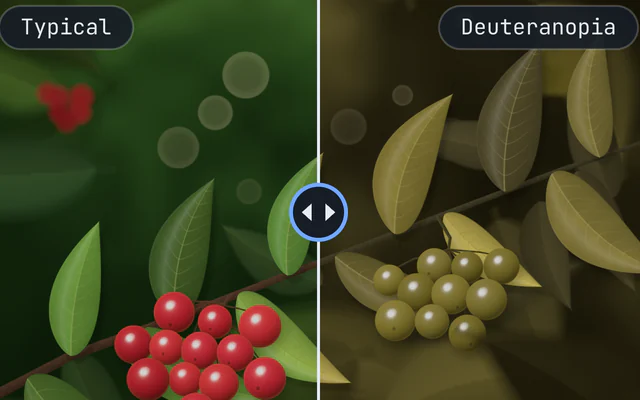
The top of your hearing range, the blind spot in each eye, and how an image looks with each type of colour blindness.
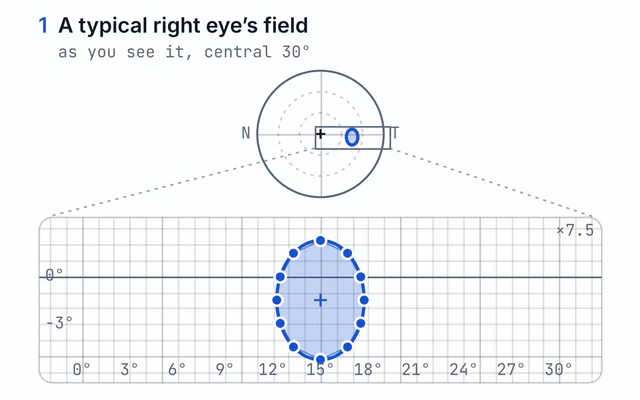
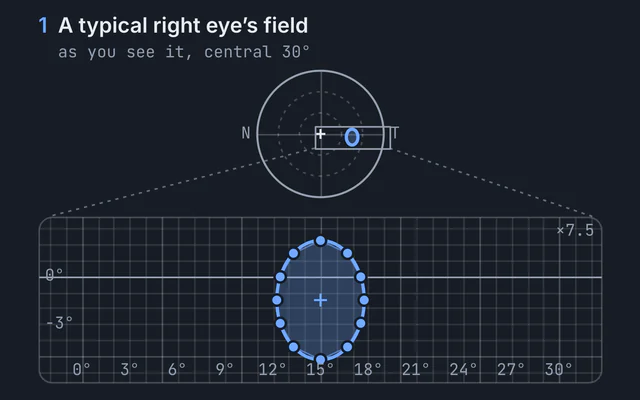
Reaction time, sleep and caffeine
A reaction time from a falling ruler, a night of sleep cycles from your bedtime, and caffeine hour by hour.
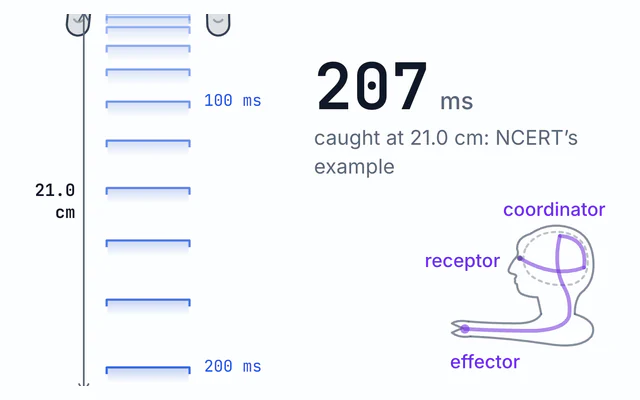
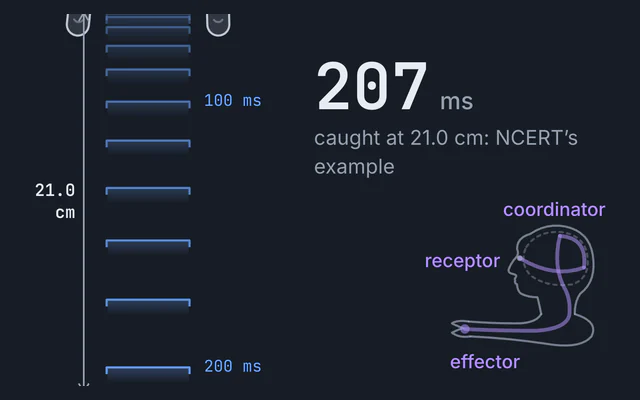
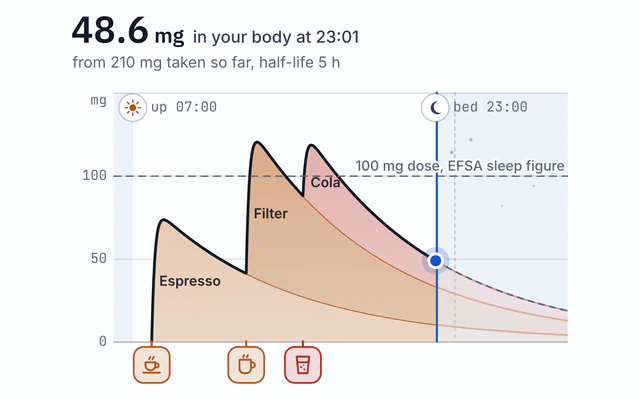
Three of these run on your own senses and reflexes. The hearing range sweep plays a tone up to 20 kHz and compares the highest one you hear with your age; the blind spot mapper calibrates your screen with a bank card, then finds where a dot vanishes and gives the spot’s size and place in degrees; the ruler drop turns the distance a ruler falls before you catch it into a reaction time, through t = √(2d/g).
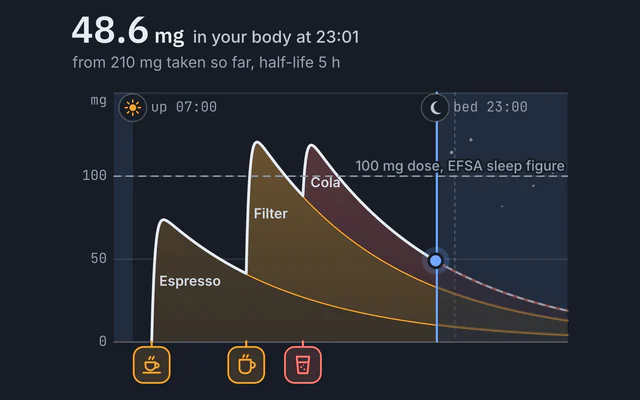
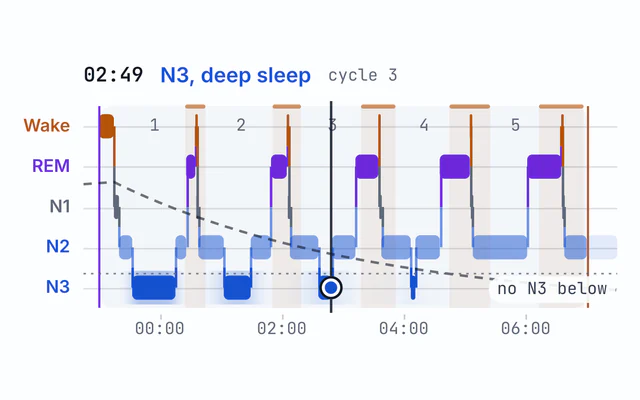
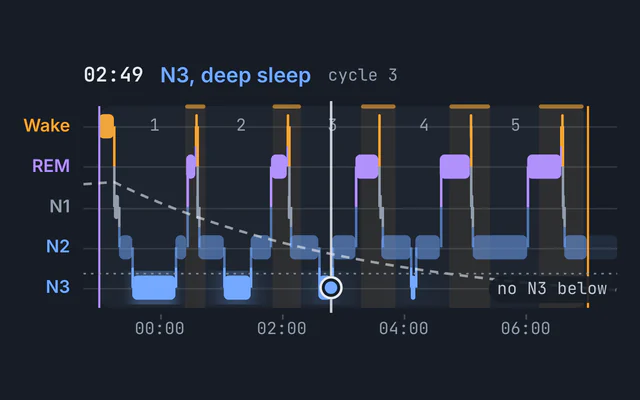
The other three are models and measure nothing about you. The colour blindness simulator shows any image you load as protan, deutan or tritan eyes see it, and the image never leaves your device. The sleep cycle visualiser draws a typical night’s stages from your bedtime to your alarm, and the caffeine simulator plots what each drink leaves in an average body, hour by hour, at a half-life you can change.
Is an online hearing test accurate?
Not as a measure of hearing loss. A real hearing test plays calibrated tones to each ear separately in a quiet booth and records thresholds in dB HL. A browser cannot know how loud your headphones are, so an online sweep shows roughly where your hearing tops out on that setup, and gives no pass or fail.
If you notice a change in your hearing, see an audiologist or a doctor. Hearing that drops suddenly, in one ear or both, needs medical help straight away, because sudden hearing loss can need treating quickly.
Can a screen test for color blindness?
No. Screens differ in their colours from one device to the next, while a clinical colour vision test controls the light and the colours it shows, so the colour blindness simulator asks nothing about what you see. An optometrist can test your own colour vision.
Reaction time and sleep
Sleep, practice and attention all change a reaction time, and an on-screen time also depends on the device it was measured on, so the ruler drop is a lesson in free fall and in spread rather than a medical, fitness or driving test. Your times stay on the page while it is open and are not sent anywhere.
The sleep cycle visualiser cannot measure your sleep. Persistent poor sleep, loud snoring with pauses in breathing, or sleepiness in the day are reasons to see a clinician.