Moon Phase on Any Date
See the Moon on any date from 1900 to 2100, anywhere: phase name, percent lit, rise and set times and a picture to save, with its orbit drawn alongside.
Calculator
Drag across the Moon to move through time, or drag it round its orbit or along the strip of days. The arrow keys move a day, with Shift an hour, Page Up and Page Down a lunation, and Home goes back to now. Space plays and pauses.
- Phase The day’s name. A day that holds the instant of a new moon, first quarter, full moon or last quarter takes that name; any other day is a waxing or waning crescent or gibbous, as the US Naval Observatory names days.
- Full Moon
- Illuminated The share of the disc in sunlight, k = (1 + cos i) / 2 with the phase angle i = 7.9°. It is the same, to within a percentage point, from everywhere on Earth at one instant; only the tilt differs.
- 99.5 %
- Moon age Time since the last new moon, 10 Oct, 21:20 local time. It starts again at every new moon, on average every 29.530589 days.
- 16.0 days
- Elongation The angle between the Moon and the Sun seen from the Earth’s centre, ψ. East of the Sun is the evening sky, west the morning.
- 172.1° west of the Sun
- Distance Centre to centre, to the nearest 100 km, against the mean of 384,400 km. The orbit is an ellipse, so from 1900 to 2100 the distance swings between about 356,400 and 406,700 km.
- 367,400 km, 4.4% nearer than average
- Apparent size The angle the disc spans from the Earth’s centre, 2 asin(1737.4 km / distance). Half a degree is 30 arcminutes.
- 32.5 arcmin
- Rise Moonrise at New Delhi, India on this local day: the upper edge on the horizon, allowing for 34′ of refraction. About one day a month has none, because each rise comes about 50 minutes later than the last.
- 17:34
- Transit When the Moon crosses the meridian, due south or north, and stands highest for the day.
- none this day
- Set Moonset on this local day, the upper edge on the horizon.
- 06:27
- Altitude, azimuth The Moon’s centre from New Delhi, India, 90° round from north. Geometric, without refraction, which lifts the Moon about half a degree at the horizon.
- 42° above the horizon, E
- Next full moon Local time. In UT, 2026-11-24 14:53.
- 24 Nov, 20:23
- Next new moon Local time. In UT, 2026-11-09 07:02.
- 9 Nov, 12:32
- Lit edge χ − q: where the middle of the sunlit edge points, measured round from the top of the disc towards the left. Turn the view to north up to see χ alone.
- left 107° from the zenith
- Libration How far the Moon is turned from its mean face towards us, in longitude and latitude. Its axis is turned 18.5° from north towards the west, P = −18.5°.
- −3.5°, −6.2° l, b
- Tithi The tithi at this moment, one for every 12° the Moon gains on the Sun. Panchangs name the day by the tithi at local sunrise, which can differ.
- Krishna Pratipada 16 of 30
How much is lit, October 2026
- Percent of the disc lit
Moon phases, October 2026
New Delhi, India, Asia/Kolkata, UTC+5:30. Each disc as it looks at 21:00 local time, turned as it hangs in the sky there.
| Mon | Tue | Wed | Thu | Fri | Sat | Sun |
|---|---|---|---|---|---|---|
Citing this tool
Last updated . Add the date you accessed it as well, which a citation of a page that can change asks for. If a specific result matters, cite the permalink from the tool’s share row instead of this page: it reproduces the exact parameters.
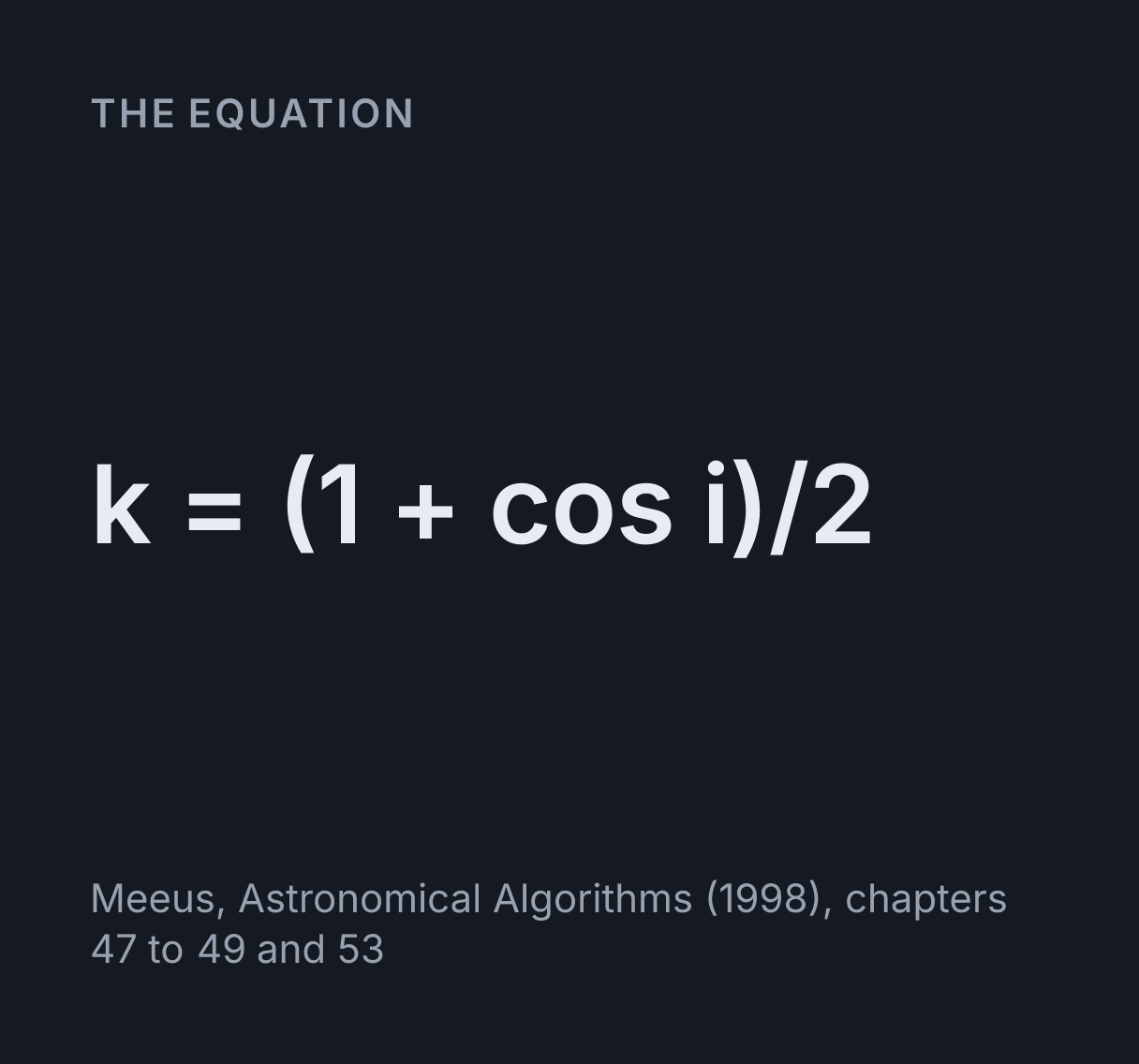
The equation
Meeus, Astronomical Algorithms (1998), chapters 47 to 49 and 53
What causes lunar phases and how are they calculated?
Lunar phases happen because the Moon’s orbit changes the angle between the Sun, the Moon and Earth, so we see more or less of its sunlit half. The cycle through New Moon, First Quarter, Full Moon and Last Quarter takes 29.53 days on average, the synodic month. The fraction of the disc lit is k = (1 + cos i) / 2, where i is the phase angle.
How the picture is worked out
The calculator works out where the Sun and the Moon were at the instant you choose, using the methods in Jean
Meeus’s Astronomical Algorithms: the Moon from the 120 periodic terms of chapter 47, good to about 10
seconds of arc, and the Sun from chapter 25. The angle Sun, Moon, Earth is the phase angle i, and the share of
the disc in sunlight follows from it, k = (1 + cos i) / 2. At i = 0 the whole face is lit, at
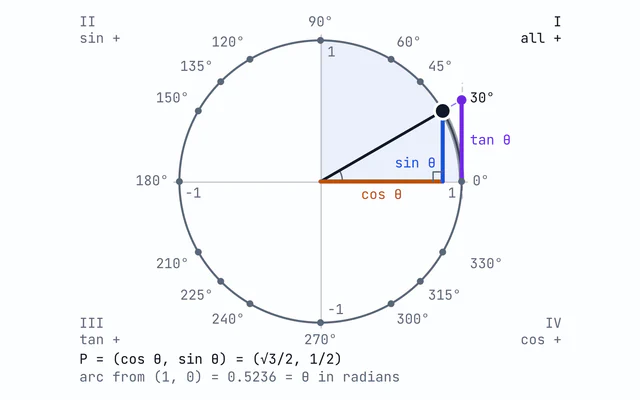
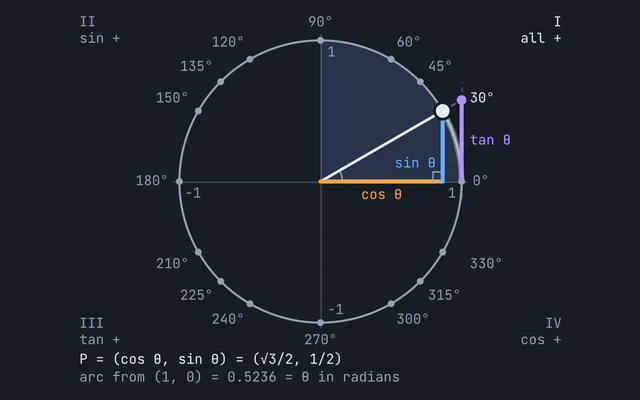
i = 90° exactly half, at i = 180° none of it. That is the cosine of an angle read off a circle, which the
unit circle explorer lets you drag round.
On Meeus’s own test date, 12 April 1992 at 0h dynamical time, the full calculation gives k = 0.6786, the book’s figure. His shortcut, which skips the two positions, gives 0.6801, which is why it is not used here.
The fraction lit is the same, to within a percentage point, from everywhere on Earth at one instant. The tilt is not. Which way the lit edge points on your sky is its position angle χ, measured from north, less the parallactic angle q, which says how far north is turned from straight up where you stand. So the same waxing Moon is lit on its right in London and on its left in Sydney. The picture is NASA’s map of the Moon, turned to show the face that pointed at you, tipped by the tilt of the Moon’s axis, and lit from the point where the Sun stood overhead on the Moon. Each patch is shaded by the Lommel-Seeliger law, which is why the full Moon looks flat rather than like a ball.
Worked example: the full moon of 26 October 2026
This is the night the page opens on before it moves to your own: New Delhi, 28.61° N, 77.21° E, at 21:00 IST on 26 October 2026. The Moon was exactly full at 09:42 IST, 04:12 UT, so the day takes the name Full Moon.
- Its age. The last new moon fell at 21:20 IST on 10 October, 15.99 days earlier, which the readout rounds to 16.0 days.
- The phase angle. 11 hours 18 minutes after full, the Sun, Moon and Earth are 7.91° out of
line, so
k = (1 + cos 7.91°) / 2 = 0.9952: the disc is 99.5 percent lit. - Where it stands. The Moon is 172.1° west of the Sun, about 367,400 km away, 4.4 percent nearer than its 384,400 km average, and so 32.5 arcminutes across. From New Delhi it stands 42° up, due east.
- Its day. It rose at 17:34 and had set that morning at 06:27, and it did not cross the meridian at all on 26 October: it passes due south at 00:31 the next day. The US Naval Observatory’s data give the same times to the minute.
- The tithi. The Moon is 186.3° ahead of the Sun in ecliptic longitude, so the tithi at that moment is the 16th, Krishna Pratipada.
The orbit view
The right-hand panel looks down on the Earth from above its North Pole, with sunlight from the left. The Moon goes round anticlockwise, and the angle from the Sun’s direction to the Moon’s is the elongation, the violet arc. Drag the Moon round its orbit and the date moves to the moment in this lunation when the Moon really was at that angle; the Moon does not move at a steady pace, so the dates are found from its true motion.
One turn against the stars, the sidereal month, takes 27.321662 days. New moon to new moon, the synodic month, takes 29.530589 days on average, because meanwhile the Earth has carried the Moon about 29° round the Sun and it has that far still to go to line up again. Switch on the Earth’s own motion to see the two lines. The Moon also turns on its axis once every 27.321662 days, once per orbit, so the same face always points at the Earth: that is tidal locking, marked by the notch on the Moon’s near side. Its slightly tilted, slightly oval orbit lets us see a little round each edge in turn, the libration, and from somewhere on Earth, over the years, about 59 percent of its surface comes into view. With the orbit drawn to scale, the Earth is about 30 of its own diameters from the Moon.
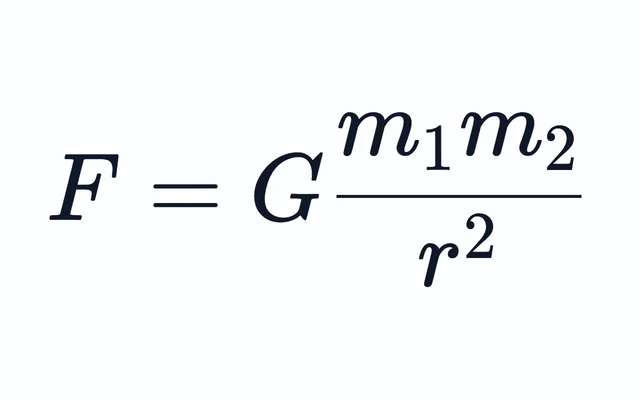
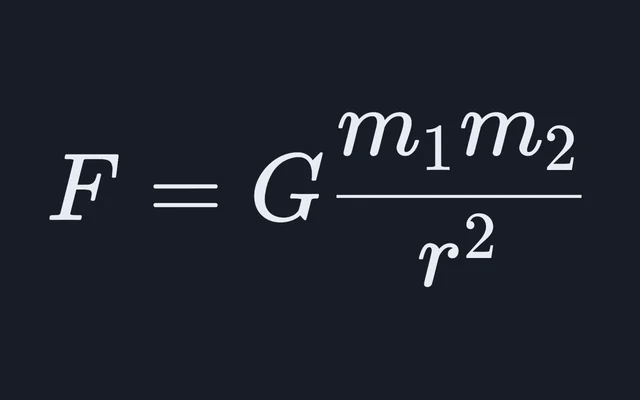
Gravity sets that orbit. The orbit simulator shows why a body launched sideways falls round in an ellipse, and the gravitational force calculator gives the pull between the Earth and the Moon that holds it there.
Reading the calendar
Each day is named the way the US Naval Observatory names days. A day that contains the instant of a new moon, first quarter, full moon or last quarter takes that name, and the instant’s local time is printed under it. Every other day is a waxing or waning crescent, under half lit, or gibbous, over half lit. Because the names follow the local calendar, a full moon can fall on different dates in different places: the full moon of 26 October 2026 at 09:42 IST in New Delhi was at 21:12 on 25 October in Los Angeles.
Each disc is drawn as it looks at 21:00 local time, turned as it hangs in that place’s sky or north up, as you choose. Times are rounded to the nearest minute, as almanacs print them. Choose the year to see a whole year of Moons at once, and save either as an image.
For a whole year in one city, every phase on its own clock with moonrise on each full moon day, see the moon phase calendars for New York, Los Angeles, Chicago, Toronto, London and Sydney.
The tithi readout is the tithi at that moment, one for every 12° the Moon gains on the Sun. A panchang names the whole day by the tithi in force at local sunrise, which can be the one before.
What it leaves out
- The air. Near the horizon, refraction lifts the Moon about half a degree and the air dims and reddens it. The rise and set times allow for the lift, 34 arcminutes, as almanacs do; the altitude readout is the plain geometric one, and the picture is not reddened.
- Eclipses. The Earth’s shadow is not drawn. The full moon of 3 March 2026 passed within half a degree of the point opposite the Sun, a total eclipse of the Moon, and here it looks like any other full moon.
- Earthshine. Sunlight reflected by the Earth faintly lights the Moon’s dark side, brightest on a thin crescent. It is drawn far brighter than it really is, so that it can be seen at all, and the picture says so.
- Clock drift. The Earth’s spin is not quite steady, and the correction for it, Delta T, is a forecast after about 2025. The forecast used here already runs about 6 seconds ahead in 2026, which shifts a phase time by those 6 seconds. Phase times agree with the US Naval Observatory’s to within a minute from 1900 to 2050, and to about two minutes by 2100, where the two forecasts part.
- The stars. The stars behind the Moon are a fixed backdrop that comes out as the sky darkens, not a map of the real sky.
The Moon map is the CGI Moon Kit colour map made by NASA’s Scientific Visualization Studio from images by the Lunar Reconnaissance Orbiter’s camera, used here in greyscale; it is in the public domain, and the credit, NASA’s Scientific Visualization Studio, appears on the stage and in every saved image. NASA does not endorse this tool. The city list comes from Natural Earth and each time zone’s own place from the tz database, both public domain.
Common questions
What was the moon phase on the day I was born?
Enter the date, the time if you know it and the town, and the calculator works out the Moon for that moment by the clock of the town’s time zone, summer time and war time included. A day takes the name of a principal phase when that phase’s instant falls on it, so anyone born in London on 15 July 1990 was born on a Last Quarter day: the quarter fell at 12:04 BST, with the disc 50.1 percent lit. The picture, which you can save or keep as a phone wallpaper, shows the Moon turned the way it hung in that sky.
Is the moon phase the same everywhere on Earth?
The share of the disc that is lit is, to within a percentage point, because everyone sees the same Sun, Earth and Moon at one instant. Two things differ. The date can: the full moon of 26 October 2026 fell at 09:42 IST in New Delhi but at 21:12 on 25 October in Los Angeles, so the two cities give the name to different days. And the tilt does, because which way the lit edge points depends on where you stand and the time of night.
Why does the Moon look upside down in the southern hemisphere?
Because you face the other way to see it. From the north the Moon is usually seen across the southern sky, and from the south across the northern sky, so the two views are half a turn apart. At the first quarter of 18 October 2026 the lit half faced right from London at 19:00 and lower left from Sydney at 21:00. Two people at 45° north and 45° south on the same meridian, watching the Moon cross it, see its lit edge turned by half a turn.
Why is a full moon never quite 100 percent lit?
The Moon’s orbit is tilted by about 5° to the Earth’s, so at full moon it usually passes a little above or below the line from the Sun through the Earth, and a thin sliver at one edge of the face we see stays in shadow. At its instant the full moon of 26 October 2026 was 4.6° out of line and 99.84 percent lit. Only when the Moon passes almost exactly behind the Earth does the figure reach 100.00, and then the Earth’s shadow falls on it, as in the eclipse of 3 March 2026. From 1900 to 2100 every full moon is at least 99.81 percent lit.
How long is a lunar cycle, and why is it longer than one orbit?
New moon to new moon takes 29.530589 days on average, the synodic month, while one turn against the stars takes 27.321662 days, the sidereal month. During a lunation the Earth carries the Moon about 29° round the Sun, so the Moon needs 2.21 more days to come back into line with it. Single lunations vary from 29.27 to 29.83 days between 1900 and 2100, because the orbit is an ellipse and the Sun tugs on it.
Why does the Moon rise about 50 minutes later each day?
Because the Moon moves east round the sky while the Earth turns, about 12° a day against the Sun, and the Earth has to turn that much further to bring it back over the horizon. On average that is 24 hours divided by 28.530589, or 50.5 minutes a day. The real delay swings through every month, because the Moon’s path meets the horizon at a changing angle: in London in 2026 it ran from 11 to 94 minutes. When the short delays fall at full moon, as around the Harvest Moon of 26 September 2026, the Moon rises only 12 to 16 minutes later on six nights running.
Why do we only ever see one side of the Moon?
Because it turns on its axis once every 27.321662 days, exactly as long as it takes to go once round the Earth, so the same face always points our way. The Earth’s tides slowed its spin to that pace long ago, which is called tidal locking. Its orbit is slightly oval and tilted, so the Moon seems to rock a little and shows us round each edge in turn: over time about 59 percent of its surface can be seen from Earth.