Asteroid Impact Simulator
Set an asteroid’s size, speed, angle and make-up, then watch it burst in the air or dig a crater, with its fireball, blast and quake mapped by distance.
Simulator
Drag the arrow to set the angle and the blue pin to move the observer; tap a ring to read it. Arrow keys move the pin, plus and minus zoom. Space plays and pauses.
- Flash at once
- Heat peaks 0.21 s
- Shaking 10 s
- Ejecta lands 1 min 41 s
- Blast arrives 2 min 32 s
Complex crater 5.29 km across, 2,027 Mt of TNT. At 50 km: 38.8 kPa of overpressure, brick buildings crack badly, shaking of Mercalli VI to VII, and grass ignites. The blast arrives after 2 min 32 s.
- Outcome It breaks up at 56.6 km but reaches the ground before the swarm can spread, striking at 19 km/s over 642 m. The first bowl it digs, the transient crater, is 4.34 km across and 1.54 km deep. A complex crater: its walls slump and its floor rebounds into a central peak.
- Complex crater 5.29 km across (3.28 mi)
- Energy 8.48 × 10¹⁸ J before it enters the air, 135,000 times the 15 kt Hiroshima bomb. 1,827 Mt reaches the surface and 200 Mt goes into the air on the way down.
- 2,027 Mt of TNT
- Breaks up Where the ram pressure of the air, its density times the speed squared, first passes the body’s 335 kPa strength. Below that it flattens and spreads as a swarm.
- 56.6 km up (35.2 mi)
- Crater Rim to rim, from the transient crater of 4.34 km by the scaling of Holsapple and Schmidt (1982) and Schmidt and Housen (1987).
- 5.29 km wide, 485 m deep (3.28 mi wide)
- Fireball The vapour fireball at its brightest, 0.21 s after the strike; its heat lasts about 51.2 s. Beyond 224 km it is below the horizon.
- 3.94 km radius (2.45 mi)
- Earthquake On the Richter scale, from the energy reaching the rock with one part in 10,000 turned into seismic waves.
- Magnitude 6.8
- How often The average gap between impacts of this energy somewhere on the Earth, from the paper’s power law, 109 E^0.78 years with E in megatons, fitted to the 2003 estimate, by the Near-Earth Object Science Definition Team, of how many asteroids cross the Earth’s orbit. A rough guide only.
- Every 41,400 years
Start from
At the observer, 50 km away
- Damage Brick blocks of flats crack badly and lose their inner walls, the strongest effect of the blast here in the table of Glasstone and Dolan (1977). Also: timber-framed houses collapse; timber-framed houses lose their inner walls and their roofs are badly damaged; glass windows shatter.
- Brick buildings crack badly
- Heat Enough that grass ignites. 94 percent of the fireball is above the horizon here.
- 1.37 MJ/m²
- Overpressure 5.63 psi above the air’s own pressure, at the blast’s front.
- 38.8 kPa
- Peak wind 285 km/h behind the blast. Enough to blow down 90 percent of trees.
- 79.2 m/s (177 mph)
- Shaking Intensity VI to VII on the Modified Mercalli scale, as strong as a magnitude 5.6 quake centred here.
- VI to VII Mercalli
- Ejecta The layer of rock thrown out of the crater that lands here, on average, in fragments about 20.5 cm across.
- 2.54 cm deep
- Blast arrives The blast front moves at about the speed of sound, so it reaches here 2 min 32 s after the strike, long after the flash. The timeline under the map has the rest.
- 2 min 32 s
How the blast fades with distance
- Peak overpressure
- Brick buildings collapse, 42.6 kPa
- Windows shatter, 6.9 kPa
Compare
| Impact | Energy | Crater | Windows shatter to |
|---|---|---|---|
| This run | 2,027 Mt | 5.29 km | 143 km |
| Chelyabinsk 2013 | 511 kt | none | none |
| Tunguska 1908 | 14.6 Mt | none | 42.9 km |
| Meteor Crater | 12.8 Mt | 1.18 km | 25 km |
| Chicxulub | 362,200,000 Mt | 182 km | 8,360 km |
Citing this tool
Last updated . Add the date you accessed it as well, which a citation of a page that can change asks for. If a specific result matters, cite the permalink from the tool’s share row instead of this page: it reproduces the exact parameters.
The equation
Collins, Melosh and Marcus (2005), Earth Impact Effects Program
What happens when an asteroid impacts Earth?
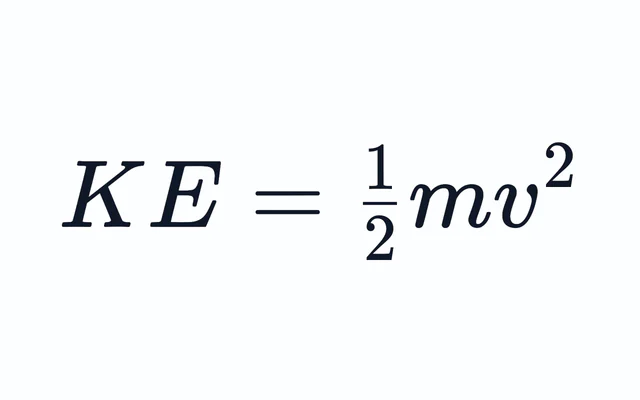
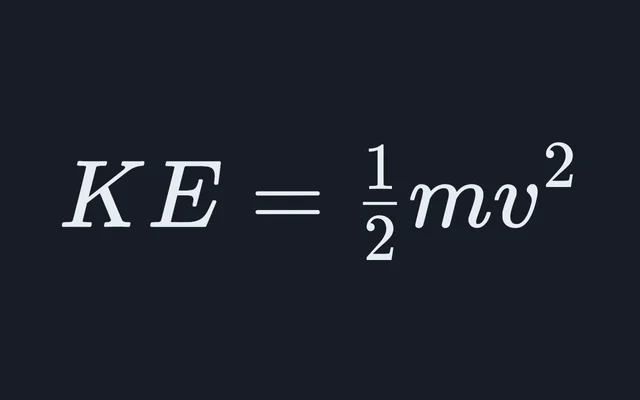
An asteroid impact converts its kinetic energy (Ek = ½mv2) into extreme atmospheric shock waves, thermal radiation, and ground cratering. Smaller and weaker bodies break up and burst in the air, while larger and stronger ones reach the surface, creating transient excavation craters and seismic shock. The size that survives depends on the body’s density, speed and entry angle, so iron reaches the ground at a fraction of the size stony rock needs.
What happens in the air
An asteroid or comet meets the air at between 11 and 72 km/s. The lower figure is the Earth’s escape speed, the least anything falling in from far away can arrive at, the same idea as the escape speed in the orbit simulator; the higher is a body orbiting the Sun meeting the Earth head on. For most of the way down the air hardly slows it. What the air does is push: it piles up in front of the body and presses on it with a ram pressure, ρv², the air’s density times the speed squared, which climbs as the body dives into thicker air.
This simulator follows the Earth Impact Effects Program of Collins, Melosh and Marcus (2005), which gives each body a strength from its density alone: about 12 kPa for ice of 1,000 kg/m³, 335 kPa for dense rock of 3,000 kg/m³ and 48.8 MPa for iron of 8,000 kg/m³. When the ram pressure passes that strength the body breaks up. It does not scatter at once. Squeezed in front and with almost nothing behind it, it flattens and spreads sideways like a pancake, and its growing width multiplies the drag. If the swarm reaches seven times its first width while still in the air, the model treats it as having exploded there, an airburst, and nearly all its energy goes into the air. If it reaches the ground first, it strikes as one swarm and digs a crater.
So size and angle decide the story. At 20 km/s and 45 degrees a stony asteroid of 3,000 kg/m³ has to be about 82 m across to reach the ground; anything smaller bursts in the air. Ice needs about 145 m and iron, far stronger, only about 33 m. In the side view the trail whitens as the ram pressure nears the body’s strength, a tick marks where it breaks, and the swarm widens by the model’s own equation for its width.
Worked example: the 300 m stony asteroid
The simulator opens on a stony asteroid 300 m across, of 3,000 kg/m³, striking sedimentary rock at 20 km/s and 45 degrees. Each step below is one of the paper’s equations, and each figure is the model’s own, the same working that feeds the readouts.
- Mass and energy.
m = (π/6)ρL³ = 4.24 × 10¹⁰ kg, and its kinetic energy,E = ½mv² = 8.48 × 10¹⁸ J, is 2,027 Mt of TNT, about 135,000 times the 15 kt Hiroshima bomb. That is the sum the kinetic energy calculator does for any mass and speed. - Strength.
Y = 10^(2.107 + 0.0624√3000) = 335 kPa, and the strength factorI_f = 4.07 C_D H Y / (ρLv² sin θ)is 0.000086, far below the 1 it would need to hold together, so the body will break. - Break-up. It breaks at 56.6 km, where the air is 0.00084 kg/m³ and the ram pressure has climbed to 336 kPa: the paper’s formula for that altitude lands within 1 percent of the strength.
- The swarm. Its dispersion length,
l = L sin θ √(ρ_i / (C_D ρ(z*))), is 283 km, far longer than the air’s 8 km scale height, so the pancake spreads slowly: it is 642 m wide when it reaches the ground, 2.1 times its first width and well short of the seven times that would make an airburst. It strikes at 19.0 km/s with 1,827 Mt, having given 200 Mt to the air on the way down. - The crater. The transient crater, the bowl the impact first digs, is
D_tc = 1.161 (ρ_i/ρ_t)^(1/3) L^0.78 v^0.44 g^−0.22 sin^(1/3) θ = 4.34 kmacross. That is more than 2.56 km, so its walls slump into a complex crater 5.29 km from rim to rim, byD_fr = 1.17 D_tc^1.13 / 3.2^0.13in kilometres, and 485 m deep. - Fireball and quake. The fireball is
R_f = 0.002 E^(1/3) = 3.94 kmin radius, and the shaking is magnitudeM = 0.67 log₁₀ E − 5.87 = 6.8, both from the 7.65 × 10¹⁸ J that reaches the ground. - At 50 km. The heat is 1.37 MJ/m², just past the 1.33 MJ/m² at which grass ignites in an impact this size. The blast brings 38.8 kPa of overpressure and a 79 m/s wind, enough to crack brick blocks of flats, flatten timber-framed houses and blow down 90 percent of trees. The shaking is Mercalli VI to VII, and 2.5 cm of ejecta lands. The heat peaks 0.21 s after the strike, the shaking arrives after 10 s, the ejecta after 1 min 41 s and the blast after 2 min 32 s.
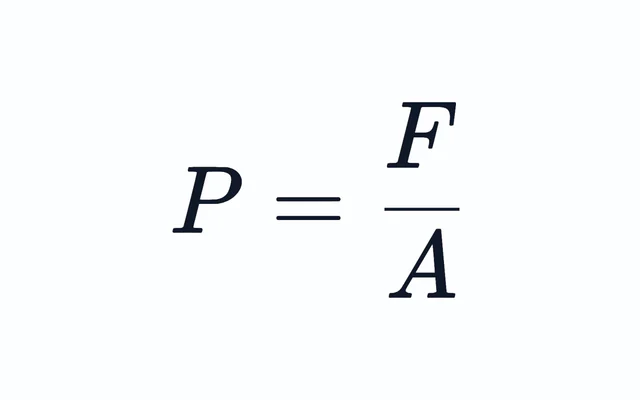
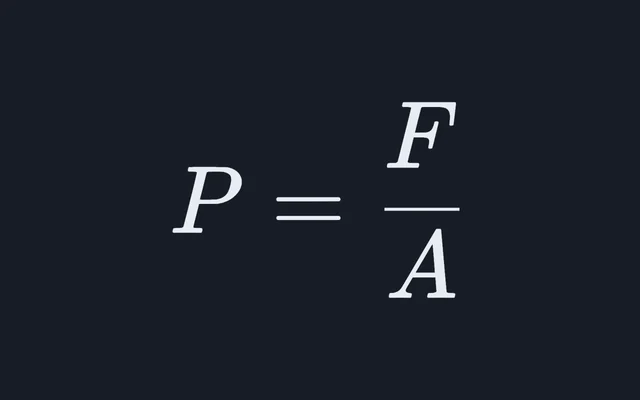
An overpressure of 38.8 kPa is 38,800 newtons on every square metre of a wall, the kind of sum the pressure calculator does for any force and area.
Reading the damage map
Each ring is the furthest an effect reaches: amber for heat, red for the blast and its wind, violet for the shaking, grey for the ejecta blanket, with the observer in blue. Tap one to read its threshold and where it comes from. Every ring is found by searching the model’s curve of that effect against distance for the last point that still reaches its threshold, so the blast’s rings are its outer edges even where the pressure under an airburst rises with distance before it falls.
The effects arrive in order. Light comes first, and the fireball is brightest 0.21 s after the default’s strike. The shaking travels through rock at 5 km/s, the ejecta is thrown on arcs that take 1 min 41 s to come down 50 km away, and the blast moves at the speed of sound, 330 m/s, taking 2 min 32 s to get there. Cinematic mode squeezes that onto a logarithmic clock; Real time plays it in true seconds.
Height matters as well as energy. A 50 m stone at 20 km/s and 45 degrees bursts 7.6 km up with 8.3 Mt and shatters windows out to 43.7 km. An 80 m one carries four and a half times the energy but bursts only 361 m up, and its windows ring reaches 40.0 km. A blast from a height reflects off the ground into a stronger front, and Glasstone and Dolan (1977) note that for any overpressure there is an optimum height of burst, the one that carries it furthest.
The Earth’s curve sets a limit on the heat. Beyond 224 km the default’s 3.94 km fireball is wholly below the horizon, so no heat arrives there however much energy it carries. Zoom out and the map becomes a globe centred on ground zero, with every ring an exact circle round it, and the inset in the corner shows the crater in cross-section, with the Eiffel Tower and the Burj Khalifa standing on its floor for depth.
Ground zero can be any of the cities the Moon Phase on Any Date offers, or any point you tap on the map. The rings are the same everywhere; the place is there for scale.
Checked against real impacts
- Tunguska, 1908. The authors’ own example, a 60 m stone at 20 km/s and 45 degrees, bursts 5.74 km up with 13.4 Mt. Winds of 40 m/s or more, enough to blow down 30 percent of trees, reach 22.9 km. The studies Collins and colleagues (2017) summarise put the real burst at 5 to 15 km from the pattern of fallen trees and its energy at 3 to 20 Mt, and they read the 2,200 km² of flattened forest as winds of that strength reaching about 25 km. The model’s 30 percent ring covers 1,650 km².
- Chelyabinsk, 2013. A 19 m stone at 19 km/s on an 18 degree path breaks up at 52.7 km and bursts at 31.4 km, inside the 28 to 32 km that analyses of its light give. Here the model falls short: by the burst it has handed the air only 0.20 Mt, because its swarm still carries 61 percent of its energy, and it reckons the blast from the larger of the two, the 0.31 Mt still in the swarm, while the whole event released about 0.5 Mt (Brown and colleagues, 2013). Some windows may break out to 46.8 km, about 6,900 km², against roughly 10,000 km² of broken windows that Popova and colleagues (2013) mapped. The city of Chelyabinsk, 43.7 km from the point under the fireball, gets 730 Pa, just over the 690 Pa at which windows may go. Across the region about 1,500 people were hurt, mostly by flying glass.
- Meteor Crater. The paper’s own case, a 40 m iron at 20 km/s and 45 degrees into sedimentary rock, breaks up at 16.7 km but strikes at 9.96 km/s and digs a simple crater 1.18 km across and 250 m deep. The real crater in Arizona is about 1.2 km across and some 170 m deep today, partly filled since it formed.
- Chicxulub. The authors’ example, a 17.5 km stone at 20 km/s and 45 degrees through 100 m of sea, leaves a complex crater 182 km across, in line with the 180 to 200 km given for the buried crater. The impactor is usually put at about 10 km across, and at 20 km/s and 45 degrees this model would give a 10 km stone a crater of only 111 km, so matching the real one here takes a bigger or faster body.
- The authors’ own program. Impact: Earth!, the program this model comes from, agrees with it to three figures on airburst altitudes and craters. It has since moved away from the published equations in several places, and this page keeps to the published ones: the program breaks bodies up as if their strength factor were twice the paper’s, at 16.6 km rather than 16.7 km for the Meteor Crater iron; it now gives a weaker blast from a strike, 17 kPa at 50 km at the defaults where the published equations give 38.8 kPa, and over five times weaker close to a small one: 5 km from a 45 m iron at 15 km/s and 45 degrees it gives 14.8 kPa, where they give 79.6 kPa; and it puts the average gap between impacts like the default’s at 77,000 years, where the paper’s power law gives 41,400.
What the model leaves out
- A real atmosphere. The air thins exponentially with an 8 km scale height, the body flies a straight line, and nothing burns off it on the way down.
- Real strength. Strength follows from density alone. Real asteroids are cracked or loose rubble: bodies tracked as they fell broke up at stresses a tenth to a hundredth of the strength of the meteorites later picked up from them (Popova and colleagues, 2011).
- The shape of a blast. Every burst is treated as a single point, so every ring is round, although a shallow path such as Chelyabinsk’s spreads its damage into an ellipse across the track. Within about three burst heights of ground zero, Collins and colleagues (2017) found the real blast could be up to twice what is shown. Under a burst the paper switches between two fits where the reflected blast forms its stronger front, and they differ there by about a factor of two; this model blends them across that stretch, and the authors’ program smooths the join too, though differently.
- The largest blasts. The blast is scaled from nuclear tests over flat ground, and above about 10,000 Mt the authors expect it to be overestimated two to five times.
- Heat from an airburst. Only a body striking the ground at 15 km/s or more makes a fireball here, although witnesses at Chelyabinsk felt its heat.
- Waves and the world. A strike at sea opens a cavity in the water and a crater in the sea floor. The water slows the body by a simple drag rule, which the authors call rudimentary, and deep water can all but stop a small one: once the transient crater it would dig in the floor is under a centimetre across, the simulator reports no crater and no quake. The tsunami is not modelled, and nor are the dust, fires and climate change that follow the largest impacts.
These are estimates from a deliberately simple published model, as its authors stress: a demonstration of what impacts do, not a forecast for any real asteroid. The coastlines and lakes on the map are from Natural Earth, which is in the public domain.
Model and assumptions
- Method
- Exact expression, no time stepping
- Repeatability
- Deterministic. The same link gives the same numbers on any machine.
What it assumes
- The atmosphere thins exponentially with an 8 km scale height from 1 kg/m³ of air at the surface, and the body flies a straight line through it, with no gravity, no ablation and no curve of the Earth.
- The body’s strength follows from its density alone, 10 to the power 2.107 + 0.0624 √ρ pascals, so dense rock holds about 335 kPa and iron about 49 MPa, whatever cracks it carries.
- Once the ram pressure of the air passes that strength the body spreads as a pancake, and when it is seven times its starting width it is treated as exploding at that altitude; if it reaches the ground first it strikes as one swarm.
- Craters scale from experiments and nuclear tests for rock or water, slumping into a simple bowl below 3.2 km and a complex crater above, with complex depths from fresh lunar craters scaled to the Earth’s gravity.
- Heat, blast and wind are scaled from nuclear tests by the cube root of the energy, the blast centred on the burst or the strike and travelling over flat ground at the speed of sound.
- Every effect is reckoned along flat ground except two that use a round Earth: the heat stops where the fireball sinks below the horizon, and the ejecta fly ballistic paths over the curve.
- The shaking takes one part in 10,000 of the energy as seismic waves, falling off with distance as Californian earthquakes do, whatever the ground is made of.
- A body striking the sea is slowed by the water before the sea floor and opens a cavity in it, but the waves it raises are not modelled.
Where it stops holding. Shallow entries, whose long paths spread a blast into an ellipse rather than a circle; small strong bodies near the strength threshold, where a few percent in speed or density turns an airburst into a strike; the heat of an airburst, which this model leaves out although witnesses at Chelyabinsk felt it; anything above about 10,000 Mt, where the authors expect the blast to be overestimated two to five times; a small body under deep water, which the paper’s simple drag rule all but stops before the sea floor; and the tsunami from a strike at sea.
Numerical accuracy
No time stepping, so nothing accumulates: the flight, the break-up, the burst, the crater, the fireball and every effect at the observer are closed forms of the paper’s equations, exact to rounding. Two kinds of number are found by search. Every ring on the map is the outermost distance at which its effect reaches its threshold, found on a logarithmic grid of points under 1 percent apart and then by halving the bracket 60 times, which settles it far below the 0.1 percent the tests hold each ring to. And the side view’s clock, the time along the path, is the path divided by the model’s speed, summed by the trapezium rule over 2,000 steps of altitude; it moves only the animation and its clock, and no readout is computed from it.
Common questions
How big does an asteroid have to be to hit the ground?
In this model a stony asteroid of 3,000 kg/m³ at 20 km/s and 45 degrees has to be about 82 m across to reach the ground; anything smaller breaks up and bursts in the air. Weaker bodies need to be bigger, about 118 m for porous rock and 145 m for ice, while iron gets through at about 33 m. The angle matters far more than the speed: a stony body falling straight down reaches the ground at 58 m, but on a 20 degree path it needs 169 m.
How big a crater does an asteroid make?
For a stony body at 20 km/s and 45 degrees, about 12 to 18 times its own width in this model. A 100 m stone leaves a simple crater 1.55 km across, the 300 m stone the simulator opens on a complex one 5.29 km across and 485 m deep, a 1 km stone one of 15.6 km, and a 10 km stone one of 119 km. Iron digs further for its size: the paper’s Meteor Crater case, a 40 m iron, made a crater 1.18 km across, 29 times its width.
What happened at Tunguska in 1908?
On 30 June 1908 a body thought to be 50 to 60 m across exploded several kilometres above the Siberian forest near the Podkamennaya Tunguska river, flattening about 2,200 km² of trees and leaving no crater. The authors’ own Tunguska example, a 60 m stone at 20 km/s and 45 degrees, breaks up at 59.9 km and bursts 5.74 km up with 13.4 Mt, inside the 5 to 15 km that the pattern of fallen trees suggests and the 3 to 20 Mt of published estimates. Its wind blows down 90 percent of trees out to 17.4 km and 30 percent out to 22.9 km.
Why do most small asteroids explode in the air?
Because the air crushes them first. The air piling up in front of a body at 20 km/s presses on it with a ram pressure that grows as it dives into thicker air, and a small asteroid’s strength, about 335 kPa for stone of 3,000 kg/m³ in this model, is passed tens of kilometres up. Once broken, it flattens into a spreading swarm whose drag grows with its width, so it slows abruptly and its energy goes into the air as a blast. The Chelyabinsk preset, a 19 m stone, breaks up at 52.7 km and bursts at 31.4 km.
How far away would you feel an asteroid impact?
Hundreds of kilometres away for a mid-sized strike. For the 300 m stone the simulator opens on, a magnitude 6.8 quake, the shaking is Mercalli VI to VII out to 129 km, enough to frighten people and bring down a little plaster; the blast shatters windows to 143 km and may break a few out to 1,000 km; and the heat stops at 224 km, where the fireball sinks below the horizon. For the authors’ Chicxulub example the shaking is VI to VII out to 1,440 km and the blast would shatter windows 8,360 km away, although above about 10,000 Mt the authors expect the blast to be overestimated two to five times.
How often does an asteroid this big hit the Earth?
The paper’s rule of thumb puts the average gap between impacts of energy E, somewhere on the Earth, at 109 E^0.78 years with E in megatons, fitted to the 2003 estimate, by the Near-Earth Object Science Definition Team, of how many asteroids cross the Earth’s orbit. That gives about 65 years for a Chelyabinsk of 0.51 Mt, 880 years for the Tunguska example’s 14.6 Mt, 41,400 years for the 2,027 Mt of the 300 m stone the simulator opens on, and 520 million years for the Chicxulub example. These are averages: they say nothing about when the next one will come.
What is the difference between an asteroid, a meteor and a meteorite?
An asteroid is a rocky or metal body orbiting the Sun, and since 2017 the International Astronomical Union has called the smallest, from 30 micrometres to a metre across, meteoroids. A meteor is the streak of light one makes as it rushes through the air, and a meteorite is any piece that reaches the ground. Over Chelyabinsk in 2013 an asteroid about 20 m across made a meteor briefly brighter than the Sun, and pieces of it were picked up as meteorites near Chebarkul.