Angular Momentum Calculator
Calculate angular momentum from L = Iω and solve conservation problems, I₁ω₁ = I₂ω₂, in rad/s or rpm, with the kinetic energy before and after.
Calculator
After mass moves in or out, with no outside torque. For two bodies joined on one axis, the sum of their moments of inertia.
Working, with your numbers
- omega2 = I1 x omega1 / I2
- = 2 x 3 / 1
- = 6 / 1
- = 6 rad/s = 57.3 rpm
Values are converted into the units the equation is worked in before the arithmetic.
- Angular momentum L = Iω. The same before and after while no outside torque acts about the axis.
- 6 kg·m²/s
- Final spin rate
- 57.3 rpm
- Rotational KE before
- 9 J
- Rotational KE after Pulling mass inward raises it, from the work done pulling it in. Joining two bodies on one axis lowers it.
- 18 J
Use this answer in
Citing this tool
Last updated . Add the date you accessed it as well, which a citation of a page that can change asks for. If a specific result matters, cite the permalink from the tool’s share row instead of this page: it reproduces the exact parameters.
On the syllabus: AP Physics 1, Unit 6: Energy and Momentum of Rotating Systems.
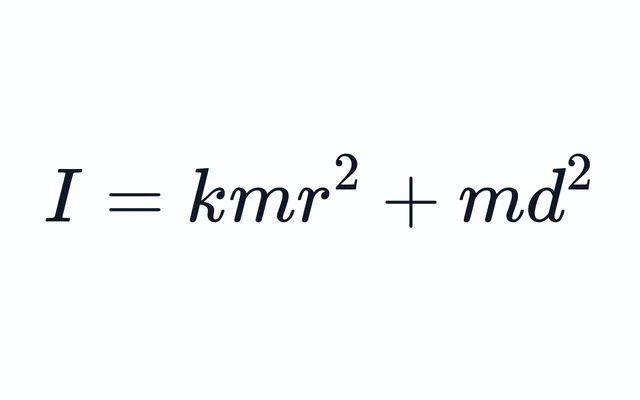
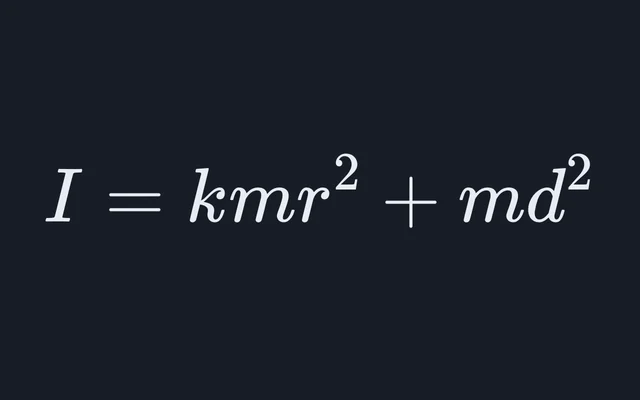
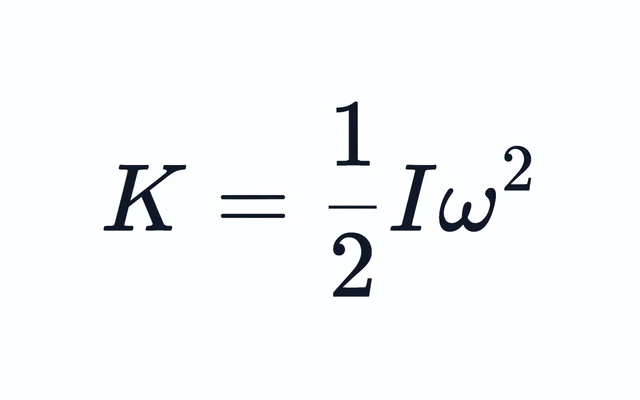
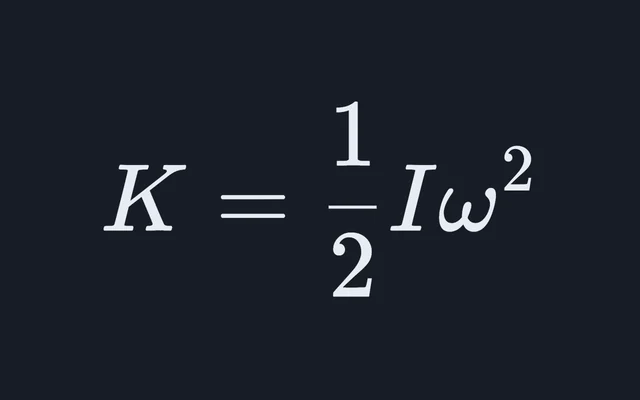
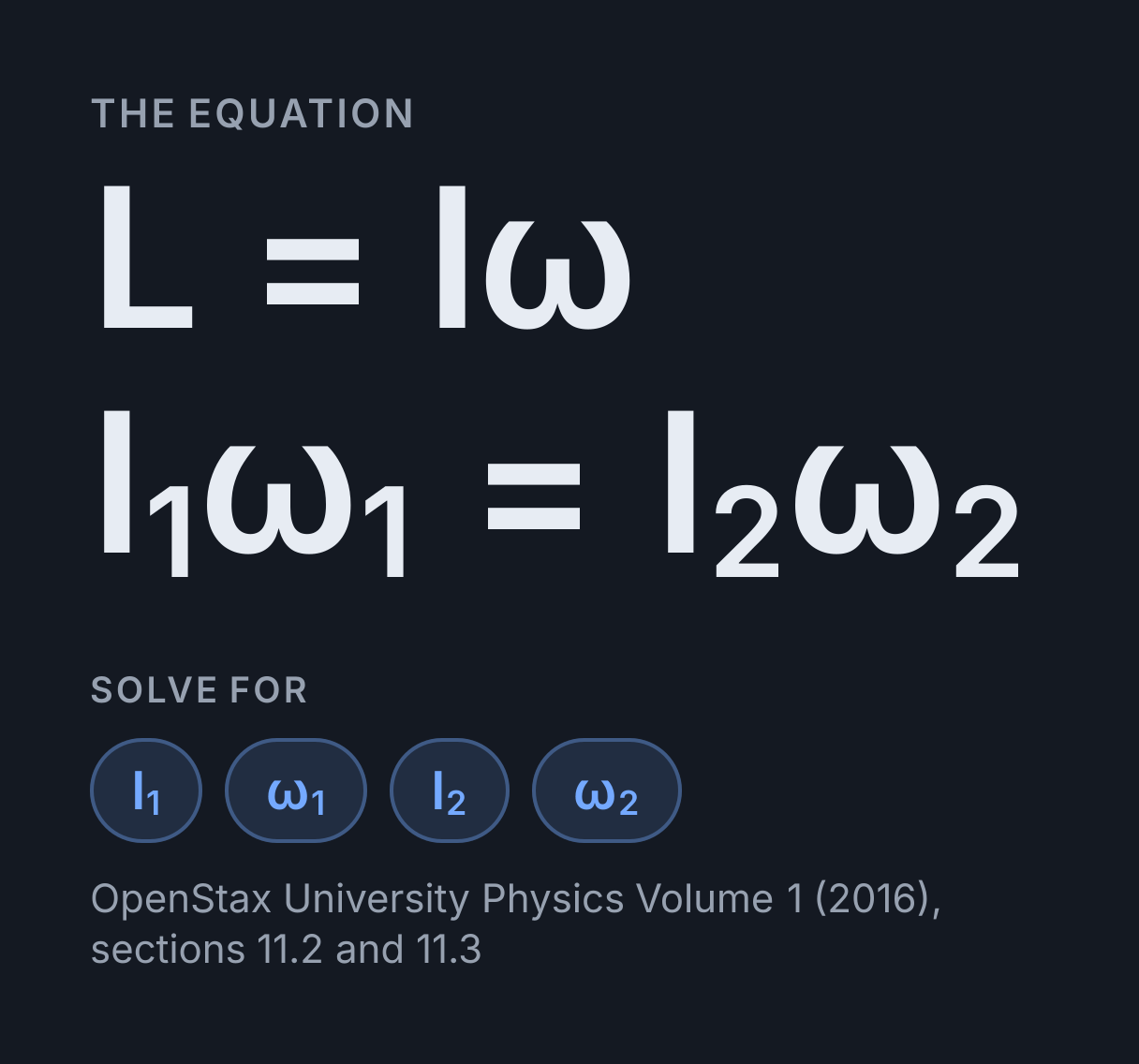
The equation
OpenStax University Physics Volume 1 (2016), sections 11.2 and 11.3
What is the angular momentum formula?
The angular momentum formula for a body turning about a fixed axis is L = Iω: moment of inertia in kg·m² times angular velocity in rad/s, giving kg·m²/s. While no net external torque acts about the axis, L is conserved, so I₁ω₁ = I₂ω₂. Halve the moment of inertia and the spin rate doubles.
Using the conservation of angular momentum calculator
Enter the moment of inertia and spin rate before the change, and one of the two after it;
the calculator solves for the fourth. Spin rates go in as rad/s, rpm, rev/s or degrees per
second, and the working converts them to rad/s, the unit L = Iω needs. The
angular momentum readout is I₁ω₁, which is all a plain L = Iω
question asks: enter I and ω as the initial values and read
L off directly.
The moments of inertia usually come from the shapes involved, and the
moment of inertia calculator gives them for
hoops, disks, rods, spheres and point masses. When a second body joins the first on the same
axis, the final moment of inertia is the sum of the two. A child of mass m who
jumps onto the rim of a merry-go-round adds m r², and a disk dropped onto a
turntable adds its own ½ m r².
When angular momentum is conserved
Angular momentum about an axis stays fixed when the net external torque about that axis is
zero. Forces inside the system cannot change it, which is what makes the skater and the diver
possible: each changes shape by moving mass toward or away from the axis,
and the spin rate changes to keep Iω the same. Two disks gripping each other
exert equal and opposite torques, so the pair’s total is unchanged even though each disk’s
own angular momentum changes.
An outside torque breaks the rule. A motor driving a turntable, a hand pushing a
merry-go-round, or friction in a bearing all change L at the rate
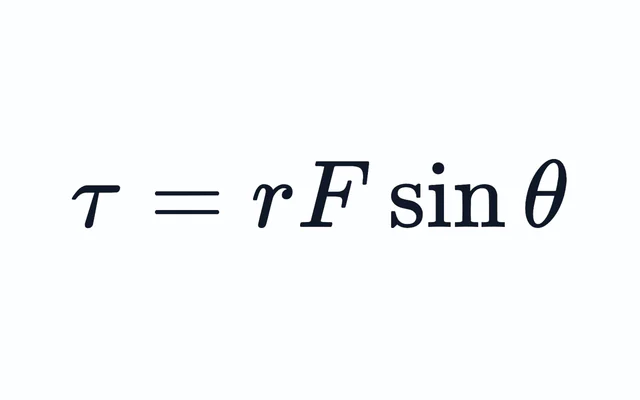
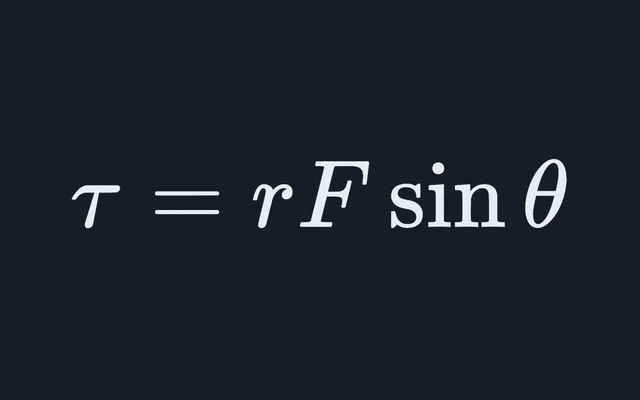
τ = ΔL / Δt, the rotational form of Newton’s second law. Textbook problems treat
the change of shape as quick enough that bearing friction can be ignored, and the
torque calculator covers the cases where a torque is
the point.
Why the kinetic energy changes
Rotational kinetic energy can be written in terms of angular momentum as
K = L² / 2I. With L fixed, a smaller moment of inertia means more
energy and a larger one means less, and the before and after readouts show both. A skater who
pulls her arms in gains energy, supplied by the work her muscles do pulling them inward
against the spin. When two disks lock together the energy falls instead, lost to friction
while they slip against each other, which makes it the rotational version of an inelastic
collision on the
collision simulator. The
rotational kinetic energy calculator
works ½ I ω² on its own.
Angular momentum of a moving point mass
A single particle has angular momentum about a point even when it moves in a straight line:
L = m v r sin θ, where r is its distance from the point and
θ the angle between r and its velocity. For a mass going round a
circle, θ is 90° and L = m v r, which is Iω again with
I = m r² and v = ω r. A planet obeys the same rule, and the
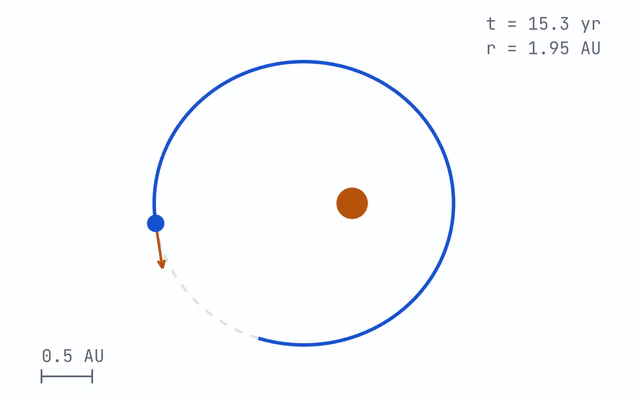
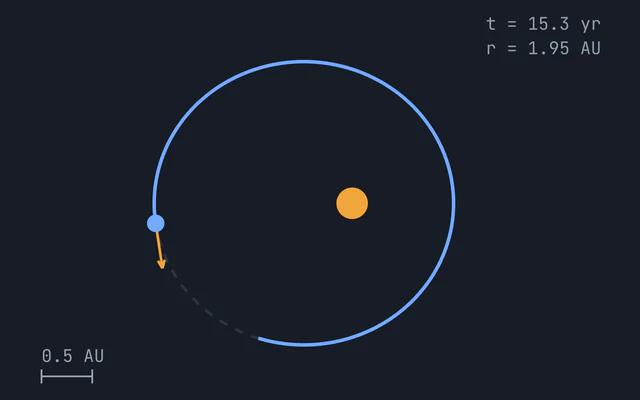
orbit simulator shows it speeding up at closest
approach because its angular momentum about the star cannot change.
Common mistakes
- Leaving the spin in rpm.
L = Iωgives kg·m²/s only withωin rad/s. Multiply rpm by 2π/60, or choose rpm in the unit menu and let the calculator convert. - Forgetting the body that joins. After a collision on one axis the final moment of inertia is the total of every body now turning together, not the first body alone.
- Assuming kinetic energy is conserved too. It rises when mass moves inward
and falls when bodies lock together. Only
Lstays fixed. - Ignoring an outside torque. Conservation needs zero net external torque about the axis. A merry-go-round that someone keeps pushing does not conserve its angular momentum.
How to calculate final angular velocity from angular momentum
- Write down the formula:
ω₂ = I₁ ω₁ ÷ I₂ -
Gather the values it needs. The calculator above starts with these:
- Initial moment of inertia: I₁ = 2 kg·m²
- Initial angular velocity: ω₁ = 3 rad/s
- Final moment of inertia: I₂ = 1 kg·m²
-
Substitute them and work through the arithmetic:
- omega2 = I1 x omega1 / I2
- = 2 x 3 / 1
- = 6 / 1
- = 6 rad/s = 57.3 rpm
-
To find one of the other values instead, rearrange the formula for it:
- Initial moment of inertia:
I₁ = I₂ ω₂ ÷ ω₁ - Initial angular velocity:
ω₁ = I₂ ω₂ ÷ I₁ - Final moment of inertia:
I₂ = I₁ ω₁ ÷ ω₂
- Initial moment of inertia:
Worked examples
Each one runs through the calculator above, so the arithmetic here is the arithmetic it does.
How fast does a 45 rpm turntable turn when an equal disk drops onto it?
- omega2 = I1 x omega1 / I2
- = 0.01 x 4.7124 / 0.02
- = 0.047124 / 0.02
- = 2.3562 rad/s = 22.5 rpm
22.5 rpm, half the speed, because the moment of inertia doubled. Half of the kinetic energy goes as well: with L fixed, K = L²/2I, so doubling I halves K. The lost energy goes into friction between the disks while they slip, as in an inelastic collision.
A diver with I = 12 kg m² at 0.5 rev/s tucks to spin at 2 rev/s. What is her tucked I?
- I2 = I1 x omega1 / omega2
- = 12 x 3.1416 / 12.566
- = 37.699 / 12.566
- = 3 kg m^2
3 kg m², a quarter, because the spin rate went up four times. Her rotational kinetic energy rises fourfold too, from about 59 J to about 237 J, and the extra comes from the work her muscles do pulling her arms and legs in toward the axis.
Practise this with Mechanics Practice Problems, questions generated from this calculator and 18 other calculators in Mechanics.
Common questions
Why does a skater spin faster when she pulls her arms in?
No outside torque acts about her spin axis, so her angular momentum, Iω, stays the same. Pulling her arms in moves mass closer to the axis and lowers I, so ω rises by the same factor. Her kinetic energy rises too, and the extra comes from the work her muscles do pulling her arms inward.
Is kinetic energy conserved when angular momentum is conserved?
Not in general. With L fixed, rotational kinetic energy is L²/2I, so it rises when I falls and falls when I rises. When a disk drops onto a spinning turntable and the two lock together, angular momentum is conserved but kinetic energy is lost to friction while they slip, just as in an inelastic collision.
What are the units of angular momentum?
Kilogram square metres per second, kg·m²/s, which is the same unit as the joule second that Planck’s constant is quoted in. L = Iω only gives kg·m²/s with ω in radians per second, so convert rpm by multiplying by 2π/60, about 0.1047, before multiplying by the moment of inertia.