Rotational Kinetic Energy Calculator
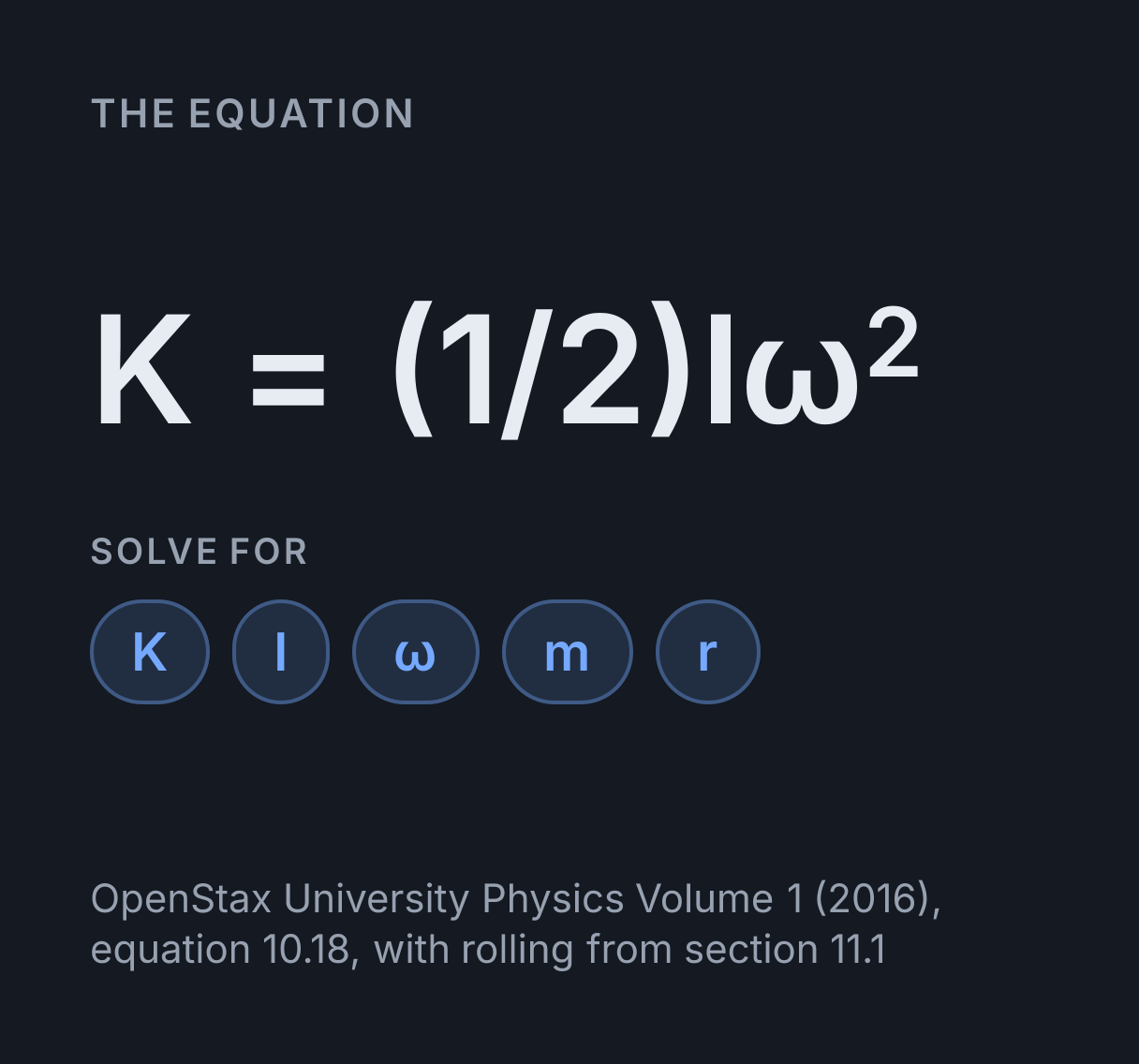
Calculate rotational kinetic energy, K = ½Iω², from moment of inertia and spin in rad/s or rpm, with the total for a body rolling without slipping.
Calculator
Only for rolling without slipping. Set it to 0 for a wheel turning on a fixed axle.
The radius it rolls on, which sets its forward speed, v = ωr.
Working, with your numbers
- K = 0.5 x I x omega^2
- = 0.5 x 0.01 x 30^2
- = 0.5 x 0.01 x 900
- = 4.5 J
Values are converted into the units the equation is worked in before the arithmetic.
- Total KE if it rolls without slipping ½Iω² + ½mv². Rolling ties the forward speed to the spin, so a rolling body carries both. On a fixed axle it is ½Iω² alone.
- 13.5 J
- Rolling speed v = ωr, the speed of the centre of mass.
- 3 m/s
- Translational KE ½mv² of the centre of mass.
- 9 J
- Share that is rotational I ÷ (I + m r²), set by the shape alone: a third for a solid cylinder, a half for a hoop.
- 33.33 %
Citing this tool
Last updated . Add the date you accessed it as well, which a citation of a page that can change asks for. If a specific result matters, cite the permalink from the tool’s share row instead of this page: it reproduces the exact parameters.
On the syllabus: AP Physics 1, Unit 6: Energy and Momentum of Rotating Systems.
The equation
OpenStax University Physics Volume 1 (2016), equation 10.18, with rolling from section 11.1
What is the rotational kinetic energy formula?
The rotational kinetic energy formula is K = ½Iω², where I is the moment of inertia in kg·m² and ω the angular velocity in rad/s, giving joules. A body rolling without slipping also moves forward at v = ωr, so its total kinetic energy is ½Iω² + ½mv².
Where ½Iω² comes from
Nothing about spinning creates a new kind of energy. Each small piece of a turning body, a
distance r from the axis, moves in a circle at v = ωr and carries
the ordinary ½ m v². Adding those up gives ½ (Σ m r²) ω², and the
bracket is the moment of inertia. That is why a flywheel can hold energy while its centre
stays put: the centre is still, but every other part of it is moving.
The square on ω decides most answers. Doubling the spin rate stores four times
the energy, and it is also why the unit matters so much: ω has to be in radians
per second, and a value left in rpm comes out about 91 times too large. Pick rpm, rev/s or
degrees per second in the unit menu and the calculator converts before it squares. For
I, the moment of inertia
calculator gives the standard shapes, with the parallel axis theorem for an offset axis.
Rolling without slipping
A wheel or ball that rolls without slipping turns once for every circumference it travels,
so its forward speed and its spin are locked together by v = ωr. Enter its mass
and rolling radius and the readouts split the total into its two parts. The rotational share
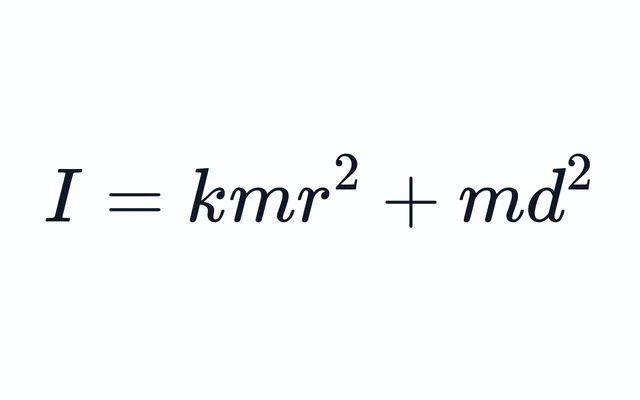
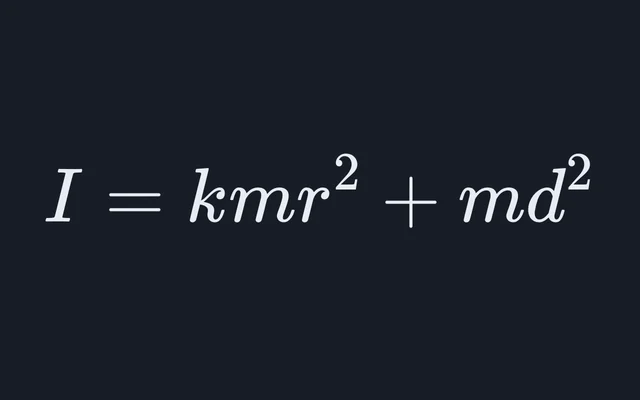
is I / (I + m r²). Writing I = k m r², that is
k / (1 + k), which depends on the shape alone and not on the mass or the size.
For a wheel on a fixed axle, set the mass to 0 and the total is the rotational energy alone.
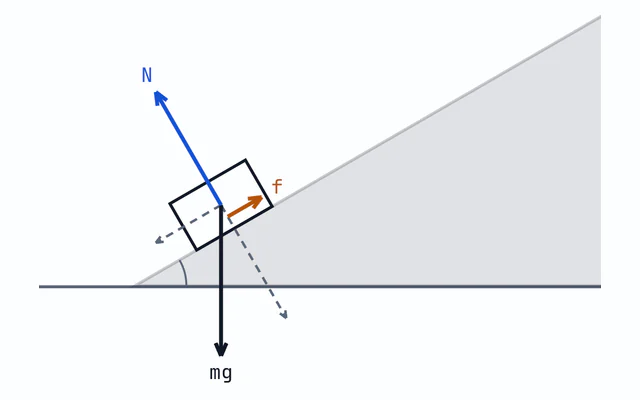
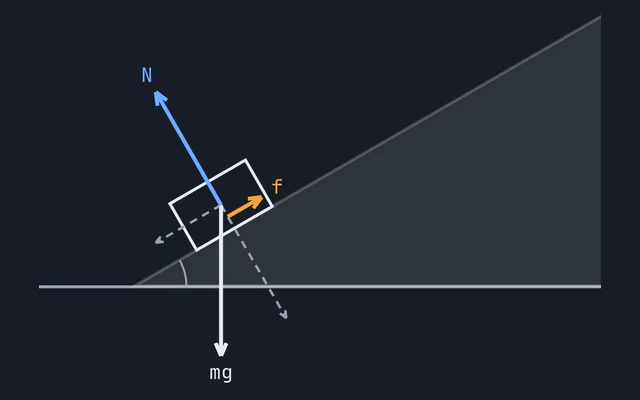
That split is why shapes race differently down a slope. Released from the same height, each
body turns the same potential energy per kilogram into kinetic energy, and whatever goes into
spin is not available for forward motion. Its speed at the bottom is
√(2gh / (1 + k)), compared with √(2gh) for a block sliding without
friction, so a lower factor wins.
| Shape | k | Share of kinetic energy in spin | Speed at the bottom, against a frictionless slide |
|---|---|---|---|
| Solid sphere | ⅖ | 2/7, 28.6% | 0.8452 |
| Solid cylinder | ½ | 1/3, 33.3% | 0.8165 |
| Hollow sphere | ⅔ | 2/5, 40% | 0.7746 |
| Hoop or thin-walled cylinder | 1 | 1/2, 50% | 0.7071 |
The solid sphere wins and the hoop comes last, whatever their masses and radii. The same
factor sets the acceleration down the slope, g sin θ / (1 + k), which for a
solid sphere is the (5/7) g sin θ the
inclined plane simulator quotes. Ideal rolling
loses no energy to friction, because the point in contact with the ground is momentarily at
rest. Once a body slips, kinetic friction does work against it and v = ωr no
longer holds.
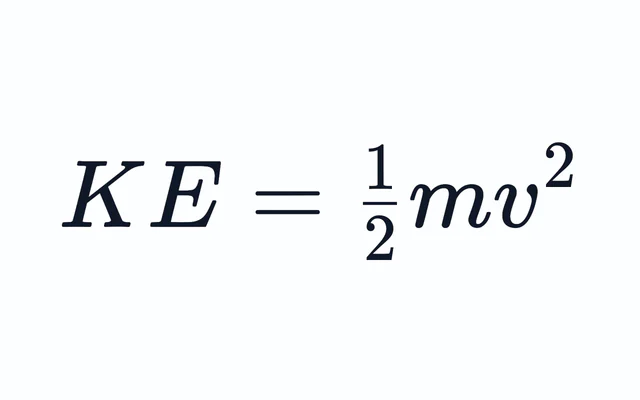
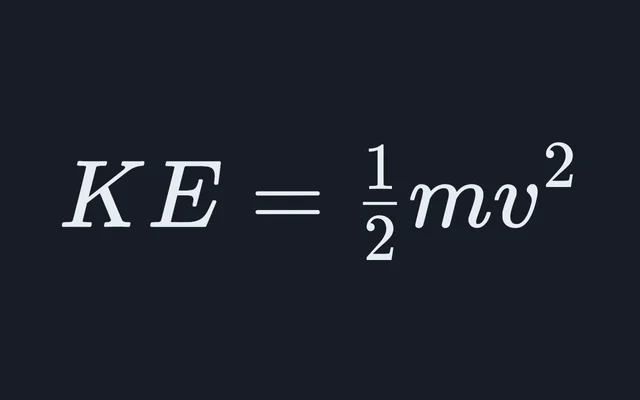
The translational half is the ½ m v² of the
kinetic energy calculator, and the
angular momentum calculator follows the
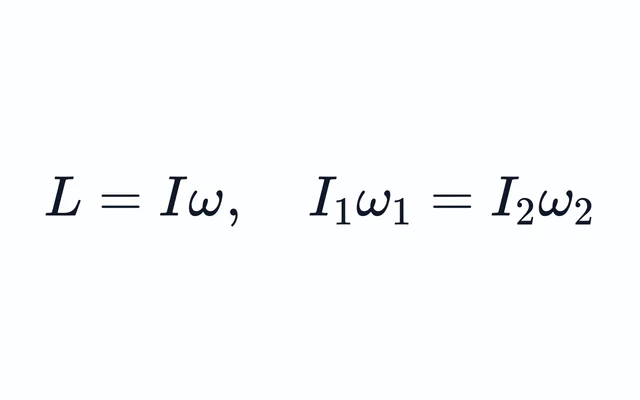
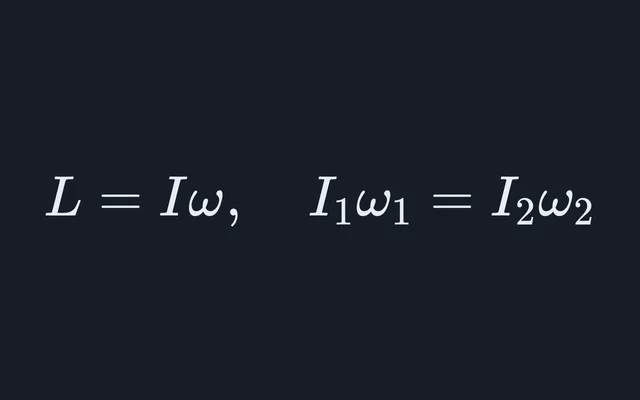
energy when a spinning body changes shape, where L = Iω stays fixed and
K does not.
Common mistakes
- Squaring rpm. Multiply by 2π/60 first. Skipping it makes the energy about 91 times too large, because the missing factor of 0.1047 is squared.
- Leaving out the spin of a rolling body.
½ m v²alone is only part of the total. For a solid sphere it is five sevenths, so an energy balance that leaves out the rotation gives a speed at the bottom of a slope that is too high. - Using the wrong moment of inertia. A disk spinning like a wheel and the same
disk turning about a diameter differ by a factor of two, and so do their energies at the
same
ω. - Using v = ωr while it slips. A wheel spinning on ice or a ball skidding after a bowl is not rolling, and its speed and spin have to be worked out separately.
Converting units first? Use the mass, energy and length conversion tables.
How to calculate rotational kinetic energy
- Write down the formula:
K = ½ I ω² -
Gather the values it needs. The calculator above starts with these:
- Moment of inertia: I = 0.01 kg·m²
- Angular velocity: ω = 30 rad/s
-
Substitute them and work through the arithmetic:
- K = 0.5 x I x omega^2
- = 0.5 x 0.01 x 30^2
- = 0.5 x 0.01 x 900
- = 4.5 J
-
To find one of the other values instead, rearrange the formula for it:
- Moment of inertia:
I = 2 K ÷ ω² - Angular velocity:
ω = √(2 K ÷ I)
- Moment of inertia:
Worked examples
Each one runs through the calculator above, so the arithmetic here is the arithmetic it does.
How much energy does a 0.5 kg m² flywheel store at 3000 rpm?
- K = 0.5 x I x omega^2
- = 0.5 x 0.5 x 314.16^2
- = 0.5 x 0.5 x 98,696
- = 24,674 J
About 24.7 kJ. The 3000 rpm has to become 314.2 rad/s before it is squared: left as 3000, the same sum gives 2.25 MJ, about 91 times too much, because the conversion factor of 2π/60 is squared along with the speed.
How fast must a 2 kg m² wheel spin to store 1 kJ of energy?
- omega = sqrt(2 x K / I)
- = sqrt(2 x 1000 / 2)
- = sqrt(1000)
- = 31.623 rad/s = 302 rpm
31.62 rad/s, about 302 rpm. Energy goes as the square of the spin, so storing twice the energy takes only √2 times the spin rate, about 41 percent more, while doubling the spin rate stores four times the energy.
Practise this with Mechanics Practice Problems, questions generated from this calculator and 18 other calculators in Mechanics.
Common questions
Why does a solid cylinder beat a hoop down a ramp?
Both turn the same potential energy per kilogram into kinetic energy, but rolling splits it between forward motion and spin in a ratio set by the shape. A hoop puts half of its kinetic energy into spin and a solid cylinder a third, so the cylinder keeps more for moving forward and reaches the bottom first, whatever the masses and radii of the two.
Do I use rpm or rad/s in K = ½Iω²?
Radians per second. The formula gives joules only with ω in rad/s, so multiply rpm by 2π/60, about 0.1047, first. Because ω is squared, a value left in rpm makes the energy about 91 times too large.
What is the total kinetic energy of a rolling object?
The sum of its translational and rotational kinetic energies, ½mv² + ½Iω². Rolling without slipping ties the two together through v = ωr, so the rotational share depends only on the shape: two sevenths of the total for a solid sphere, a third for a solid cylinder and a half for a hoop.