Anion Gap Calculator
Calculate the anion gap from sodium, chloride and bicarbonate in mEq/L or mmol/L, correct it for albumin in g/dL or g/L, and read the delta ratio.
Calculator
mEq/L on a US report is the same number, since sodium carries a single charge.
mEq/L and mmol/L are the same number for chloride too.
On a US basic metabolic panel this is the line marked CO2 or total CO2, which is mostly bicarbonate.
Optional. Left at 4.0 g/dL, which is 40 g/L, nothing is corrected and the answer is the plain anion gap. UK, Canadian and Australian reports give g/L, so choose that unit rather than dividing by hand.
The anion gap plus the albumin correction. With albumin left at 4.0 g/dL the two are the same number.
Working, with your numbers
- AG = Na - Cl - HCO3
- = 140 - 104 - 24 = 12 mmol/L
- AG corr = AG + 2.5 x (4.0 - albumin)
- = 12 + 2.5 x (4.0 - 4)
- = 12 + 0
- = 12 mmol/L
Values are converted into the units the equation is worked in before the arithmetic.
- Anion gap, uncorrected Na minus Cl minus HCO3, before any correction for albumin. Potassium is left out, as is conventional; a laboratory that includes it reports a gap higher by the potassium, about 4 mmol/L.
- 12 mmol/L
- Albumin correction 2.5 mmol/L for each g/dL of albumin below 4.0 g/dL, which is 0.25 for each g/L below 40 g/L (Figge and colleagues, 1998). Negative when albumin is above 4.0, and zero when it is left there.
- 0 mmol/L
- Corrected gap against common ranges There is no single normal anion gap. Each laboratory sets the interval for its own method: 8 to 12 mmol/L is the range long taught, and many laboratories on current methods print about 3 to 11 mmol/L, both without potassium. Read a real result against the range printed on its report.
- Inside 8 to 12, above 3 to 11
- Delta ratio The rise in the corrected gap above 12 divided by the fall in bicarbonate below 24. Read only when the corrected gap is above 12 and bicarbonate has fallen by at least 4, because nearer 24 the divisor is so small that a 1 mmol/L change in bicarbonate can double the ratio.
- Not read
- Delta ratio reads as Teaching bands, the ones the site’s acid base interpreter uses, not a guideline’s cut-offs. Under 0.8, bicarbonate fell further than the gap rose, which needs a normal-gap acidosis as well. Over 2, the gap rose further, which needs a metabolic alkalosis or the compensation for chronic CO2 retention holding bicarbonate up. The ratio counts the rise from a normal gap of 12, so on a method whose normal gap is lower it is understated.
- Not read: the gap is not raised
Citing this tool
Last updated . Add the date you accessed it as well, which a citation of a page that can change asks for. If a specific result matters, cite the permalink from the tool’s share row instead of this page: it reproduces the exact parameters.
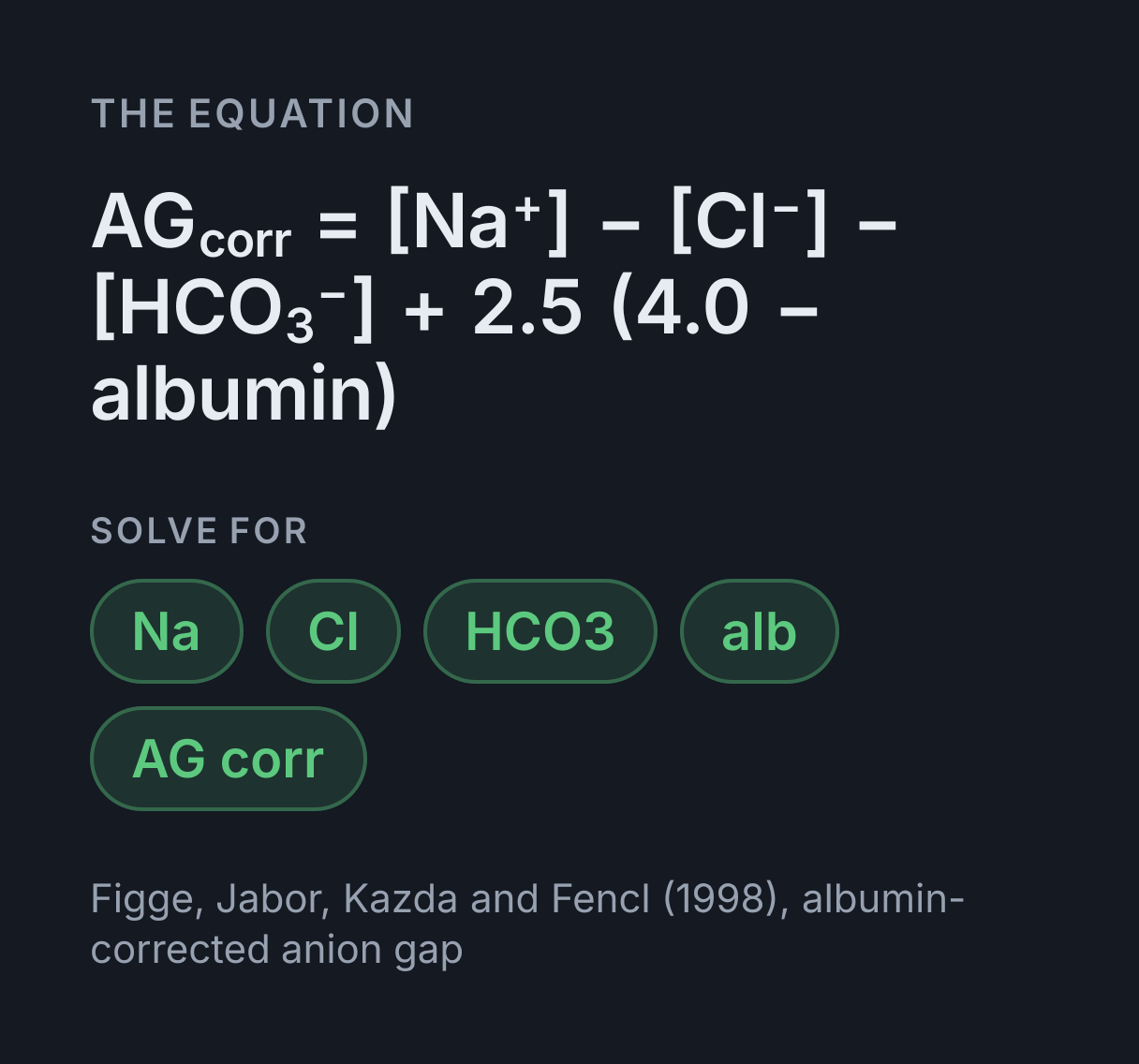
The equation
Figge, Jabor, Kazda and Fencl (1998), albumin-corrected anion gap
How do you calculate the anion gap?
The anion gap is sodium minus the sum of chloride and bicarbonate: AG = Na − (Cl + HCO3), with each value in mEq/L or mmol/L, the same number for these ions. To correct it for a low albumin, add 2.5 for each g/dL that albumin falls below 4.0 g/dL. Judge the result against the range on the laboratory’s own report.
What the gap is counting
Plasma carries equal positive and negative charge. A routine chemistry panel reports most of the positive side, as sodium, but only part of the negative side, as chloride and bicarbonate. The difference is the anions the panel leaves out, less the cations it leaves out. Albumin is the largest of the unreported anions, with phosphate, sulfate and organic anions such as lactate making up the rest, while potassium, calcium and magnesium are the unreported cations.
An acid whose anion is not on the panel raises the gap. Bicarbonate buffers the hydrogen ion and falls, and the new anion takes its place unseen. If bicarbonate is lost instead, from the gut in diarrhea or through the kidney in a renal tubular acidosis, or diluted by large volumes of 0.9 percent saline, chloride takes its place and the gap stays where it was. That split, a raised gap or a normal one, is the first branch in working up a metabolic acidosis, and the normal-gap kind is called hyperchloremic for that reason.
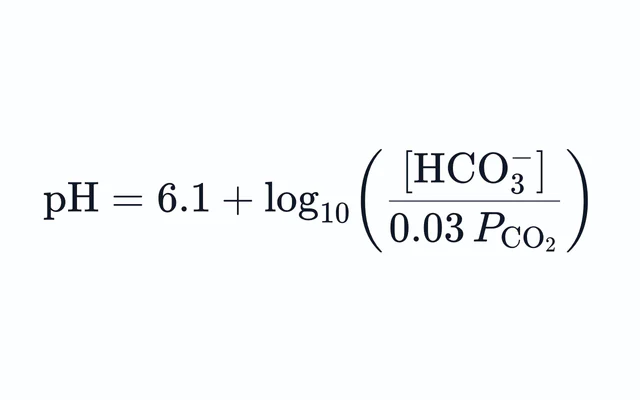
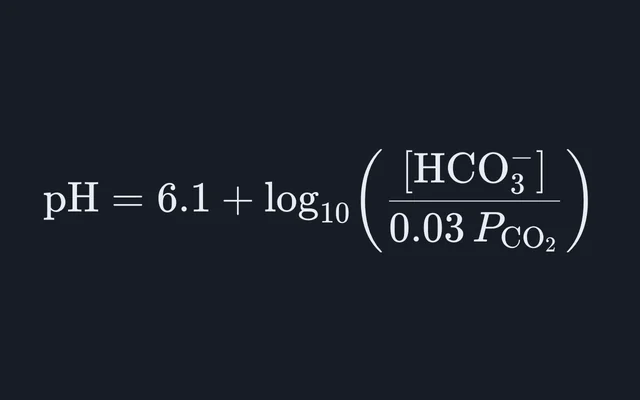
On a US basic metabolic panel the bicarbonate figure is the line marked CO2 or total CO2. It measures all the carbon dioxide the sample releases, which is mostly bicarbonate, while a blood gas report gives a bicarbonate calculated from pH and pCO2. Use whichever the laboratory calculated its own gap from.
Why no single normal range fits
Each laboratory sets the reference interval for its own method. About 8 to 12 mmol/L is the range long taught, and many laboratories on current methods print about 3 to 11 mmol/L, both calculated without potassium. Intervals have moved as measurement methods changed, which Kraut and Madias review in their 2007 account of the gap. A laboratory that adds potassium to the sum reports a gap higher by the potassium concentration and sets its range to match.
The calculator places the corrected gap against both common ranges and says where it falls in each, calling neither one normal.
Correcting the gap for albumin
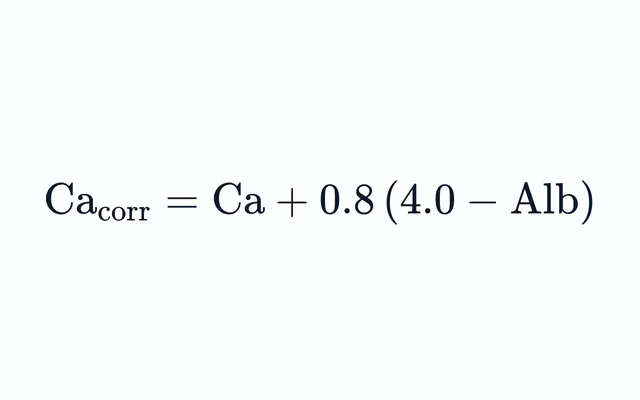
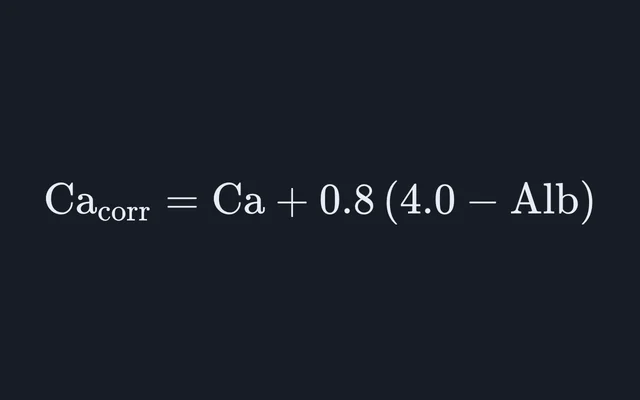
Albumin carries a net negative charge at the pH of blood, so it supplies much of the normal gap. It falls in critical illness, liver disease, nephrotic syndrome and malnutrition, and the baseline gap falls with it, so an added acid can lift the gap only as far as a value that looks normal. Figge and colleagues put the size of the effect in 1998 at about 2.5 mmol/L of gap per g/dL of albumin, which is 0.25 per g/L.
The correction adds that back for every g/dL below 4.0 g/dL, the conventional normal albumin and the one this site uses throughout. Above 4.0 it turns negative, and the corrected gap is smaller than the measured one. US reports give albumin in g/dL, while UK, Canadian and Australian reports give g/L, ten times the number, so choose the unit in the albumin field instead of converting by hand.
What raises the gap
A raised gap means an unmeasured acid anion has accumulated. Mehta and colleagues grouped the causes under the mnemonic GOLD MARK in 2008: glycols (ethylene and propylene glycol), 5-oxoproline (pyroglutamic acid, linked to long-term acetaminophen use), L-lactate, D-lactate, methanol, aspirin, renal failure and ketoacidosis, whether diabetic, alcoholic or from starvation.
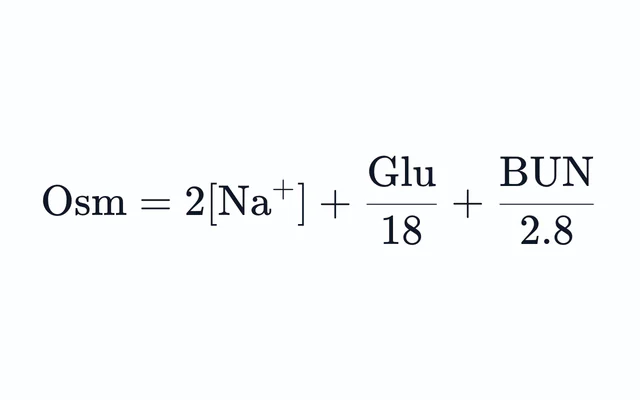
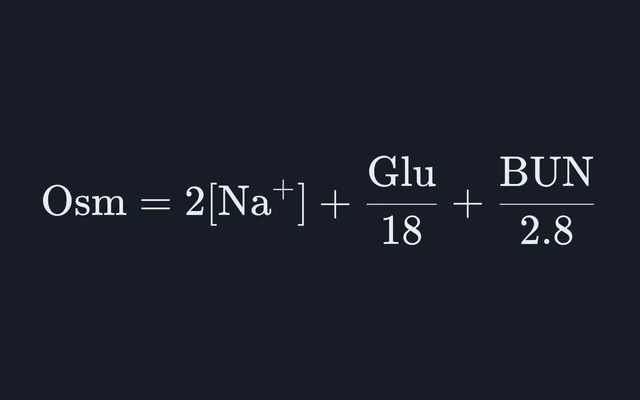
Methanol and ethylene glycol also raise the measured osmolality. The parent alcohols do so before they are broken down into the acids that raise the gap, so an unexplained osmolar gap beside a raised anion gap points at them. The serum osmolality calculator works out that second gap.
The delta ratio, and when to leave it alone
Once the gap is raised, use the delta ratio to check whether one process explains the whole fall in bicarbonate. It divides the rise in the corrected gap above 12 by the fall in bicarbonate below 24, the comparison Wrenn described in 1990 as the delta gap. In a single raised-gap acidosis each unit of acid adds about one unit of unmeasured anion and removes one unit of bicarbonate, so the ratio sits near 1.
- Under 0.8. Bicarbonate has fallen further than the gap has risen, so a normal-gap acidosis is running alongside the raised-gap one.
- 0.8 to 2. Consistent with a raised-gap acidosis on its own.
- Over 2. The gap has risen further than bicarbonate has fallen, which needs something holding bicarbonate up: a metabolic alkalosis, from vomiting for example, or the renal compensation for chronic CO2 retention.
These are teaching bands, the same ones the acid base interpreter applies, not guideline cut-offs. The calculator reads the ratio only when the corrected gap is above 12 and bicarbonate has fallen by at least 4, because near 24 the divisor is so small that a 1 mmol/L change in bicarbonate can double the ratio. It also measures the rise from a gap of 12, so on a method whose normal gap is lower the ratio is understated. In diabetic ketoacidosis, ketoanions lost in the urine stop counting towards the gap while bicarbonate stays low, so the ratio often runs near or below 1, more so once fluids restore urine flow.
Common mistakes
- Reading the uncorrected gap when albumin is low. Hypoalbuminemia is common in critical illness, where lactic acidosis is common too, and it is the usual way a raised gap hides inside the reference range.
- Typing a g/L albumin against g/dL. The number is ten times too large: in the bare formula, 35 g/L read as g/dL gives a correction of 2.5 × (4.0 − 35) = −77.5 mmol/L. This field refuses it, so switch the unit to g/L instead.
- Judging against someone else’s range. Read a gap from a method whose interval is 3 to 11 against 3 to 11, not 8 to 12, and a gap that includes potassium against a range that includes it too.
- Reading a delta ratio when bicarbonate is near normal. A fall of 1 or 2 mmol/L makes the ratio meaningless, and the calculator gives none for a fall under 4.
- Treating the gap as a diagnosis. It narrows a differential and says nothing about compensation. The acid base interpreter works a full blood gas through in order, including the step where a second disorder shows itself.
Worked examples
Each one runs through the calculator above, so the arithmetic here is the arithmetic it does.
What is the anion gap if sodium is 134, chloride 98 and bicarbonate 10?
- AG = Na - Cl - HCO3
- = 134 - 98 - 10 = 26 mmol/L
- AG corr = AG + 2.5 x (4.0 - albumin)
- = 26 + 2.5 x (4.0 - 4)
- = 26 + 0
- = 26 mmol/L
A gap of 26 is above both common ranges, so an acid whose anion the panel does not measure has been added, as in diabetic ketoacidosis. Bicarbonate has fallen 14 below 24 and the gap has risen 14 above 12, a delta ratio of 1.00, which is what one raised-gap acidosis produces on its own.
Is an anion gap of 11 normal when albumin is 20 g/L?
- AG = Na - Cl - HCO3
- = 137 - 106 - 20 = 11 mmol/L
- AG corr = AG + 2.5 x (4.0 - albumin)
- = 11 + 2.5 x (4.0 - 2)
- = 11 + 5
- = 16 mmol/L
Not once albumin is counted. 20 g/L is 2.0 g/dL, 2.0 below the reference, so the correction adds 5 mmol/L and the gap of 11, inside both common ranges, becomes 16, above both. This is how a lactic acidosis hides in a patient in intensive care. The albumin unit menu takes g/L as reported; typed against g/dL, 20 is over the field’s limit and refused.
What does a low delta ratio mean with sodium 136, chloride 110 and bicarbonate 8?
- AG = Na - Cl - HCO3
- = 136 - 110 - 8 = 18 mmol/L
- AG corr = AG + 2.5 x (4.0 - albumin)
- = 18 + 2.5 x (4.0 - 4)
- = 18 + 0
- = 18 mmol/L
The gap of 18 is raised, but only 6 above 12, while bicarbonate has fallen 16 below 24, a delta ratio of 0.38. The raised-gap acid accounts for part of the fall. The rest needs a second, normal-gap acidosis, such as diarrhea or a renal tubular acidosis, with chloride taking bicarbonate’s place, which is what the high chloride shows.
Practise this with Lab and Clinical Calculation Practice Problems, questions generated from this calculator and 20 other calculators in Biology.
Common questions
What is a normal anion gap?
It depends on the laboratory’s method, which is why every report prints its own range. About 8 to 12 mmol/L is the interval long taught, and many laboratories on current methods print about 3 to 11 mmol/L, both calculated without potassium. A laboratory that adds potassium reports a gap higher by the potassium concentration, roughly 4 mmol/L, and sets its range to match. Judge a real result against the range on its own report, and use the albumin-corrected gap when albumin is low.
How do you correct the anion gap for albumin?
Add 2.5 mmol/L for every 1 g/dL that albumin is below 4.0 g/dL, which is 0.25 for every g/L below 40 g/L. That is the size of the effect Figge and colleagues described in 1998. Albumin is the largest of the anions a chemistry panel does not report, so when it falls the normal gap falls with it, and a raised-gap acidosis can show a gap inside the reference range. Above 4.0 g/dL the correction is subtracted instead.
What causes a high anion gap metabolic acidosis?
An acid whose anion the panel does not measure. The GOLD MARK list from Mehta and colleagues (2008) covers the causes worth knowing: glycols, 5-oxoproline, L-lactate, D-lactate, methanol, aspirin, renal failure and ketoacidosis, whether diabetic, alcoholic or from starvation. Methanol and ethylene glycol also raise the osmolar gap early, before they are broken down into acids, so checking both gaps together narrows the list.
What does the delta ratio tell you?
Whether one raised-gap acidosis explains the whole fall in bicarbonate. It divides the rise in the corrected gap above 12 by the fall in bicarbonate below 24. From about 0.8 to 2 fits a single raised-gap acidosis. Under 0.8, bicarbonate fell further than the gap rose, so a normal-gap acidosis is also present, and over 2 something is holding bicarbonate up, such as a metabolic alkalosis. These are teaching bands rather than guideline cut-offs, and the ratio is worth reading only when the gap is raised and bicarbonate is clearly low.
Is the CO2 on a basic metabolic panel the same as bicarbonate?
Nearly, and it is the bicarbonate figure a US chemistry panel calculates its anion gap from. The CO2 or total CO2 line measures all the carbon dioxide released from the sample, which is mostly bicarbonate plus a little dissolved CO2, about 1.2 mmol/L at a pCO2 of 40 mmHg. A blood gas report gives a bicarbonate calculated from pH and pCO2 instead. Use the figure the laboratory used, and do not mix one source’s sodium and chloride with the other’s bicarbonate.
Why can the anion gap be low or negative?
Low albumin is the usual reason, which is one more reason to correct for it. Beyond that, a low gap comes from an unmeasured cation, as with lithium toxicity or an IgG paraprotein in myeloma, or from an assay that reads bromide as chloride. A negative gap is rare enough that checking the values were copied correctly comes first, and the calculator warns when the plain gap falls below zero.