Weight-Based Dosage Calculator
Calculate a weight-based dose in mg from mg/kg and a weight in kg or lb, then the volume in mL to draw up from the concentration, with every step shown.
Calculator
Per dose. Divide an order in mg/kg/day by the number of doses in the day first.
In kg or lb. The working converts to kg, because the dose is per kilogram.
The strength on the label, per mL. A label reading 250 mg/5 mL is 50 mg/mL.
Working, with your numbers
- V = D × W ÷ C
- dose = 10 mg/kg × 20 kg = 200 mg
- V = 200 mg ÷ 40 mg/mL
- = 5 mL
Values are converted into the units the equation is worked in before the arithmetic.
- Dose Dose per kilogram times weight in kg, before the strength of the liquid comes in.
- 200 mg
- Weight in pounds 1 kg is 2.2046 lb. Dividing pounds by 2.2 instead gives a weight 0.21 percent heavier.
- 44.09 lb
- Strength per 5 mL Oral liquids are often labelled per 5 mL. 200 mg/5 mL is 40 mg/mL.
- 200 mg/5 mL
Citing this tool
Last updated . Add the date you accessed it as well, which a citation of a page that can change asks for. If a specific result matters, cite the permalink from the tool’s share row instead of this page: it reproduces the exact parameters.
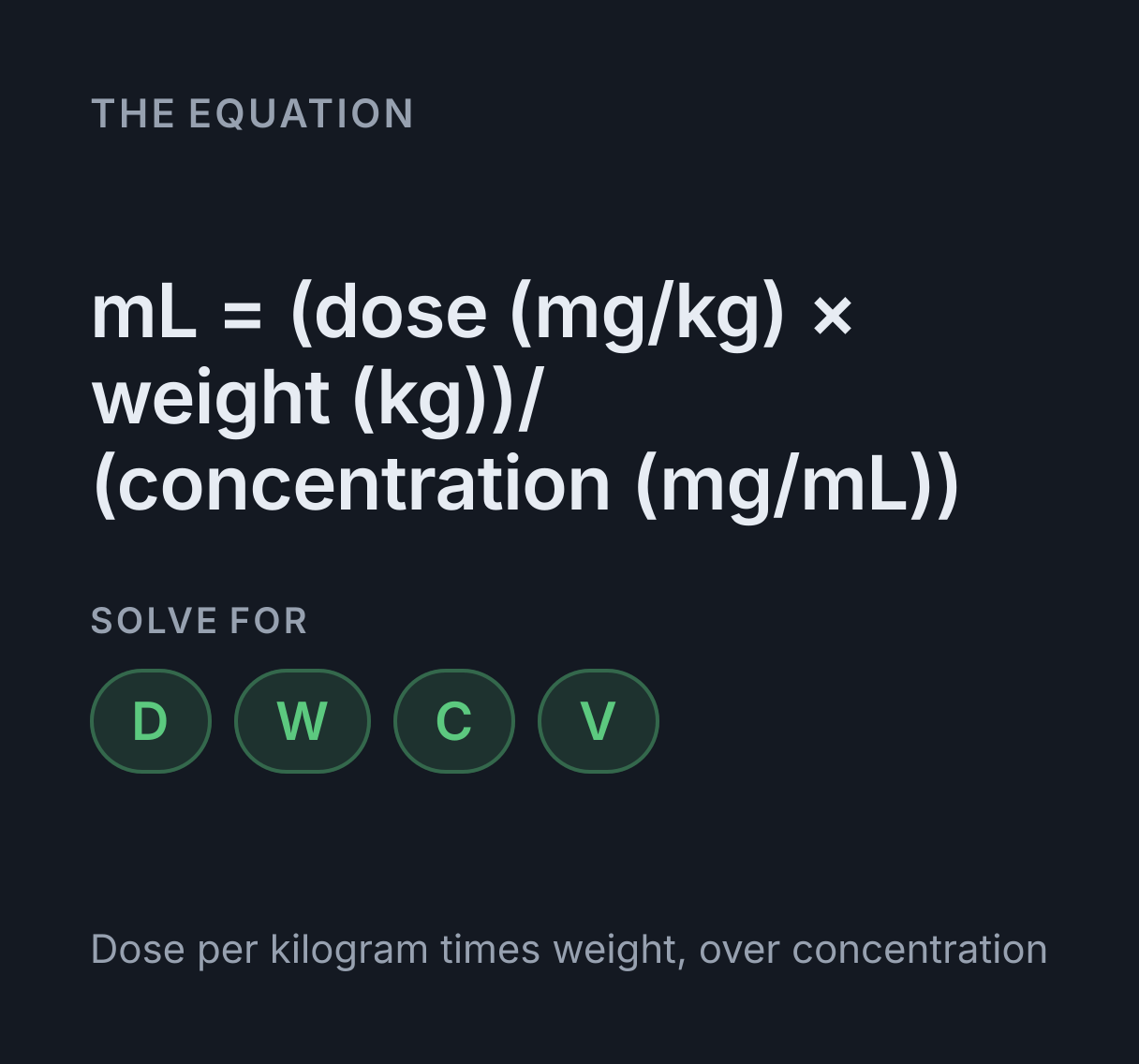
The equation
Dose per kilogram times weight, over concentration
How do you calculate a weight-based dose?
Multiply the dose per kilogram by the patient’s weight in kg to get the dose in mg, then divide by the concentration in mg/mL for the volume to give: mL = (mg/kg × kg) ÷ mg/mL. For 10 mg/kg in a 20 kg child from a 40 mg/mL liquid, that is 200 mg, given as 5 mL.
Pounds, kilograms and the 2.2 rule
Weight-based doses are written per kilogram, while American scales, charts and parents often give pounds, so the conversion is the first step and the one most worth checking. One pound is exactly 0.45359237 kg, which makes 1 kg equal to 2.2046 lb. Courses that divide by 2.2 get a weight 0.21 percent heavier, a difference that does not change a dose but does explain an answer that is out in its last figure. A weight in pounds entered where kilograms belong is a different matter: it gives 2.2 times the dose.
The Institute for Safe Medication Practices recommends that patients are weighed and their weights recorded in metric units only, so that a number on the chart can mean only one thing. This calculator accepts lb for the cases where a weight arrives that way, and its working shows the kilogram figure it used.
Reading the strength on the label
A liquid’s concentration is the drug per volume, and labels state it in more than one way. An oral suspension labelled 250 mg/5 mL is 50 mg/mL, and the Strength per 5 mL readout converts back the other way. Drugs dosed in micrograms are labelled in mcg/mL, and the dose and the concentration fields both accept mcg, so a microgram dose never has to be turned into a decimal of a milligram by hand.
Per dose, per day and the maximum
An order in mg/kg/day is a daily total, divided by the number of doses before anything is drawn up. 30 mg/kg/day given every 8 hours is three doses of 10 mg/kg, and entering the daily figure as one dose gives three times the intended amount.
Most weight-based doses also have a ceiling. In a heavy child the calculated dose can come out above the usual adult dose, and it is normally capped there. The cap is specific to each drug and is on the label or in the drug reference, so this calculator applies none: the result is the arithmetic of the order, not a check that the order is safe.
Common mistakes
- mg/5 mL read as mg/mL. Dividing a dose by 250 instead of by 50 gives a fifth of the volume.
- mcg and mg mixed. A dose in mcg divided by a strength in mg/mL is out by a factor of 1000. Choose the unit on each field and let the working convert.
- A trailing zero. 5.0 mg can be read as 50 mg, which is why The Joint Commission’s “Do Not Use” list includes trailing zeros in medication orders, and why no result here is written with one.
- Rounding before the end. Round only the final volume, to what the syringe or the oral cup in use can measure, as local policy sets.
Worked examples
Each one runs through the calculator above, so the arithmetic here is the arithmetic it does.
How many mL of a 250 mg/5 mL suspension give 15 mg/kg to a 44 lb child?
- V = D × W ÷ C
- dose = 15 mg/kg × 19.96 kg = 299.4 mg
- V = 299.4 mg ÷ 50 mg/mL
- = 5.987 mL
Two conversions: the weight from pounds to kilograms, and the label’s 250 mg/5 mL to 50 mg/mL, which is how it goes into the concentration field. How far to round the volume depends on the oral syringe in use and on local policy.
How many mL of a 50 mcg/mL solution give 2 mcg/kg to a 3.5 kg infant?
- V = D × W ÷ C
- dose = 0.002 mg/kg × 3.5 kg = 0.007 mg
- V = 0.007 mg ÷ 0.05 mg/mL
- = 0.14 mL
With mcg chosen on both fields nothing is converted by hand: the working turns both into mg, and the Dose readout gives 7 mcg rather than a decimal of a milligram. A volume this small needs a syringe graduated in hundredths of a mL to measure.
What dose in mg/kg is 7.5 mL of a 40 mg/mL liquid for a 25 kg child?
- D = V × C ÷ W
- dose = 7.5 mL × 40 mg/mL = 300 mg
- D = 300 mg ÷ 25 kg
- = 12 mg/kg
Solving for the dose per kilogram turns an ordered volume back into the figure a drug reference states its range in, so the order can be checked against it. The range itself is not something this calculator knows.
Practise this with Dosage Calculation Practice Problems, questions generated from this calculator and 3 other calculators in Biology.
Common questions
What is the desired over have formula?
D ÷ H × Q: the dose desired, divided by the dose on hand, times the quantity the dose on hand comes in. 300 mg ordered from a liquid of 125 mg per 5 mL is 300 ÷ 125 × 5 = 12 mL. This calculator does the same arithmetic with the strength written per 1 mL, so 125 mg/5 mL goes in as 25 mg/mL.
How do I check an ordered dose against a mg/kg range?
Divide the ordered dose in mg by the weight in kg and compare the result with the range in the drug reference. 250 mg for an 18 kg child is 13.9 mg/kg. In this calculator, choose dose per kilogram as the unknown and enter the volume and the strength of the order. The range itself is not something the calculator knows.
Can I use this for a dose per square meter?
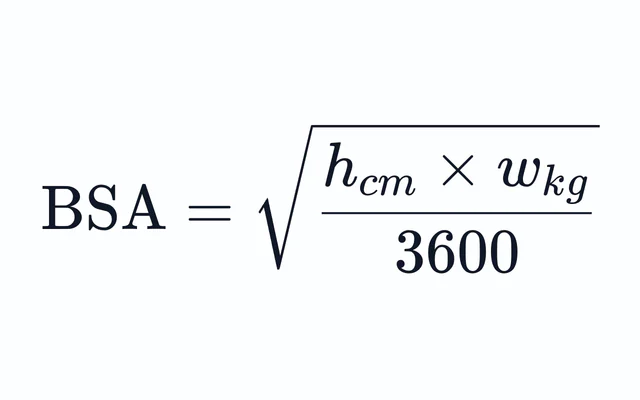
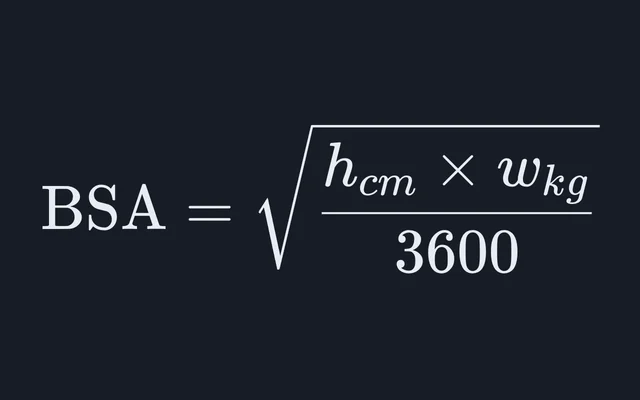
No. A dose written per m² is multiplied by the body surface area, not by the weight, and the body surface area calculator works that out from height and weight. Entering a weight in kg where the order asks for m² gives a dose many times too large, because a person’s weight in kg is many times their surface area in m².