mcg/kg/min to mL/hr Calculator
Convert a weight-based infusion dose in mcg/kg/min to a pump rate in mL/hr from the weight and the bag’s concentration, or find the dose a rate delivers.
Calculator
The ordered dose per kilogram per minute.
In kg or lb. The working converts to kg, because the dose is per kilogram.
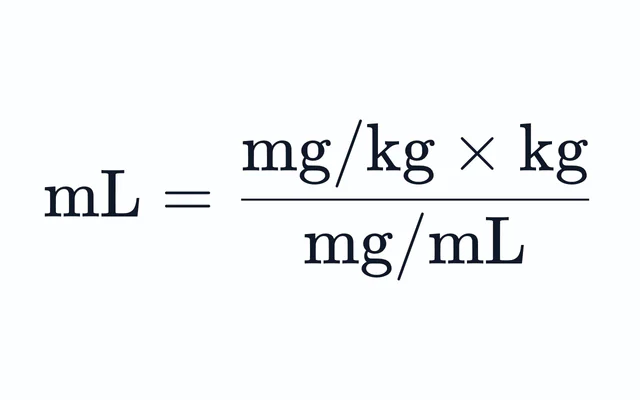
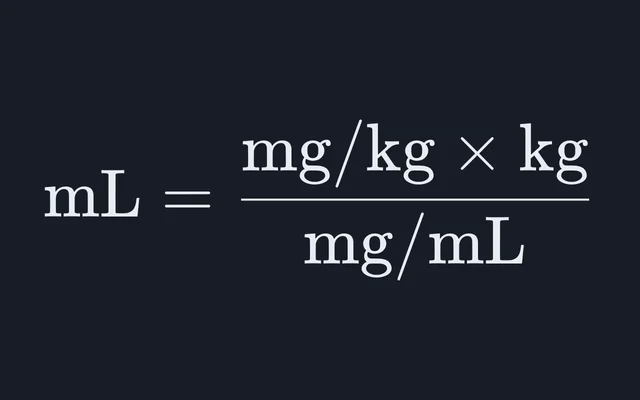
Drug in the bag divided by the volume of the bag. 400 mg in 250 mL is 1.6 mg/mL, which is 1600 mcg/mL.
Working, with your numbers
- R = D × W × 60 ÷ C
- = 5 mcg/kg/min × 80 kg × 60 min/h ÷ 1600 mcg/mL
- = 24,000 mcg/h ÷ 1600 mcg/mL
- = 15 mL/h
Values are converted into the units the equation is worked in before the arithmetic.
- Dose per minute The dose before the concentration comes in. Drugs ordered in mcg/min rather than per kilogram start from this line.
- 400 mcg/min
- Dose per hour The same dose per hour, in mg, for checking against the total drug in the bag.
- 24 mg/h
- Weight in pounds 1 kg is 2.2046 lb. A weight in pounds entered as kilograms gives 2.2 times the dose.
- 176.4 lb
Citing this tool
Last updated . Add the date you accessed it as well, which a citation of a page that can change asks for. If a specific result matters, cite the permalink from the tool’s share row instead of this page: it reproduces the exact parameters.
The equation
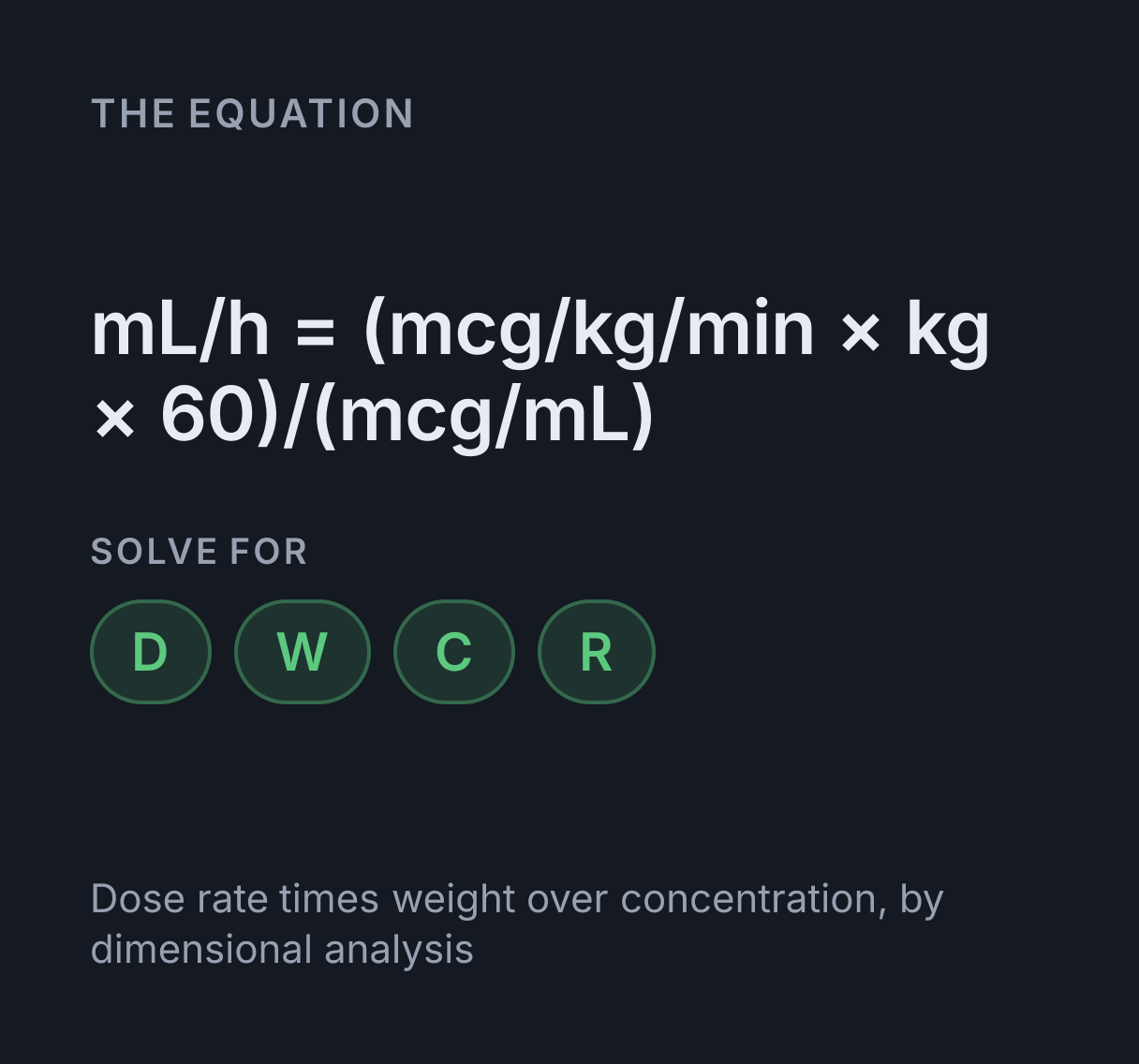
Dose rate times weight over concentration, by dimensional analysis
How do you convert mcg/kg/min to mL/hr?
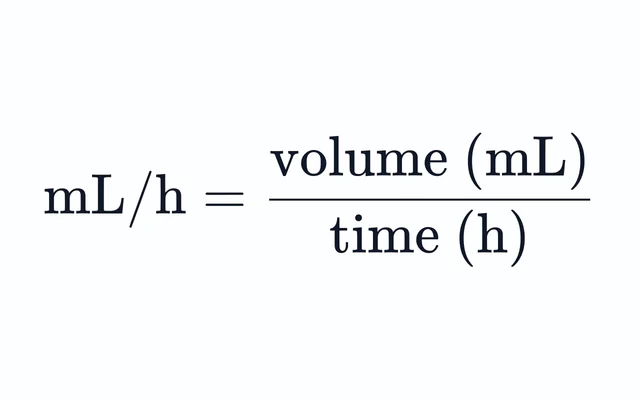
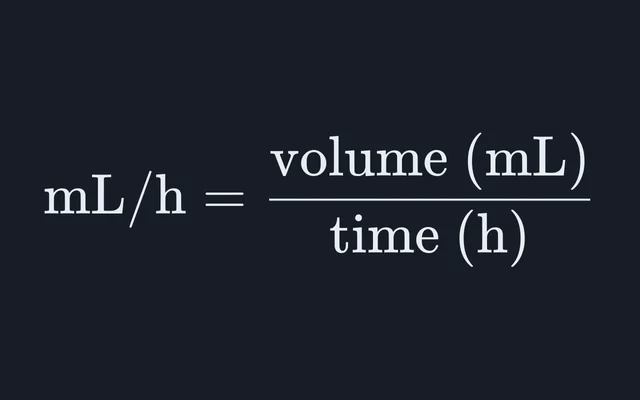
Multiply the dose in mcg/kg/min by the patient’s weight in kg and by 60 minutes, then divide by the concentration in mcg/mL: mL/h = (mcg/kg/min × kg × 60) ÷ mcg/mL. A dose of 5 mcg/kg/min for an 80 kg patient, from a bag holding 1600 mcg/mL, runs at 15 mL/h.
Every unit has to cancel
Written with its units, the calculation shows why each factor is there. mcg/kg/min times kg leaves mcg/min, the dose this patient receives each minute. Times 60 min/h leaves mcg/h. Divided by mcg/mL, the micrograms cancel and mL/h is left, the unit the pump takes. A unit left over at the end means a conversion is missing, which is a check the arithmetic alone cannot make.
Up to three conversions happen before the numbers go in: a weight in pounds becomes kilograms, a strength in mg/mL becomes mcg/mL, and the 60 turns minutes into hours. Enter the weight in lb or the concentration in mg/mL and the working prints the converted figure it used, so each conversion can be checked on its own line.
Getting the concentration from the bag
Infusion bags are labelled with the total drug and the total volume, so the concentration is one divided by the other. 400 mg in 250 mL is 1.6 mg/mL, and multiplying by 1000 makes that 1600 mcg/mL. The same drug mixed at double the strength needs half the rate for the same dose, which is why an infusion rate means nothing without the concentration it was worked out for.
Titrating the dose
The rate is directly proportional to the dose, so a titration order becomes a fixed step in mL/h. At 15 mL/h for 5 mcg/kg/min, each 1 mcg/kg/min is 3 mL/h, and going up by 2 mcg/kg/min means adding 6 mL/h. The step holds only while the weight and the concentration stay the same: a new bag at a different strength needs the calculation done again.
Checking a running infusion
Solving for the dose instead of the rate answers the question asked at every handover: what is this patient actually receiving? Multiply the rate by the concentration, divide by 60 for mcg/min, then divide by the weight. A result that does not match the order means the pump, the bag or the order has changed, and each is worth checking before anything is adjusted.
Common mistakes
- A weight in pounds used as kilograms. 176 lb is about 80 kg. Entered as 176 kg, it makes the rate 2.2 times too high.
- mg/mL taken as mcg/mL. A strength of 1.6 mg/mL entered as 1.6 mcg/mL makes the rate 1000 times too high.
- Leaving out the 60. Without it the answer is a rate per minute, 60 times smaller than the number the pump needs.
- A different weight from the order. Whether a drug is dosed on actual, ideal or adjusted body weight is set by the order or the protocol. Use the weight it names.
Worked examples
Each one runs through the calculator above, so the arithmetic here is the arithmetic it does.
What rate in mL/hr gives 5 mcg/kg/min from a 1.6 mg/mL bag to a 176 lb patient?
- R = D × W × 60 ÷ C
- = 5 mcg/kg/min × 79.83 kg × 60 min/h ÷ 1600 mcg/mL
- = 23,950 mcg/h ÷ 1600 mcg/mL
- = 14.97 mL/h
Two conversions come before the arithmetic: the weight from pounds to kilograms and the strength from mg/mL to mcg/mL, each on a line of the working. Using 176 as if it were kilograms gives 33 mL/h, 2.2 times the order.
What dose in mcg/kg/min is 21 mL/hr of a 1600 mcg/mL bag giving a 70 kg patient?
- D = R × C ÷ (W × 60)
- = 21 mL/h × 1600 mcg/mL ÷ (70 kg × 60 min/h)
- = 560 mcg/min ÷ 70 kg
- = 8 mcg/kg/min
The relation run backwards: the rate on the pump and the bag hanging give the dose the patient is receiving, the figure to set against the order. The working passes through mcg/min, the dose for the whole patient, before the weight comes in.
Practise this with Dosage Calculation Practice Problems, questions generated from this calculator and 3 other calculators in Biology.
Common questions
What if the dose is in mcg/min, with no weight?
Leave the weight out: mL/h = mcg/min × 60 ÷ mcg/mL. Some orders are written per minute for the whole patient rather than per kilogram, and the Dose per minute readout above gives that figure for a weight-based order. 10 mcg/min from a 40 mcg/mL bag runs at 10 × 60 ÷ 40 = 15 mL/h.
What about a dose per kilogram per hour?
Drop the 60, because the dose and the pump are both per hour: mL/h = dose per kg per hour × kg ÷ concentration, with the concentration in the same unit as the dose, mg/mL for a dose in mg and units/mL for a dose in units. 0.1 units/kg/h for a 70 kg patient from a bag of 1 unit/mL runs at 0.1 × 70 ÷ 1 = 7 mL/h.
Why does the same dose need a different rate from a different bag?
Because the rate is inversely proportional to the concentration. A bag mixed at twice the strength delivers the same dose at half the rate, so a rate carried over from one bag to the next is wrong whenever the concentration changed, even though the order did not. Work the rate out again from the concentration on the new bag’s label.