Electrical Power Calculator
Calculate watts from volts and amps with P = IV, or amps from watts, plus the load resistance for P = I²R and V²/R and the energy used in J and kWh.
Calculator
The current through the load. For AC, the rms value, which is what labels and clamp meters give.
The voltage across the load: 120 V at a US or Canadian outlet, 230 V in the UK and Australia. For AC, the rms value.
Real power for DC or a resistive AC load. With a motor or electronics on AC, V × I is volt-amperes and the watts can be lower.
Only used for the energy readouts. It does not change the power.
Working, with your numbers
- P = I x V
- = 12.5 A x 120 V
- = 1500 W
Values are converted into the units the equation is worked in before the arithmetic.
- Energy used E = Pt over the running time. One kWh is 1 kW for one hour.
- 1.5 kWh
- Energy in joules One kWh is exactly 3.6 MJ: 1,000 W for 3,600 s.
- 5.4 × 10⁶ J
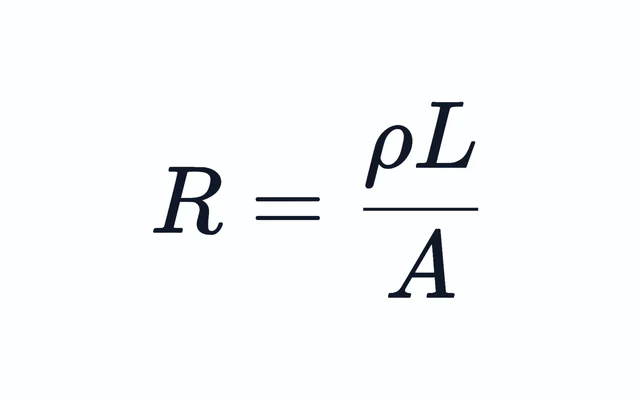
- Load resistance R = V/I. With it, P = I²R and P = V²/R give the same power.
- 9.6 Ω
- Charge moved Q = It. The energy is also QV, since a volt is a joule per coulomb.
- 45,000 C
Use this answer in
Citing this tool
Last updated . Add the date you accessed it as well, which a citation of a page that can change asks for. If a specific result matters, cite the permalink from the tool’s share row instead of this page: it reproduces the exact parameters.
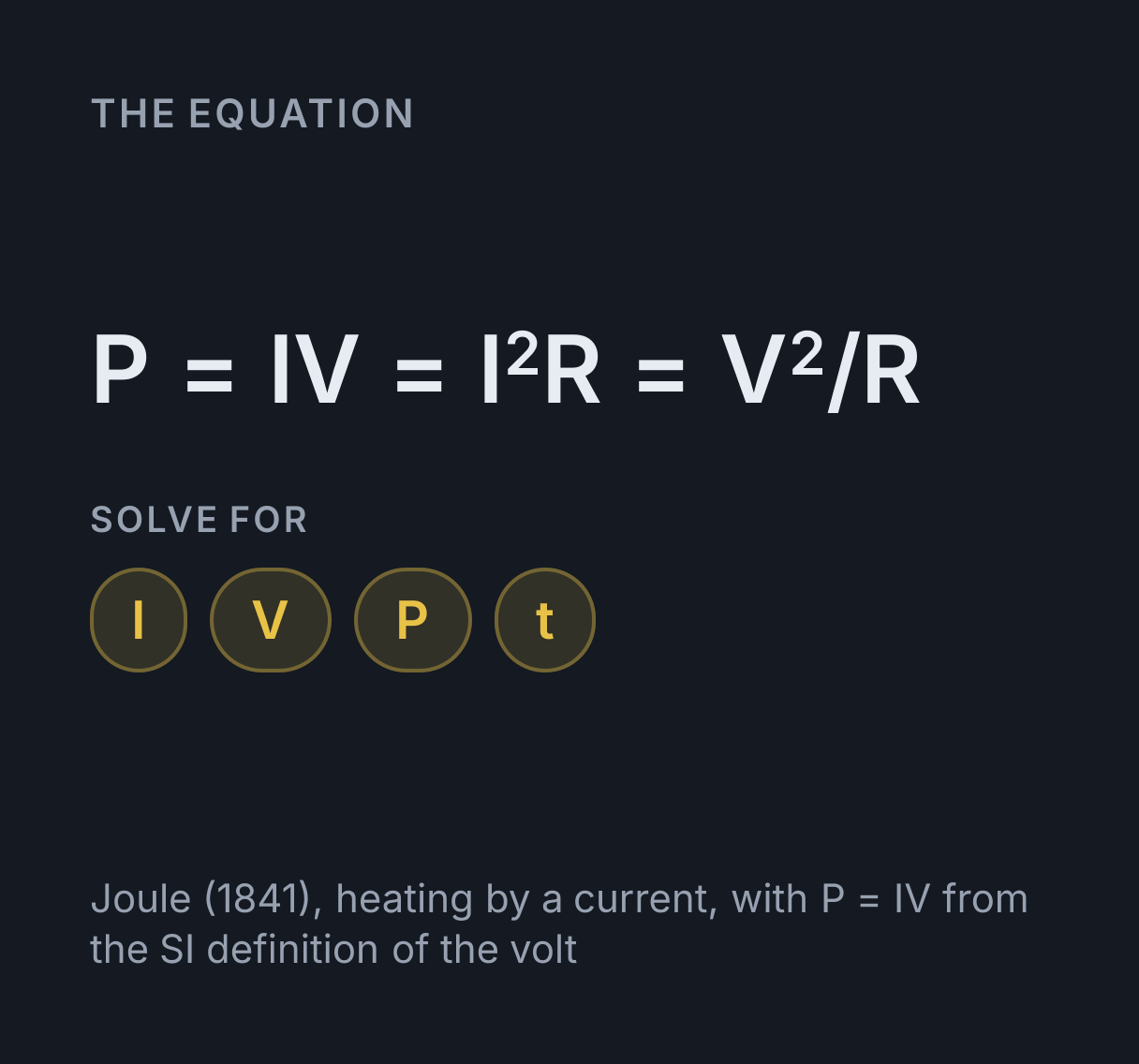
The equation
Joule (1841), heating by a current, with P = IV from the SI definition of the volt
What is the electrical power formula?
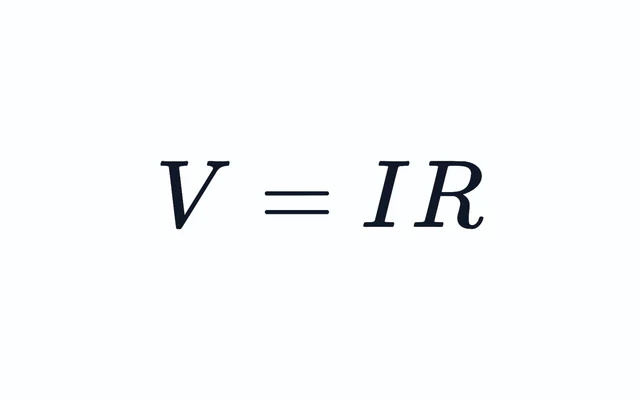
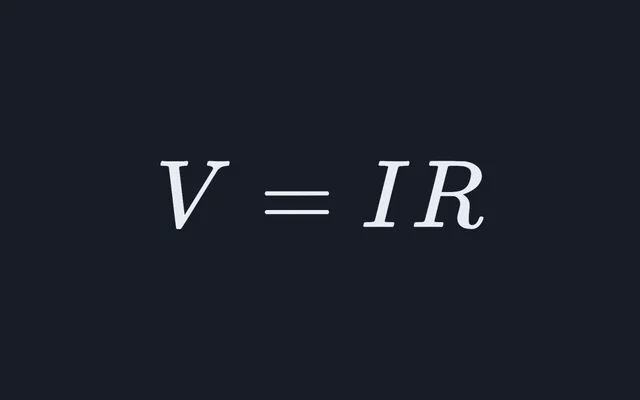
P = IV: power in watts (W) equals current in amperes (A) times voltage in volts (V). Ohm’s law, V = IR, turns it into P = I²R and P = V²/R, with resistance R in ohms (Ω). Energy is power times time, E = Pt: 1 W for 1 s is 1 J, and 1 kW for 1 h is 1 kWh.
Why volts times amps gives watts
A volt is a joule of energy for every coulomb of charge that moves through the potential
difference, and an ampere is a coulomb of charge passing each second. Multiply the two and the
coulombs cancel, leaving joules per second, which is the definition of the watt. The argument
holds for any component, so P = IV gives the power delivered to a heater, a motor
or a battery on charge alike.
The other two forms need Ohm’s law, so they hold only where V = IR does: resistors,
heating elements and wires. The calculator reports the load resistance, R = V / I,
which for a heating element is its resistance when hot. For a fixed resistance, power rises
with the square of the voltage, so the same element on double the voltage draws double the
current and dissipates four times the power. A heater built for a 120 V outlet must not be
plugged into a 230 V supply.
Power is a rate, energy is an amount
A rating in watts says how fast an appliance uses energy. The energy it uses depends on how
long it runs, E = Pt, so the calculator asks for a running time and reports the
energy in kilowatt-hours and in joules. One kilowatt-hour is 1,000 W for 3,600 s, exactly
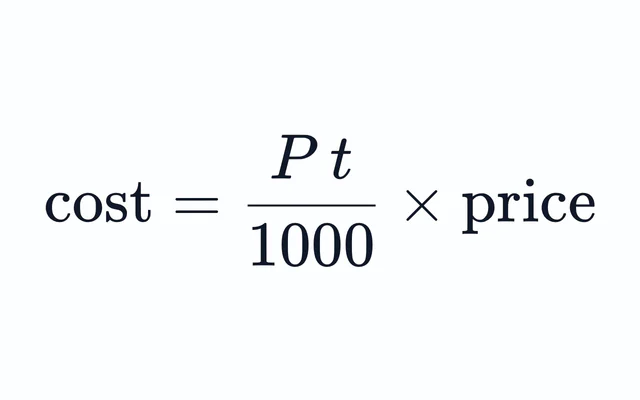
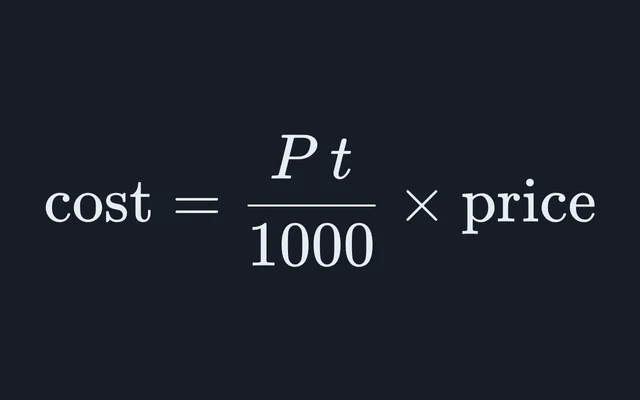
3.6 MJ, and it is the unit an electricity bill charges for. To turn the
energy into money, the electricity cost
calculator takes the same wattage, the hours of use per day and a price per kWh.
The charge readout, Q = It, gives a second route to the same energy: each coulomb
carries V joules through the load, so the energy is also QV.
AC power, rms values and power factor
Household supplies alternate, and their voltages are quoted as rms values: 120 V in the US and
Canada, 230 V in the UK and Australia. The rms value is the steady voltage that would deliver
the same average power to a resistor, so a 120 V supply swings to a peak of about 170 V.
Ratings and labels quote rms figures, and with rms voltage and current P = IV gives the average power of a resistive load such as a heater, a kettle or an
incandescent bulb.
Motors, compressors and the switch-mode power supplies in chargers and computers draw current
that is out of step with the voltage or arrives in pulses. Their real power is
V × I × power factor, where the power factor lies between 0 and 1, and the product
V × I alone is the apparent power, measured in volt-amperes (VA). A UPS label
often gives both, a VA rating and a lower watt rating.
Common mistakes
- Entering milliamps as amps. An LED drawing 20 mA entered as 20 A gives a power a thousand times too large. Choose mA in the unit menu, or convert to amperes first.
- Using the peak voltage. Take rms values for both factors in
P = IV. The 170 V peak of a 120 V supply times an rms current overstates the average power by a factor of √2, about 1.41. - Assuming a wattage holds at another voltage. A rating applies at the voltage it was rated for. On a different supply a heating element draws a different current, and its power changes with the square of the voltage for as long as its resistance holds.
- Confusing kW with kWh. The first is power and the second is energy. A 1 kW heater running for 3 hours uses 3 kWh, not 1.
Converting units first? Use the time, electric current, voltage and power conversion tables.
Worked examples
Each one runs through the calculator above, so the arithmetic here is the arithmetic it does.
How many amps does a 1500 watt heater draw on 120 volts?
- I = P / V
- = 1500 W / 120 V
- = 12.5 A
A heater is a resistive load with a power factor of 1, so dividing its watts by the volts gives the current exactly. A motor of the same wattage draws more, because its current is the power divided by the voltage and by its power factor.
What is the power of an LED drawing 20 mA at 3 V?
- P = I x V
- = 0.02 A x 3 V
- = 0.06 W
The milliamps become amps before the multiplication, as the working shows. Multiplying 20 by 3 gives 60, which is right only in milliwatts: milliamps times volts gives milliwatts, so keep each prefix with the unit it belongs to.
What voltage delivers 100 W at 5 A?
- V = P / I
- = 100 W / 5 A
- = 20 V
USB Power Delivery reaches 100 W this way, at 20 V and 5 A, rather than at the basic 5 V of USB, where the same power would need 20 A. Raising the voltage lets a thin cable carry more power, since the heat in the cable depends on the current through it.
Practise this with Electricity Practice Problems, questions generated from this calculator and 11 other calculators in Electricity.
Common questions
How do you convert watts to amps?
Divide the power by the voltage, I = P/V. A 1,500 W heater on a 120 V outlet draws 12.5 A, and a 1,500 W heater made for 230 V draws about 6.5 A. For AC loads with motors or electronics, divide by the power factor as well, because they draw more current than P/V.
Does P = IV work for AC circuits?
Yes for resistive loads such as heaters, kettles and incandescent bulbs, using the rms voltage and current that labels and meters give. Motors, compressors and electronic power supplies have a power factor below 1, so their real power is V × I × power factor, and V × I on its own is the apparent power in volt-amperes.
How many joules are in a kilowatt-hour?
Exactly 3.6 million. A kilowatt is 1,000 joules per second and an hour is 3,600 seconds, so 1 kWh is 1,000 × 3,600 = 3,600,000 J, or 3.6 MJ.
When should I use P = I²R instead of P = V²/R?
Both follow from P = IV and Ohm’s law and give the same power for the same resistor. Use I²R when you know the current through a resistance, such as a wire carrying a load, and V²/R when you know the voltage across it, such as a heater on a fixed supply. The load resistance this calculator reports lets you check either.