Solar Panel Output Calculator
Find solar panel output in kWh per day, month and year from panel watts, peak sun hours and PVWatts’s default 14% losses, plus what the energy is worth.
Calculator
The watts on the panel’s label or datasheet, its maximum power at standard test conditions. For a whole system rated in kW, choose kW and enter 1 panel.
How many panels of that rating, as a whole number. Solved for, it is rounded up, since one fewer would fall short.
The day’s sunlight on the panels in kWh/m², which equals the hours of full 1,000 W/m² sun it amounts to. PVWatts gives it by month for your address, tilt and direction. The 5 shown is only an example.
PVWatts’s default is 14: soiling, shading, snow, mismatch, wiring, connections, light-induced degradation, nameplate rating, age and availability, combined. Raise it for shade from trees or buildings. Leave out the inverter, which has its own field.
The inverter’s rated AC output over its DC input, from its datasheet. PVWatts assumes 96. Set 100 if your loss figure already includes the inverter.
From your bill, in any currency: 0.15 for 15 cents. The 0.20 shown is only an example. It is used only for the value readouts.
Delivered on an average day with the peak sun hours entered.
Working, with your numbers
- D = (1 − L / 100) x η / 100
- = (1 − 14 / 100) x 96 / 100
- = 0.8256
- E = P x N x PSH x D / 1000
- = 400 W x 10 x 5 h x 0.8256 / 1000
- = 16.512 kWh per day
Values are converted into the units the equation is worked in before the arithmetic.
- Energy per year Every day of a 365.25-day year at the sun hours entered, so enter the yearly average peak sun hours for a yearly total.
- 6031 kWh
- Energy per month An average month of 30.44 days at the sun hours entered. For one month, enter that month’s peak sun hours.
- 502.6 kWh
- Value per year The yearly energy at your price per kWh, in the currency of the price.
- 1,206.20 per year
- Value per month
- 100.52 per month
- System size The panels’ total rating at standard test conditions, the DC system size PVWatts asks for.
- 4 kW
- Derate The share of the panels’ rated output that reaches the meter: (1 − losses ÷ 100) × inverter efficiency ÷ 100. Heat losses in the cells are not in it.
- 0.8256
- Yearly yield per kW Yearly kWh for each kW of panel rating, the final yield of the IEC 61724 standard, which compares systems of any size.
- 1508 kWh/kW
Citing this tool
Last updated . Add the date you accessed it as well, which a citation of a page that can change asks for. If a specific result matters, cite the permalink from the tool’s share row instead of this page: it reproduces the exact parameters.
The equation
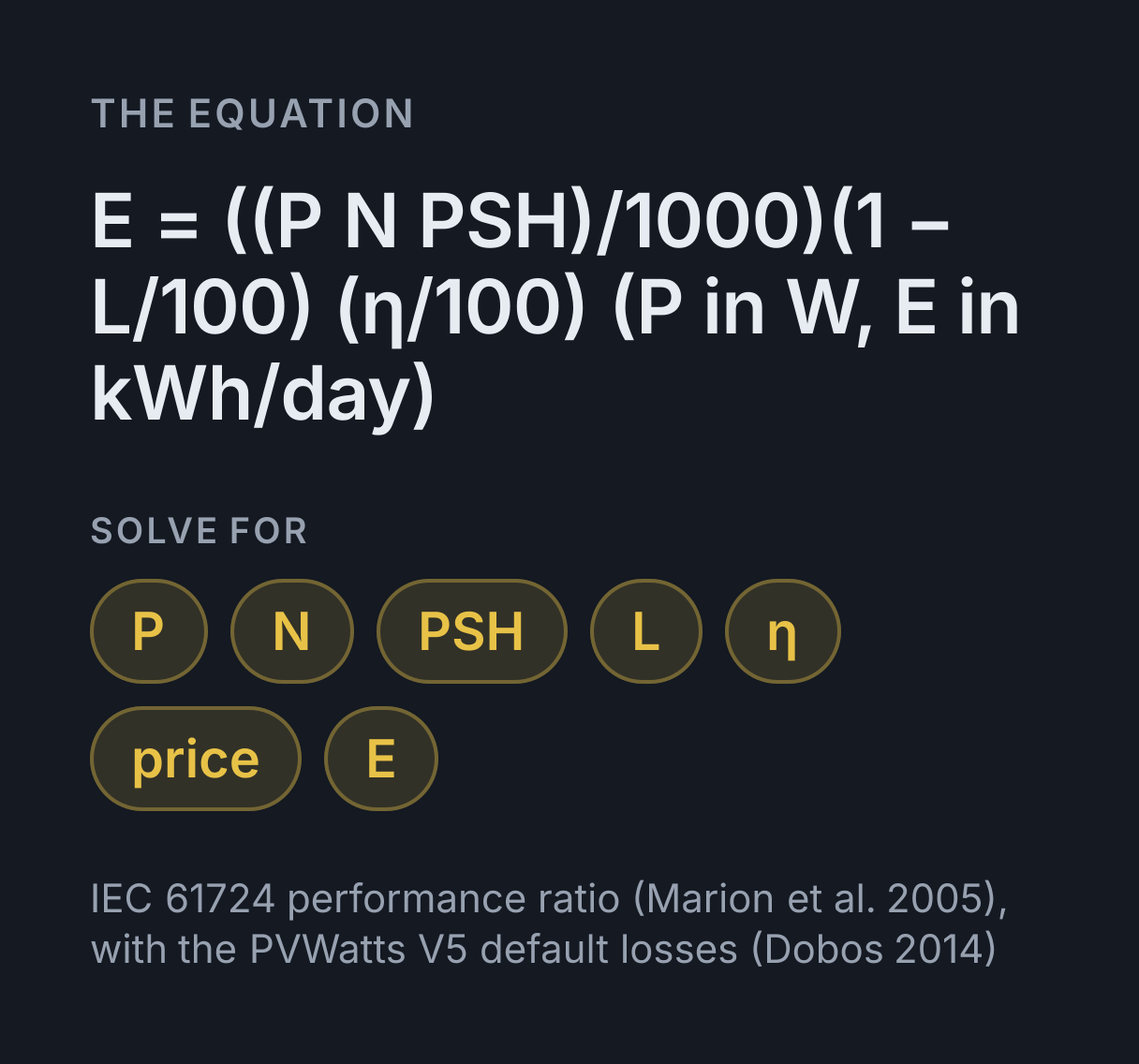
IEC 61724 performance ratio (Marion et al. 2005), with the PVWatts V5 default losses (Dobos 2014)
How do you calculate solar panel output?
Multiply the panel rating in watts by the number of panels and the peak sun hours, then by the derate for losses, and divide by 1,000 for kWh per day. PVWatts’s defaults, 14 percent system losses and a 96 percent efficient inverter, give a derate of 0.86 × 0.96 = 0.8256. Multiply by 30.44 for a month or 365.25 for a year.
What peak sun hours measure
The power of sunlight arriving on a surface is its irradiance, in watts per square meter. It climbs from nothing at dawn to a midday high, falls again toward sunset, and drops whenever cloud passes. Added up over a day it becomes the irradiation, in kWh/m². Panel ratings are measured at standard test conditions, 1,000 W/m² of sunlight with the cells at 25 °C, so a day that delivers 5 kWh/m² to the panels gives them as much energy as 5 hours of that standard sunshine would: 5 peak sun hours. The irradiation in kWh/m² per day and the peak sun hours are the same number.
The figure has to be for the plane of the panels. Sunlight on flat ground differs from sunlight on a panel tilted toward the sun, and a panel facing away from it collects less again. The IEC 61724 standard for monitoring solar systems calls this quantity the reference yield, and a system’s measured kWh divided by its rating and by the reference yield is its performance ratio, the measured counterpart of the derate used here.
Finding the peak sun hours for your address
The free PVWatts calculator, run by the US Department of Energy’s National Laboratory of the Rockies (formerly NREL), works them out. Enter an address, then the tilt of the panels and the direction they face, and its results list the solar radiation on the panels for each month and for the year in kWh/m²/day, calculated from typical-year weather data for that location. Those are the peak sun hours to enter here.
Sun hours change through the year, so use the yearly figure for the yearly output and a month’s figure for that month; a summer month’s value entered for a yearly total is that month repeated twelve times. PVWatts also gives its own monthly and yearly output, modeled hour by hour, and setting it beside the figure here shows how much the effects this calculator leaves out matter at that site.
Where the 14 percent comes from
PVWatts’s default system losses are 14 percent, from ten categories: soiling, shading, snow, mismatch between panels, wiring, connections, light-induced degradation, the nameplate rating, age and availability. They combine by multiplication, each one taking its share of what the others leave, so the defaults in the PVWatts Version 5 manual (Dobos 2014) add to 15 percent but come to 14, which leaves 0.86 of the output. The default shading loss assumes nothing close by casts a shadow, so raise the losses for nearby trees or buildings.
The inverter, which turns the panels’ direct current into the alternating current a home uses, sits outside the 14 percent: PVWatts gives it a separate efficiency, 96 percent by default, and so does this calculator. If you have one loss figure that already includes the inverter, such as the 0.77 derate of the first version of PVWatts, enter it as 23 percent losses with the inverter at 100, so the inverter is not counted twice.
What this estimate leaves out
Panels lose output as they heat up, and in sunshine their cells run hotter than the air. In PVWatts’s model a standard panel loses 0.47 percent of its power for every degree Celsius its cells are above the 25 °C its rating assumes. PVWatts also counts the extra sunlight the glass reflects when light strikes it at a glancing angle, and the inverter’s lower efficiency at part load, hour by hour. A daily total times a fixed derate includes none of these, so in hot, sunny months this calculator usually comes out above PVWatts for the same system.
From kWh to a month, a year and a bill
The month here is the average month, a twelfth of a 365.25-day year, so twelve monthly figures add up to the yearly one. The value readouts multiply the energy by your price per kWh, in whatever currency you type: 0.15 gives dollars and 15 gives cents. That value is a saving on the bill only where each kWh replaces one you would have bought at that price. Energy sent back to the grid may be credited at a different rate, so check how your utility credits it.
To set the output against what you use, the
electricity cost calculator turns an
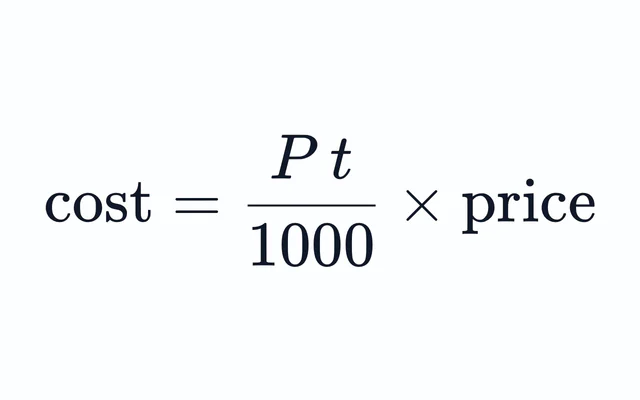
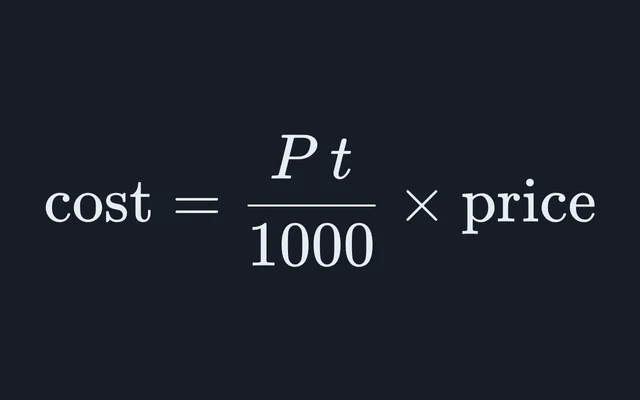
appliance’s watts and hours of use into kWh per day and a cost at the same price. A panel’s
rating is a power, as an appliance’s is, and the
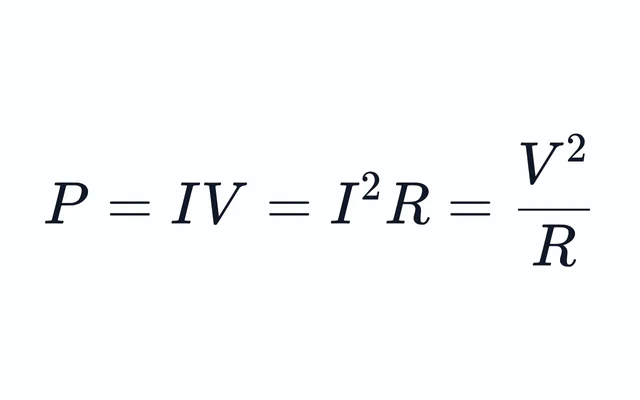
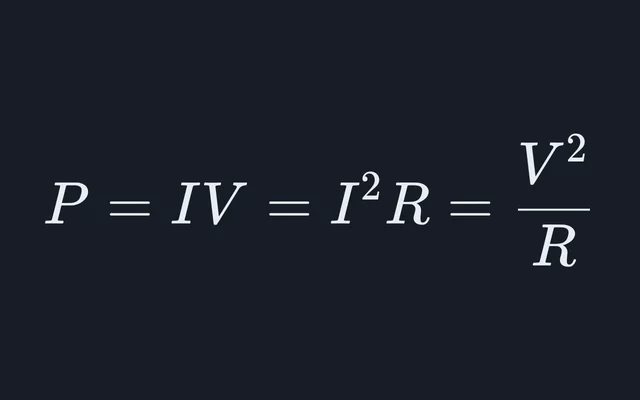
electrical power calculator works with
P = IV: the rating on a panel’s datasheet is its voltage at maximum power times its
current at maximum power.
Common mistakes
- Using hours of daylight as peak sun hours. The sun is below 1,000 W/m² for most of the day, so a day holds fewer peak sun hours than hours of daylight, and entering the hours of daylight overstates the output.
- Adding the loss percentages. Losses multiply: two losses of 10 percent leave 0.9 × 0.9 = 0.81 of the output, a loss of 19 percent, not 20.
- Treating kW and kWh as the same thing. A system’s kW rating is a rate. Ten 400 W panels make a 4 kW system, and at 5 peak sun hours with the default derate it delivers 16.51 kWh in a day.
- Multiplying by the panel area as well. The rating already includes the area and the efficiency: it is the area times 1 kW/m² times the efficiency. Multiplying the rating by the area again counts the area twice.
Converting units first? Use the power conversion table.
Worked examples
Each one runs through the calculator above, so the arithmetic here is the arithmetic it does.
How many kWh does a 400 watt solar panel produce per day at 5 peak sun hours?
- D = (1 − L / 100) x η / 100
- = (1 − 14 / 100) x 96 / 100
- = 0.8256
- E = P x N x PSH x D / 1000
- = 400 W x 1 x 5 h x 0.8256 / 1000
- = 1.6512 kWh per day
The rating times the sun hours, 400 W for 5 hours, is 2 kWh, what the panel would make with nothing lost. PVWatts’s default losses and a 96 percent inverter, a derate of 0.8256, bring it to 1.65 kWh, and hot cells in summer bring it lower still.
How many 400 W solar panels does it take to make 30 kWh a day at 5 peak sun hours?
- D = (1 − L / 100) x η / 100
- = (1 − 14 / 100) x 96 / 100
- = 0.8256
- N = 1000 x E / (P x PSH x D), rounded up
- = 1000 x 30 / (400 W x 5 h x 0.8256)
- = 30,000 / 1651.2
- = 18.17, rounded up to 19 panels
The division gives 18.17 panels, the 30 kWh divided by the 1.6512 kWh one panel makes. Panels come whole and 18 would fall short every day, so the answer is rounded up to 19, which make 31.37 kWh a day, a little more than asked for.
How many kWh a day does a 6 kW solar system make at 4.5 peak sun hours with a 0.77 derate?
- D = (1 − L / 100) x η / 100
- = (1 − 23 / 100) x 100 / 100
- = 0.77
- E = P x N x PSH x D / 1000
- = 6000 W x 1 x 4.5 h x 0.77 / 1000
- = 20.79 kWh per day
A derate quoted as one factor, as the first version of PVWatts gave it, goes in as losses of 100 minus its percentage, here 23, with the inverter at 100 so it is not counted twice. A system rated in kW goes in as one panel, with kW chosen in the unit menu.
Practise this with Electricity Practice Problems, questions generated from this calculator and 11 other calculators in Electricity.
Common questions
Why does a solar panel make less than its rated watts?
The rating is its output under standard test conditions: 1,000 W/m² of sunlight with the cells at 25 °C. Real sunlight is weaker for most of the day, and in sunshine the cells run hotter than 25 °C, which lowers their output. Dirt, shade, wiring and the inverter take a further share, which is what the derate here and the system losses in PVWatts account for.
How many solar panels do I need?
Divide the energy you want each day by what one panel makes in a day, its rating in kW times the peak sun hours times the derate, and round up, since one panel fewer falls short. Your daily use is on your electric bill: divide a month’s kWh by the days the bill covers. Solve for the number of panels here and the calculator does both steps.
What are peak sun hours?
The day’s solar energy on the panels in kWh per square meter, counted as hours of full 1,000 W/m² sunshine: 5 kWh/m² in a day is 5 peak sun hours. They depend on the location, the season and the tilt and direction of the panels, and they are fewer than the hours of daylight. PVWatts, the free calculator from the National Laboratory of the Rockies (formerly NREL), gives them by month for an address.
Why does the calculator use 14% system losses?
It is the PVWatts default, set out in the PVWatts Version 5 manual (Dobos 2014): soiling, shading, snow, mismatch, wiring, connections, light-induced degradation, nameplate rating, age and availability, combined by multiplication. The inverter is a separate 96 percent. Heat losses in the cells are not in the 14 percent either, because PVWatts models them hour by hour, and this calculator leaves them out. Change either field to match your system.