Boiling Point at Altitude Simulator
Carry a pot from the Dead Sea to Everest and watch water’s boiling point fall with air pressure, then seal a pressure cooker and push it to 121 °C.
Simulator
Drag the pot up the mountain or the rose line on the chart, and tap the pot for a pressure cooker’s lid. Keys: up and down move it 100 m, Page Up and Down 1,000 m, left and right set the gauge. Space plays and pauses.
A mountain from the Dead Sea to the summit of Everest, with the pot at sea level; the pot on its burner with a thermometer reading 100.0 °C; and a vapour-pressure chart, temperature across and pressure on a log scale up, where the air’s line at 101.3 kPa crosses water’s curve at 100.0 °C.
- Boiling point The temperature at which water’s vapour pressure equals the pressure on it, 101.3 kPa: 99.97 °C, found by halving a bracket on Hyland and Wexler’s equation. At sea level, 101.325 kPa, it is 99.97 °C.
- 100.0 °C, 212.0 °F
- Air pressure 101.3 kPa, 1013 hPa, 760 mmHg, 14.7 psi, 1 atm. The 1976 standard atmosphere at sea level, not today’s weather, which moves it by a few kPa.
- 101.3 kPa
- Oxygen in the air 20.95 percent of the dry air. Breathed in, the air is warmed to 37 °C and saturated with water vapour at 6.28 kPa, which does not fall with altitude, so the oxygen reaching the airways is 0.2095 × (p − 6.28 kPa) = 19.9 kPa. A demonstration of the air, not a measurement of anyone’s blood.
- 21.2 kPa, 100% of sea level
- Soft-boiled egg Williams’s formula for a 57 g egg at 4 °C, straight from the fridge, dropped into an open pan boiling at 100.0 °C: 4 min 32 s until the edge of the yolk reaches 63 °C. He notes that it under-predicts at altitude, where the egg cooks more slowly than the formula says.
- 4.5 min
- Boil drinking water for The CDC: “Bring clear water to a rolling boil for 1 minute (at elevations above 6,500 feet, boil for 3 minutes).” 6,500 ft is 1,981 m, where water boils at 93.4 °C. In an open pot, whatever the lid is doing.
- 1 minute
- Clausius-Clapeyron estimate 1/T = 1/T₀ − R ln(p/p₀)/ΔH with T₀ = 373.124 K at p₀ = 101.325 kPa and ΔH = 40.65 kJ/mol held constant, against 99.97 °C from the full saturation curve. It takes two shortcuts. Holding ΔH constant, when it really grows as water cools and shrinks as it heats, pulls the estimate low at every pressure. Treating steam as an ideal gas pulls it low below one atmosphere but high above it, and above it that wins.
- 100.0 °C, the same
A demonstration, not a diagnosis or a safety rule: the oxygen figures describe the air, not anyone’s blood. For drinking water follow the CDC’s advice, and for cooking times your cooker’s own instructions.
Other liquids at this pressure
- Water 100.0 °C
Tap a liquid to draw its curve on the chart. Antoine fits from the NIST Chemistry WebBook: each curve is dashed, and its reading marked extrapolated, beyond the temperatures its fit was made over.
- Water’s boiling point
- Oxygen in the air
- Breathed in, warmed and saturated
Citing this tool
Last updated . Add the date you accessed it as well, which a citation of a page that can change asks for. If a specific result matters, cite the permalink from the tool’s share row instead of this page: it reproduces the exact parameters.
The equation
Hyland and Wexler (1983) with the US Standard Atmosphere (1976)
Why does water boil at a lower temperature at higher altitude?
At higher altitudes atmospheric pressure is lower, because there is less air above pressing down. Water boils when its vapour pressure equals the pressure of the air on it, so it reaches that lower pressure at a lower temperature. From about 100 °C (212 °F) at sea level, the boiling point falls by about 1 °C for every 300 m of climb. In the standard atmosphere it is 70.2 °C on the summit of Everest; at the 33.7 kPa measured there, 71.8 °C.
Why water boils cooler up high
The pressure decides it through the bubbles. A bubble of steam inside the water is squeezed by the pressure the air puts on the water and held open by the molecules escaping into it, whose push is the vapour pressure, so it can form and survive only once that push matches the air’s. At sea level the air presses with 101.325 kPa, which water’s vapour pressure reaches at 99.97 °C. Less air overhead lowers the bar: water boils at 96.6 °C at 1,000 m, and on the summit of Everest the air presses with less than a third of sea level’s force.
The vapour-pressure chart on the stage is the whole argument in one picture. Each curve is a liquid’s vapour pressure against temperature, on a logarithmic scale so that a vacuum and a pressure cooker fit on the same chart. The rose line across it is the pressure on the pot. Water boils where that line crosses water’s blue curve, and every other liquid where it crosses its own. Carry the pot up the mountain and the line slides down the chart; seal the pot and a second line rises above it. Nothing about the water changes. Only the pressure does.
Using the simulator
The page opens on a pot climbing from sea level to the summit of Everest and back. Touch anything and the climb stops where it is. Drag the pot up and down the mountain, tap a place under the stage, or type an altitude in metres or feet. Drag the rose pressure line on the chart and the pot moves to the altitude with that pressure. Switch to typing any pressure, from 0.3 to 300 kPa, to boil water in a vacuum or to go below the triple point, where water can only be ice or vapour. Tap the pot to put a pressure cooker lid on it, then drag the dial or the valve weight. With the stage focused, the up and down arrow keys move the pot 100 m, Page Up and Page Down move it 1,000 m, and left and right change the cooker’s gauge.
The list under the readouts gives six other liquids’ boiling points at the same pressure, and a tap on one draws its curve on the chart. A switch adds the Clausius-Clapeyron estimate as a fine dashed line beside water’s curve. The plots below the stage give the boiling point and the oxygen in the air against altitude, and, with the lid on, the cooker’s temperature against its gauge; each downloads as data.
Boiling point at different altitudes
| Place | Altitude | Air pressure | Boils at | Soft-boiled egg | Boil water |
|---|---|---|---|---|---|
| Dead Sea shore | −440 m −1,444 ft | 106.72 kPa | 101.4 °C 214.6 °F | 4.4 min | 1 minute |
| Sea level | 0 m 0 ft | 101.33 kPa | 100.0 °C 212.0 °F | 4.5 min | 1 minute |
| Bengaluru | 920 m 3,018 ft | 90.75 kPa | 96.9 °C 206.4 °F | 4.9 min | 1 minute |
| Denver | 1,609 m 5,280 ft | 83.43 kPa | 94.6 °C 202.3 °F | 5.2 min | 1 minute |
| Mexico City | 2,240 m 7,349 ft | 77.16 kPa | 92.5 °C 198.5 °F | 5.5 min | 3 minutes |
| Leh | 3,500 m 11,483 ft | 65.78 kPa | 88.3 °C 190.9 °F | 6.2 min | 3 minutes |
| La Paz | 3,650 m 11,975 ft | 64.52 kPa | 87.8 °C 190.0 °F | 6.3 min | 3 minutes |
| Everest Base Camp | 5,364 m 17,598 ft | 51.47 kPa | 82.0 °C 179.7 °F | 7.6 min | 3 minutes |
| Everest summit | 8,849 m 29,032 ft | 31.50 kPa | 70.2 °C 158.4 °F | 13.0 min | 3 minutes |
For every 500 ft from sea level to 15,000 ft and every 250 m to 5,000 m, in °F and °C, see the boiling point of water by altitude chart.
Worked example: Denver and Everest
- The air pressure. Denver’s official elevation is one mile, 5,280 ft or 1,609 m. The 1976
standard atmosphere is written in geopotential height,
H = r₀z/(r₀ + z)with r₀ = 6,356,766 m, which here is still 1,609 m to the metre. Below 11 km it givesp = 101.325 (T/288.15)^5.255876 kPawithT = 288.15 − 0.0065H: 83.43 kPa in Denver, or 625.8 mmHg. - The boiling point. Water boils where its saturation pressure reaches 83.43 kPa. Hyland and Wexler’s equation for it cannot be turned round, so the simulator halves a bracket on the temperature until it is narrower than a ten-billionth of a degree: 94.62 °C, or 202.3 °F.
- Everest. On the summit, 8,849 m, the same steps give 8,837 m of geopotential height, 31.50 kPa or 236.2 mmHg, and a boiling point of 70.22 °C, 158.4 °F.
- The measured summit. In October 1981 a barometer on the summit read 253 mmHg, 33.73 kPa (West and colleagues, 1983). At these heights the pressure runs higher nearer the equator than the standard atmosphere allows, and Everest is at 28° N. At 33.73 kPa water boils at 71.82 °C, 1.6 °C hotter than the standard atmosphere says, and the season moves it as well: the same study found the pressure at the summit’s height about 11.5 mmHg higher in midsummer than in midwinter.
- The check. The textbook shortcut, the Clausius-Clapeyron equation with water’s heat of
vaporisation held at 40.65 kJ/mol, gives
1/T = 1/373.124 − 8.314 × ln(31.50/101.325)/40,650, so T = 342.58 K, or 69.43 °C: 0.80 °C low. About 0.5 °C of that is because the real heat of vaporisation grows as water cools, and 0.3 °C because steam is not quite an ideal gas: it takes about 1.5 percent less room than one at 100 °C, which makes the real curve steeper. Above one atmosphere the two pull opposite ways and the second wins, so in a 15 psi cooker the shortcut gives 121.14 °C, 0.19 °C high.
Inside a pressure cooker
A pressure cooker raises the boiling point instead of lowering it. Its lid seals, and a weighted valve stays shut until the steam inside pushes on it with more than its weight, so the steam is held at a fixed gauge pressure above the air outside. The usual top setting is 15 psi, 103.42 kPa. At sea level that makes the pressure inside 101.325 + 103.42 = 204.75 kPa, at which water boils at 120.95 °C, the 121 °C a laboratory autoclave sterilises at. 5 psi gives 108.39 °C and 10 psi 115.20 °C.
Because the valve holds the steam above the air outside, a cooker carried uphill cooks cooler. The same 15 psi gives 118.07 °C in Denver, 115.00 °C in Leh and 108.20 °C on the summit of Everest. To reach 120.95 °C again the gauge would have to read 17.6 psi in Denver and 20.2 psi in Leh, beyond the usual top setting, so follow the cooker’s own instructions at altitude. Cookers marked in kilograms per square centimetre work the same way: 1 kgf/cm², 98.07 kPa, gives 120.11 °C at sea level.
Other liquids and the vacuum
Every liquid has its own vapour-pressure curve, so every liquid has its own boiling point at each pressure.
The simulator draws six from fits of the Antoine equation, log₁₀(P/bar) = A − B/(T + C) with T
in kelvin, as the NIST Chemistry WebBook lists them. At one atmosphere they give 56.27 °C for acetone,
64.55 °C for methanol, 68.74 °C for n-hexane, 78.30 °C for ethanol, 82.24 °C for 2-propanol and 110.62 °C
for toluene, each within 0.12 °C of the WebBook’s average of the measured boiling points. On the summit of
Everest acetone boils at 25.7 °C, the temperature of a warm room, and ethanol at 51.4 °C.
Each fit holds only over the temperatures its measurements covered, so each curve is solid there and dashed beyond. 2-propanol’s was fitted from 56.8 °C up, so at the summit’s pressure, where it would boil at 55.8 °C, the reading is an extrapolation, and the table says so. Diethyl ether is left out altogether: the WebBook’s fit over 250 to 329 K gives 36.4 °C at one atmosphere against a measured 307.7 K, 34.55 °C.
Pumping the air away lowers the boiling point further than any mountain. At 3.17 kPa water boils at 25 °C, so a glass of water in a vacuum chamber boils at room temperature, and a rotary evaporator uses the same effect to boil solvents off gently. At 1 kPa water boils at 7.0 °C. Below 0.6117 kPa, the triple point, liquid water cannot exist at any temperature: ice turns straight to vapour instead, at −2.4 °C at 0.5 kPa, which is the principle of freeze-drying. Type a pressure below the triple point and the pot holds ice. For the other half of the phase diagram, melting and boiling at one atmosphere with the heat each takes, the heating curve calculator follows water from ice to steam, and the states of matter simulator shows the molecules doing it.
Cooking and safety at altitude
Food cooks more slowly up a mountain because the water around it is cooler, not because of anything else
about the air. Charles Williams’s formula for a soft-boiled egg treats the egg as a uniform sphere,
t = M^(2/3) c ρ^(1/3) / (K π² (4π/3)^(2/3)) × ln[0.76 (T_egg − T_water)/(T_yolk − T_water)],
ready when the edge of the yolk reaches 63 °C. For a 57 g egg from a 4 °C fridge it gives 4.54 minutes at sea
level, his “four and a half minutes”, 5.20 in Denver, 6.20 in Leh, 7.59 at Everest Base Camp and 13.0 on the
summit. In water no hotter than 63 °C the egg never sets, which in the standard atmosphere happens above
10,949 m.
Williams himself warns that this under-predicts at altitude. He quotes Dr Edward Brooks, who is reported to have said “It took me five minutes to cook a ‘three minute egg’” at the Mount Washington Observatory, 1,917 m, where water boils at 93.6 °C and the formula adds less than a minute, 5.34 minutes against 4.54. The yolk does not set at a single temperature but through reactions that run faster the hotter it is, so cooler water slows the cooking by more than one setting temperature allows.
For drinking water the CDC gives a time rather than a temperature: “Bring clear water to a rolling boil for 1 minute (at elevations above 6,500 feet, boil for 3 minutes).” 6,500 ft is 1,981 m, where water boils at 93.4 °C, so Bengaluru and Denver are on the 1-minute side, and Mexico City, Leh, La Paz and Everest Base Camp on the 3-minute side. The simulator gives the CDC’s time for an open pot at the elevation shown and goes no further: it is a demonstration of the physics, not food-safety or medical advice.
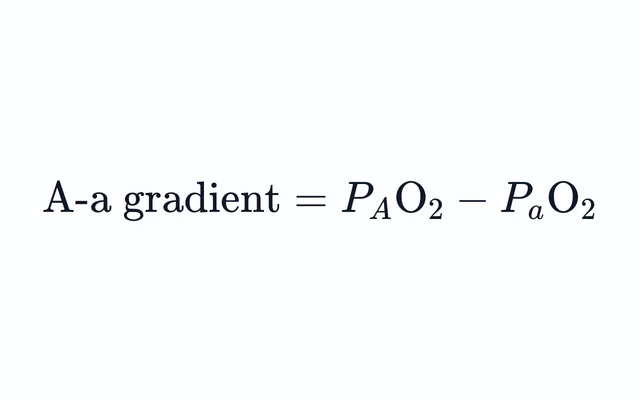
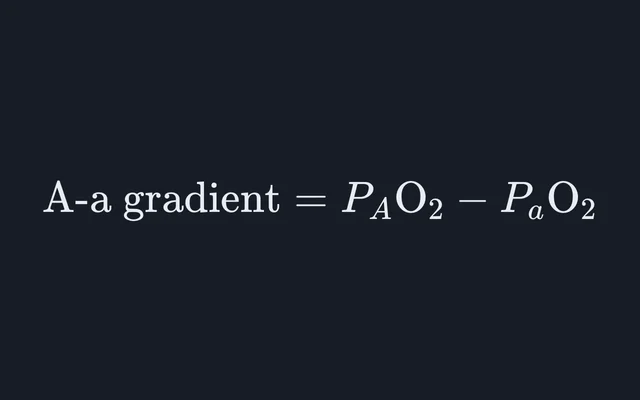
The oxygen in the air falls in step with its pressure, since oxygen is 20.95 percent of dry air at every altitude people reach. On the summit the air holds 6.60 kPa of oxygen, 31 percent of sea level’s. Breathed in, warmed to 37 °C and saturated with water vapour at 6.28 kPa, it leaves only 5.28 kPa, or 39.6 mmHg, of oxygen, and at West’s measured 253 mmHg, 43 mmHg. The A-a gradient calculator takes the next step, to the oxygen in the alveoli, and the oxygen dissociation curve simulator shows how much of it hemoglobin can carry at such pressures. At 6.28 kPa itself water boils at body temperature, 37 °C: the Armstrong limit, about 19.2 km up in the standard atmosphere. These are figures for the air, not measurements of anyone’s blood.
What the model leaves out
- The weather. The pressure is the 1976 standard atmosphere, an average, and real air differs from it by a few kilopascals from day to day and place to place. Near sea level each kilopascal moves the boiling point by about 0.28 °C, so weather that moves the pressure by a few kilopascals moves the boiling point by about a degree, and the summit of Everest boils water 1.6 °C hotter than the standard atmosphere says.
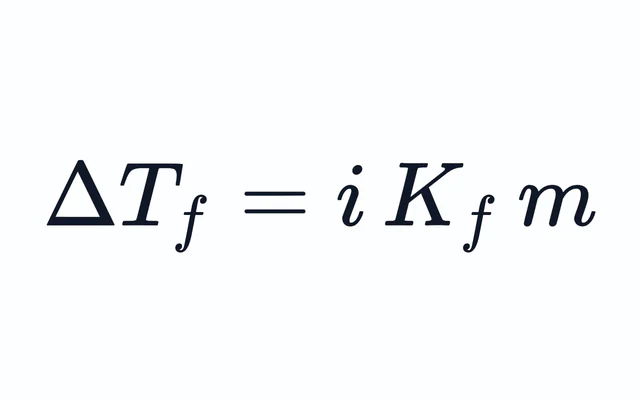
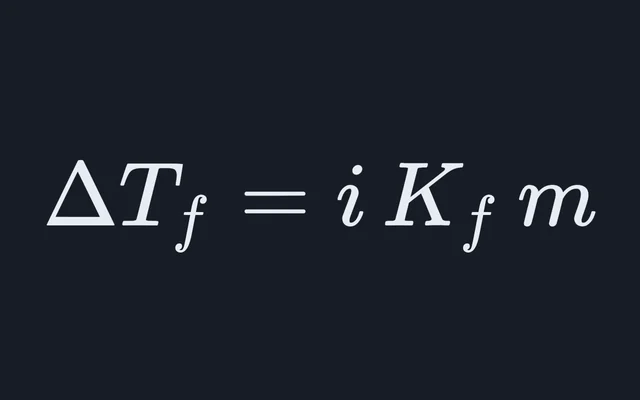
- What is dissolved. Salt and sugar raise the boiling point of what they are dissolved in. The freezing point depression calculator works out that boiling point elevation from the molality.
- The cooker’s real valve. The gauge setting is taken as the pressure the valve holds. A real valve lets steam out over a small range of pressures round its setting, and makers mark their cookers differently, so the simulator works in gauge pressure and makes no claim about any brand.
- How the pot gets there. The water is shown at its boiling point. How quickly it heats, and how hard it boils, depend on the burner and the pot, which the model leaves alone. The bubbles are drawn to the scale of the vapour’s volume, larger up a mountain and smaller in a cooker, but they are a picture, not a measurement.
- The fits. Water’s curve is Hyland and Wexler’s equation, the one the psychrometric chart explorer uses, which ASHRAE gives for −100 to 200 °C. The other liquids’ curves are fits to measurements over limited ranges, and extrapolations outside them.
- The egg. Williams’s formula treats an egg as a uniform sphere with one setting temperature. Real eggs vary in size, shape and freshness, and his own comparison suggests it under-predicts at altitude.
Common mistakes
- Saying water always boils at 100 °C. It boils at 99.97 °C at exactly one atmosphere, the figure the modern temperature scale gives, and at every other pressure somewhere else: 94.6 °C in Denver, 120.95 °C in a cooker at 15 psi.
- Turning the heat up to cook faster at altitude. Once water boils, more heat only boils it away faster. Its temperature stays at the boiling point, which is set by the pressure.
- Reading a cooker’s gauge as the pressure inside. A gauge reads the pressure above the air outside. The absolute pressure is the two added together, which is why the same 15 psi is cooler in Leh.
- Trusting Clausius-Clapeyron far from one atmosphere. With the heat of vaporisation held at its 100 °C value it is 0.80 °C low on Everest, and at 1 kPa it gives 2.7 °C against the real 7.0 °C.
- Confusing the two boiling points. Lower pressure lowers the boiling point; dissolved substances raise it. Searches for “boiling point elevation” are about the second, a property of solutions, and the freezing point depression calculator handles it.
Every pressure here converts through the site’s own factors; the pressure conversion table lists them all.
Model and assumptions
- Method
- Exact expression, no time stepping
- Repeatability
- Deterministic. The same link gives the same numbers on any machine.
What it assumes
- Water boils where its saturation pressure equals the pressure on it, from Hyland and Wexler’s 1983 equation, the same one the psychrometric chart uses.
- Air pressure follows the 1976 standard atmosphere, not today’s weather, with each altitude turned into geopotential height before the layer equations are applied.
- A pressure cooker holds a fixed gauge pressure above the air outside, so its absolute pressure is the air pressure plus the gauge setting.
- The other liquids follow the Antoine fits listed in the NIST Chemistry WebBook, and a reading is flagged whenever it falls outside the temperatures its fit was made over.
- The Clausius-Clapeyron estimate treats steam as an ideal gas and holds water’s heat of vaporisation at 40.65 kJ/mol, its value at 100 °C, at every pressure.
- Oxygen is 20.95 percent of dry air at every altitude, and the oxygen breathed in is counted after the air is warmed to 37 °C and saturated with water vapour.
- The egg is Williams’s uniform sphere dropped into water at the open pot’s boiling point, ready when the edge of its yolk reaches 63 °C.
- The bubbles, the steam and the flame come from a fixed seed and the scene’s clock, and no number on the page is read from them.
Where it stops holding. Weather, which moves the real pressure by a few kilopascals and the boiling point by about a degree; a cooker’s valve, which sets its pressure whatever its dial is marked; and dissolved salt or sugar, which raise the boiling point. The Freezing Point Depression Calculator is the right tool there.
Numerical accuracy
No time stepping, so nothing accumulates. The air pressure at an altitude and the altitude for a typed pressure, the cooker’s pressure, every other liquid’s boiling point, the Clausius-Clapeyron estimate, the oxygen, the egg and the CDC’s time are all closed forms, exact to rounding. Water’s boiling point is not: Hyland and Wexler’s equation cannot be solved for the temperature, so it is found by halving a bracket on the saturation curve until it is narrower than a ten-billionth of a degree, far finer than the hundredth of a degree the page prints, and below the triple point the same search on the curve over ice gives the frost point.
Converting units first? Use the pressure conversion table.
Constants used: Molar gas constant (R).
Common questions
What is the boiling point of water at my altitude?
Roughly 1 °C lower for every 300 m you climb near sea level: 99.97 °C at sea level, 96.6 °C at 1,000 m, 94.6 °C in Denver at 1,609 m, 92.5 °C in Mexico City at 2,240 m and 88.3 °C in Leh at 3,500 m, in the 1976 standard atmosphere. Set your altitude in metres or feet and the simulator finds the temperature at which water’s vapour pressure equals the air pressure there. The weather moves the real pressure by a few kilopascals, which shifts the boiling point by about a degree either way.
At what temperature does water boil on Mount Everest?
At about 70 °C. The standard atmosphere puts the summit, 8,849 m, at 31.50 kPa, where water boils at 70.22 °C. The real summit is usually a little less thin: in October 1981 a barometer there read 253 mmHg, 33.73 kPa, at which water boils at 71.82 °C. Either way the water is too cool for an egg to soft-boil in Williams’s four and a half minutes: his formula gives 13.0 minutes at 70.22 °C and 11.8 minutes at 71.82 °C.
How hot does a pressure cooker get?
About 121 °C at its usual top setting of 15 psi, at sea level. The valve holds the steam 15 psi, 103.42 kPa, above the air outside, so the pressure inside is 204.75 kPa absolute, and there water boils at 120.95 °C, the temperature an autoclave sterilises at. Lower settings give less: 5 psi gives 108.39 °C and 10 psi 115.20 °C. Up a mountain the same setting gives less again, because the air outside is thinner: 118.07 °C in Denver and 115.00 °C at Leh, 3,500 m.
Does food take longer to cook at high altitude?
Yes, whenever it cooks in boiling water, because the water is cooler. In Denver water boils at 94.6 °C, and Williams’s formula for a soft-boiled 57 g egg from the fridge gives 5.20 minutes against 4.54 at sea level; at Leh, where it boils at 88.3 °C, it gives 6.20 minutes, and at Everest Base Camp, 82.0 °C, 7.59. Turning the heat up does not help, since boiling water stays at its boiling point. A pressure cooker does, by raising the boiling point again.
Why does lower air pressure lower the boiling point?
Because water boils when its vapour pressure, the push of molecules escaping from it, reaches the pressure around it, so that bubbles of vapour can form inside it. Vapour pressure climbs steeply with temperature, so where the air presses less, water gets there sooner: at sea level that takes 99.97 °C, and at 50 kPa, the air about 5,580 m up, only 81.3 °C. On the simulator’s chart the air’s pressure is a horizontal line, and water boils where it crosses water’s curve.
At what temperature does water boil in a vacuum?
The lower the pressure, the lower the boiling point, down to 0.01 °C at the triple point. At 3.17 kPa water boils at 25 °C, room temperature, and at 1 kPa at 7.0 °C. Below 0.6117 kPa, the triple point, liquid water cannot exist at all: ice turns straight to vapour, at −2.4 °C at 0.5 kPa, which is the principle of freeze-drying. Water put into a hard vacuum boils, chills itself by boiling, and freezes.
How accurate is the Clausius-Clapeyron equation for boiling points?
Within a degree from Everest’s pressure up through a pressure cooker’s, and worse at lower pressures. With water’s heat of vaporisation held at its 100 °C value, 40.65 kJ/mol, it gives 69.43 °C on Everest against 70.22 °C from the full saturation curve, 0.80 °C low, and 121.14 °C in a 15 psi pressure cooker against 120.95 °C, 0.19 °C high. At 1 kPa it gives 2.7 °C against 7.0 °C. Two shortcuts make the error, and they add on Everest but pull against each other in the cooker. Holding the heat of vaporisation constant, when it grows as water cools and shrinks as it heats, pulls the estimate low at every pressure. Treating steam as an ideal gas pulls it low below one atmosphere but high above it, and in the cooker that wins.