Calories Burned Calculator
Estimate calories burned walking, running, cycling, swimming and more from 2024 Compendium MET values and your weight in lb or kg, with net calories.
Calculator
Compendium code 17200, 4.8 MET: Walking, 3.5 to 3.9 mph, level, brisk, firm surface, walking for exercise. 3.5 to 3.9 mph is 5.6 to 6.3 km/h.
Converted to kg at exactly 0.45359237 kg per lb.
Active time only. 90 minutes is 1.5 hours.
- Calories burned 729 kJ. Gross: it includes the 36 kcal your body would use at rest over the same 30 minutes. A food label Calorie is one kcal.
- 174 kcal
- Net calories, above rest Gross minus 1 MET, the resting rate, over the same time: the energy the activity added.
- 138 kcal
- Burn rate 5.8 kcal per minute at 4.8 MET and 72.6 kg.
- 348 kcal/h
- Intensity Light is below 3.0 MET, moderate 3.0 to 5.9 and vigorous 6.0 and above, as the Physical Activity Guidelines for Americans (2018) define them.
- Moderate
- Oxygen uptake MET × 3.5, since the Compendium defines 1 MET as 3.5 mL of oxygen per kg per minute.
- 16.8 mL/kg/min
- By MET × 3.5 × kg ÷ 200 per minute The Compendium’s oxygen form, at 5 kcal per litre of oxygen. It gives 5 percent more, and some calculators use it.
- 183 kcal
Working, with your numbers
- kg = 160 lb × 0.45359237 = 72.57 kg
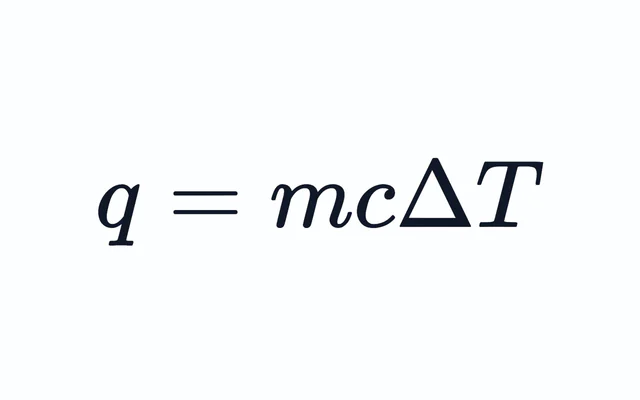
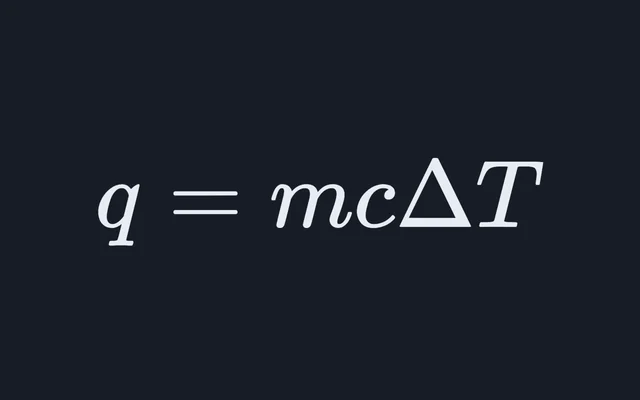
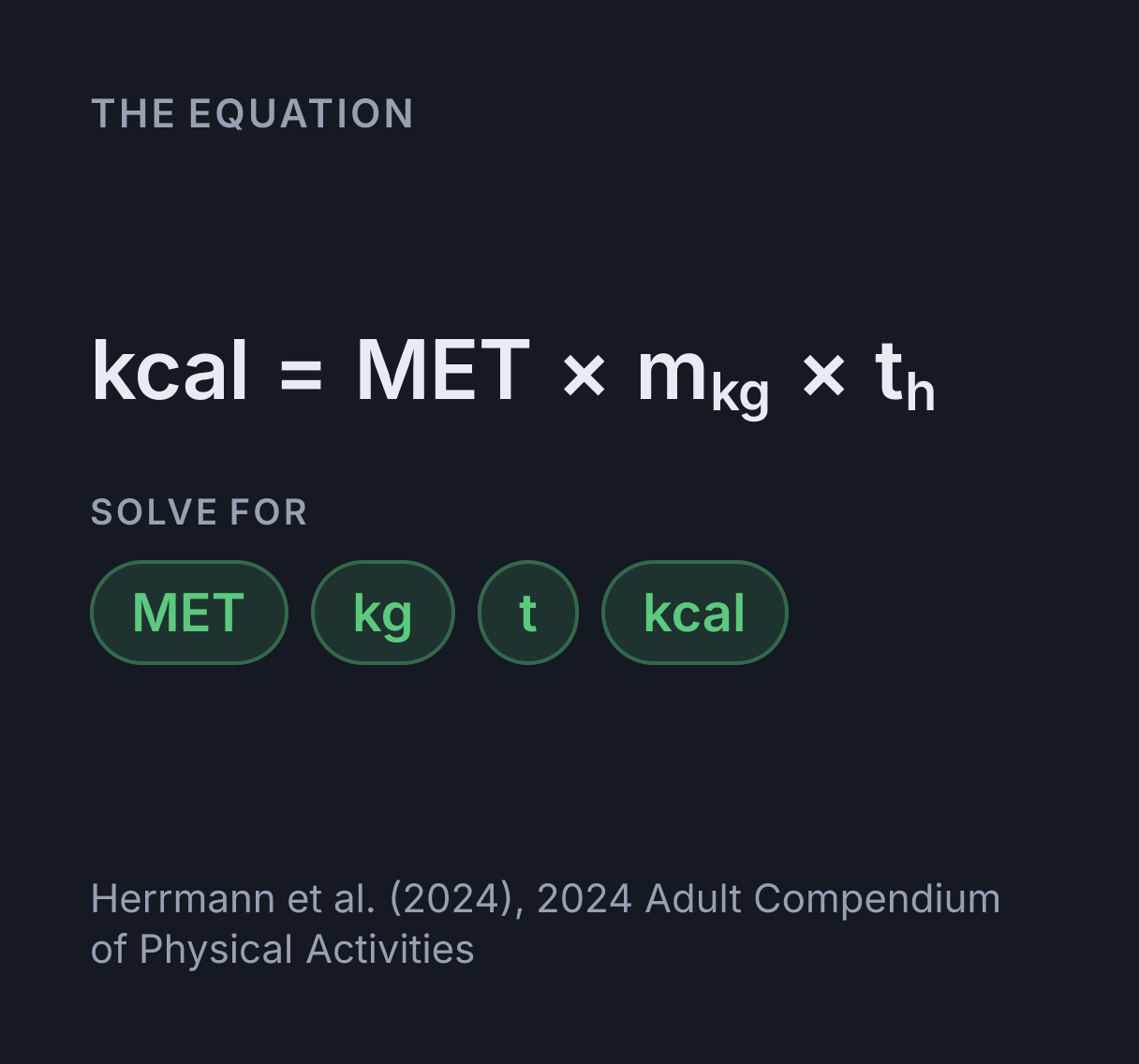
- kcal = MET × kg × hours
- = 4.8 × 72.57 × (30 ÷ 60)
- = 4.8 × 72.57 × 0.5
- = 174.2 kcal
- net kcal = (MET − 1) × kg × hours
- = (4.8 − 1) × 72.57 × 0.5
- = 137.9 kcal
One MET is 1 kcal per kg per hour, so MET × kg is the hourly burn and the hours turn it into an amount.
Citing this tool
Last updated . Add the date you accessed it as well, which a citation of a page that can change asks for. If a specific result matters, cite the permalink from the tool’s share row instead of this page: it reproduces the exact parameters.
The equation
Herrmann et al. (2024), 2024 Adult Compendium of Physical Activities
How do you calculate calories burned?
Multiply the activity’s MET value by your body weight in kilograms and by the time in hours: calories = MET × kg × hours. One MET is about 1 kcal per kilogram per hour, the rate at rest. Brisk walking is 4.8 MET, so a 160 lb (72.6 kg) person walking briskly for 30 minutes burns about 174 kcal.
What a MET measures
A MET, the metabolic equivalent of task, states an activity’s energy cost as a multiple of sitting quietly. The Compendium of Physical Activities defines one MET as an oxygen uptake of 3.5 mL per kilogram of body weight per minute. At about 5 kcal per litre of oxygen that is 1.05 kcal per kilogram per hour, which the Compendium rounds to 1, and that rounding is what lets the formula multiply straight through by weight and time. Running at 10 mph is 14.8 MET: nearly fifteen times the resting rate, for every kilogram.
The values here are from the 2024 Adult Compendium (Herrmann and colleagues, Journal of Sport and Health Science, 2024), which lists 1,114 activities for adults aged 19 to 59, 912 of them with values measured by indirect calorimetry and 202 estimated. Each activity in the menu shows its Compendium code, so you can find the row on the Compendium’s own site.
Gross and net calories
The headline figure is gross: everything your body used during the activity, including what it
would have used sitting still. Net calories subtract that resting share, one MET over the same
time, which leaves (MET − 1) × kg × hours. For the brisk walk above, 174
kcal gross is 138 kcal net.
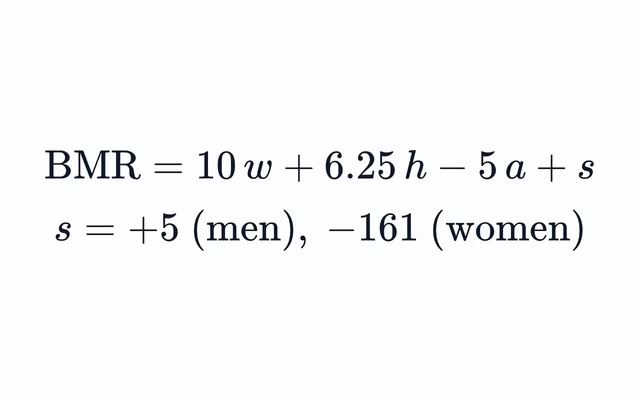
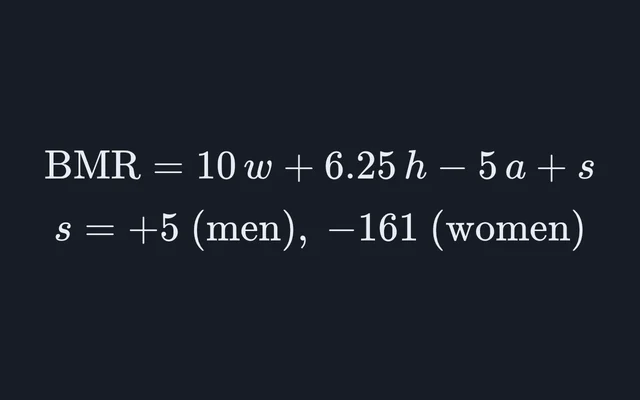
The gap matters most for light activity. Walking at 2.5 mph is 3.0 MET, so only 67 percent of its gross calories are extra; at 10 mph running the share is 93 percent. When you set exercise against food, net is the fair number, because the resting calories are already part of what you burn every day, which is what a BMR calculator estimates.
Why calculators and fitness trackers disagree
- Two forms of the same formula. Some calculators use
kcal per minute = MET × 3.5 × kg ÷ 200, which skips the rounding to 1 kcal per kilogram per hour and so gives 5 percent more. The calculator shows both. - Different editions of the Compendium. Jogging, general, was 7.0 MET in the 2011 Compendium and is 7.5 in 2024; running at 6 mph went from 9.8 to 9.3. A calculator still on the 2011 values can differ by that much for the same session.
- Trackers use their own models. A watch estimates energy from your heart rate and movement, and a gym machine from its speed, resistance or power, each with the manufacturer’s own equations and whatever you told it about yourself. Neither its number nor this one is a measurement.
How much your own body changes the answer
The Compendium was built to give research questionnaires a common scale of intensity, and its authors say plainly that it was not designed to give the precise energy cost of an activity for one person. A standard MET assumes everybody rests at 3.5 mL/kg/min. Kozey and colleagues (Journal of Physical Activity and Health, 2010) measured resting and activity oxygen uptake in 252 adults and found activity METs averaged 0.51 MET above the standard values, with the largest errors in older, overweight and less fit people.
Their correction divides by your own predicted resting rate instead:
corrected MET = MET × 3.5 ÷ resting VO₂, with the resting oxygen uptake in
mL/kg/min worked out from the Harris-Benedict equation, which needs your age, height and sex.
Adults aged 60 and over have an Older Adult Compendium of their own, built on a resting value of
2.7 mL/kg/min, and children and teenagers a separate Youth Compendium (Butte and colleagues,
2018). This calculator uses the adult values for everyone, so treat its answer as an estimate
for a typical adult rather than a reading of your metabolism.
Light, moderate and vigorous activity
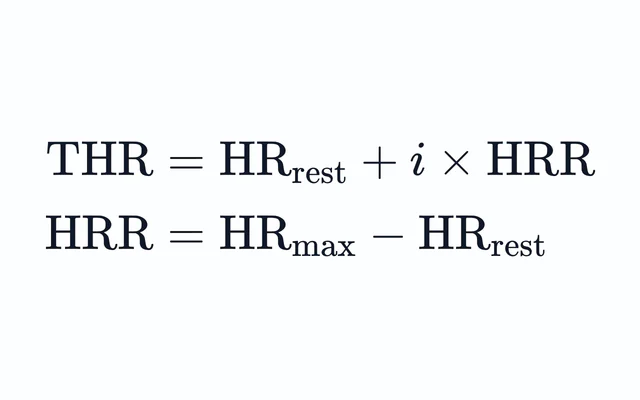
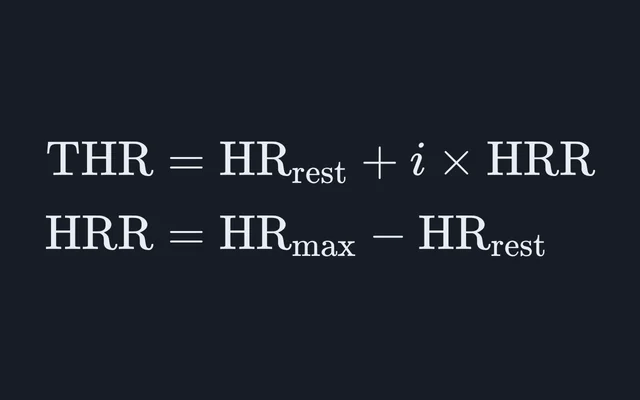
The Physical Activity Guidelines for Americans (2nd edition, 2018) class activity below 3.0 MET as light, 3.0 to 5.9 as moderate and 6.0 and above as vigorous, and recommend that adults get at least 150 to 300 minutes of moderate aerobic activity a week, or 75 to 150 minutes of vigorous activity, or an equivalent mix. The intensity readout uses those bands. They are fixed MET values, so the same jog counts as vigorous for everyone; heart rate is the personal measure of how hard it is for you, and a target heart rate calculator turns it into training zones.
Common mistakes
- Entering pounds as kilograms. 160 typed into the kilogram box gives 384 kcal for the brisk half hour instead of 174, which is 2.2 times too much and still looks plausible. Pick the unit first.
- Counting the breaks. Downhill skiing’s 6.3 MET is for active time only, so a day on the slopes should count the runs, not the lift rides. The same holds for the pauses in a game or between sets.
- Adding gross calories on top of a daily total. A daily energy estimate already includes resting energy, so adding gross exercise calories to it counts the resting share twice. Add net calories instead.
- Typing hours into the minutes box. An hour and a half is 90 minutes, not 1.5.
Worked examples
Each one runs through the calculator above, so the arithmetic here is the arithmetic it does.
How many calories does a 200 lb person burn running at 6 mph for 30 minutes?
- kcal = MET × kg × hours
- = 9.3 × 90.72 × (30 ÷ 60)
- = 9.3 × 90.72 × 0.5
- = 421.8 kcal
Pounds go to kilograms first, 200 lb to 90.72 kg, because a MET is a rate per kilogram. Running at 6 mph, a 10 minute mile, is 9.3 MET in the 2024 Compendium. Of the 421.8 kcal, 45.4 kcal is what the same half hour at rest would have used, so the run added 376.5.
How long do you have to walk briskly to burn 300 calories?
- t = 60 × kcal ÷ (MET × kg)
- = 60 × 300 ÷ (4.8 × 72.57)
- = 18,000 ÷ 348.4
- = 51.67 min
Solved for time: brisk walking burns 348.4 kcal an hour at 160 lb, so 300 kcal takes just under 52 minutes. Only 237.5 kcal of that is above what sitting still would have used, since net counts 3.8 of the 4.8 MET, and net is the figure to set against 300 food Calories.
What MET value burns 500 calories in 45 minutes at 70 kg?
- MET = 60 × kcal ÷ (kg × t)
- = 60 × 500 ÷ (70 × 45)
- = 30,000 ÷ 3150
- = 9.524 MET
Working backward from a measured burn gives the intensity. 9.52 MET is vigorous, well above the 6.0 line in the Physical Activity Guidelines for Americans, and close to running at 6 mph (9.3) or a spin class (9.0) in the 2024 Compendium.
Practise this with Lab and Clinical Calculation Practice Problems, questions generated from this calculator and 20 other calculators in Biology.
Common questions
How many calories does walking for 30 minutes burn?
It depends on your weight and your pace. Brisk walking at 3.5 to 3.9 mph is 4.8 MET in the 2024 Adult Compendium, so 30 minutes burns about 174 kcal at 160 lb and about 218 kcal at 200 lb. A slower walk at 2.5 mph is 3.0 MET, which is about 109 kcal for the same half hour at 160 lb.
What is the difference between gross and net calories burned?
Gross calories are everything your body used during the activity, including the energy it would have used sitting still. Net calories subtract that resting share, one MET over the same time, so net kcal = (MET − 1) × kg × hours. Use net when you set exercise against food, because resting energy is already part of what you burn every day.
What does MET mean?
MET stands for metabolic equivalent of task: an activity’s energy cost as a multiple of resting. The Compendium of Physical Activities defines 1 MET as 3.5 mL of oxygen per kilogram of body weight per minute, about 1 kcal per kilogram per hour. Running at 10 mph is 14.8 MET, nearly fifteen times the resting rate.
Why does my fitness tracker show a different number?
It uses a different model. A watch estimates energy from your heart rate and movement with the manufacturer’s own equations, while this calculator uses one standard MET value per activity and assumes everyone rests at 3.5 mL/kg/min. Kozey and colleagues found in 2010 that this assumption put activity METs 0.51 MET below measured values on average, most of all in older, overweight and less fit adults.
Which version of the Compendium does this calculator use?
The 2024 Adult Compendium of Physical Activities by Herrmann and colleagues, which covers adults aged 19 to 59. Some values changed from the 2011 edition: jogging, general, went from 7.0 to 7.5 MET and running at 6 mph from 9.8 to 9.3, so a calculator still on the 2011 list can give a different answer. Adults aged 60 and over have a separate Older Adult Compendium.