Continuity Equation Calculator
Solve A₁v₁ = A₂v₂ for the flow speed or area at either section of a pipe, with the volume flow rate in m³/s, L/s and US gallons per minute.
Calculator
For a round pipe, A = πd²/4: a 1 in bore is 0.785 in² (5.07 cm²).
The mean speed over the section: the volume flow rate divided by the area.
In a pipe that branches, the total area of all the branches.
Working, with your numbers
- v2 = A1 x v1 / A2
- = 0.002 m2 x 1.5 m/s / 0.0005 m2
- = 0.003 m3/s / 0.0005 m2
- = 6 m/s
Values are converted into the units the equation is worked in before the arithmetic.
- Volume flow rate, Q = A₁v₁ The same at both sections: A₂v₂ gives the same number.
- 0.003 m³/s
- Flow rate in L/s
- 3 L/s
- Flow rate in gpm
- 47.55 US gal/min
- Speed ratio, v₂/v₁ Equal to the area ratio A₁/A₂: halve the area and the speed doubles.
- 4
- Diameter at 2, if round d = √(4A/π). That is 0.9934 in.
- 2.523 cm
Citing this tool
Last updated . Add the date you accessed it as well, which a citation of a page that can change asks for. If a specific result matters, cite the permalink from the tool’s share row instead of this page: it reproduces the exact parameters.
On the syllabus: AP Physics 1, Unit 8: Fluids; MCAT, 4B: Importance of fluids for the circulation of blood, gas movement, and gas exchange.
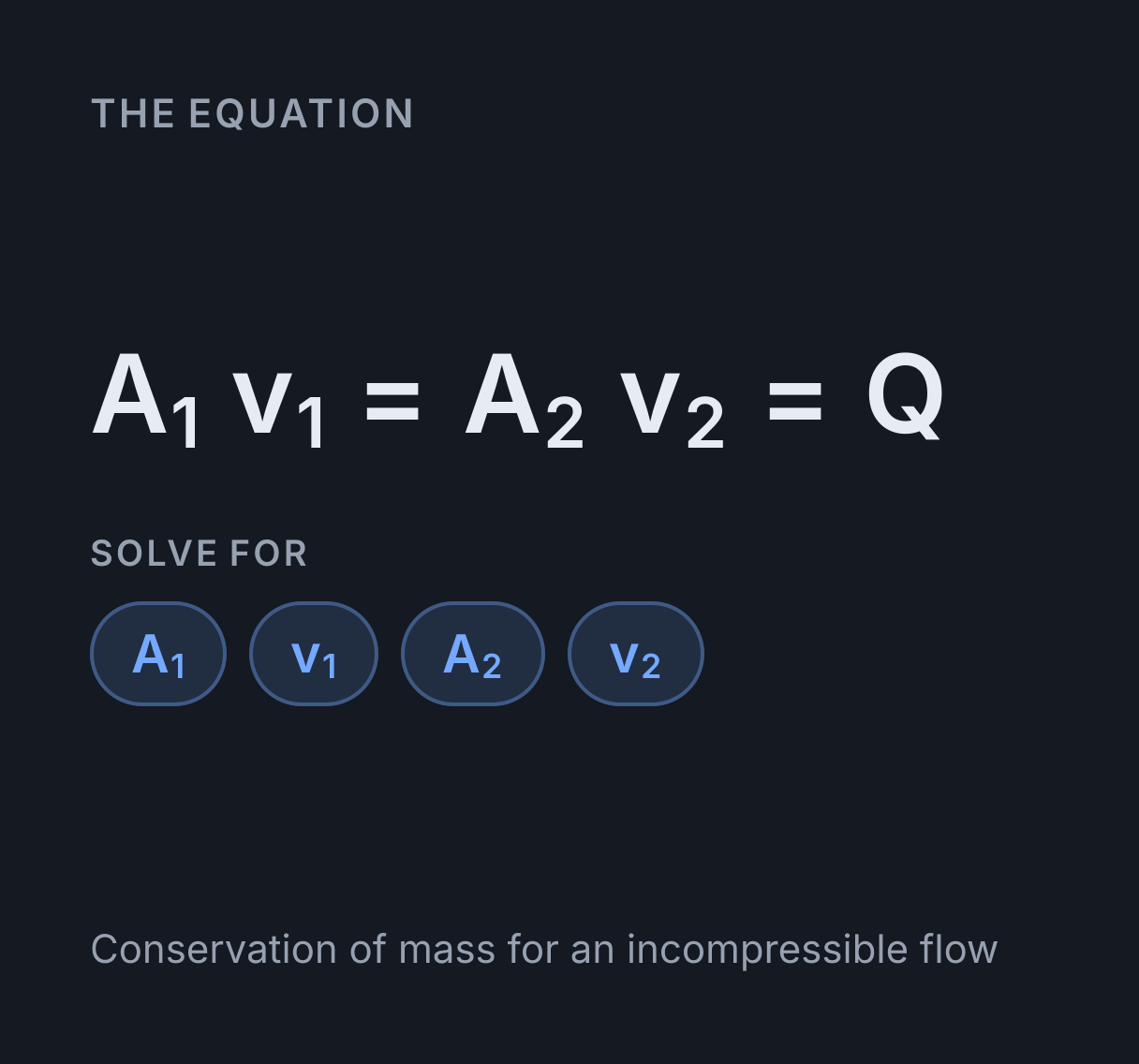
The equation
Conservation of mass for an incompressible flow
What is the continuity equation?
The continuity equation is A₁v₁ = A₂v₂: for an incompressible fluid in steady flow, the cross-sectional area A (m²) times the mean flow speed v (m/s) is the same at every section of a pipe. That product is the volume flow rate, Q = Av, in m³/s, so a narrower section carries faster flow.
Why area times speed is conserved
In a time t the fluid crossing a section fills a length vt of the
pipe, a volume Avt, so Av is the volume passing each second. In
steady flow nothing builds up between two sections, so the mass entering one each second
must leave through the other: ρ₁A₁v₁ = ρ₂A₂v₂. A liquid keeps the same density
throughout, the densities cancel, and what is left is the equation above. It is
conservation of mass, nothing more, which is why it holds whatever the pipe is made of and
whether or not the flow loses energy to friction.
The calculator solves for any one of the four quantities and reads the flow rate off the first section, in m³/s, in L/s and in US gallons per minute. One US gallon is exactly 3.785411784 L, so 1 L/s is 15.85 gpm, the unit pumps, faucets and fire hoses in the US are rated in.
Area, diameter and speed
The equation is written in areas, but pipes are sold by diameter. A round bore has
A = πd²/4, so the speed changes with the square of the diameter ratio: halve the
diameter and the area is a quarter, so the speed is four times as fast. The calculator’s
starting values are exactly that case, 20 cm² narrowing to 5 cm², and the last readout gives
the diameter of a round pipe with the second area, which is the number needed to choose a
nozzle.
Where a pipe divides, the area that counts is the total of all the branches. That is why blood slows down in the capillaries even though each capillary is far narrower than the aorta: there are so many of them in parallel that their combined cross section is roughly a thousand times larger, and the same flow through it moves about a thousand times more slowly.
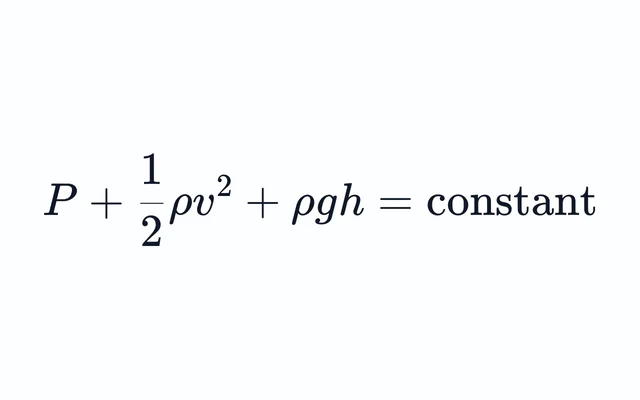
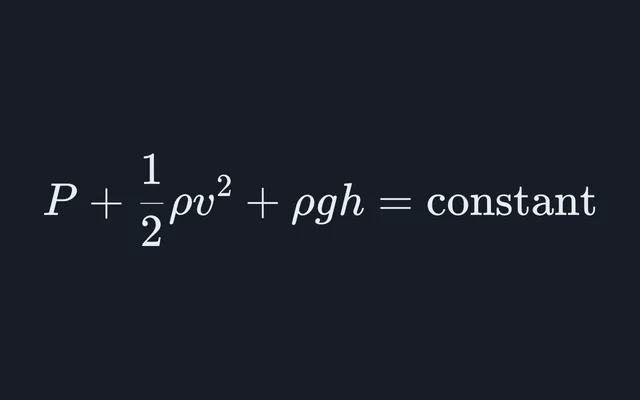
From speed to pressure
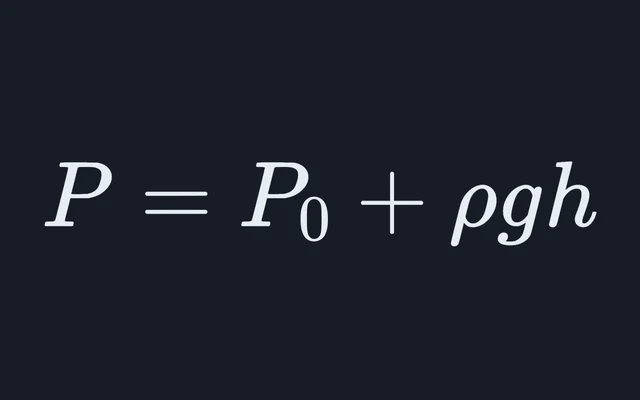
Continuity gives the speeds but says nothing about what drives them. The
Bernoulli equation calculator takes the
two speeds and returns the pressure change between the sections, which is how a Venturi
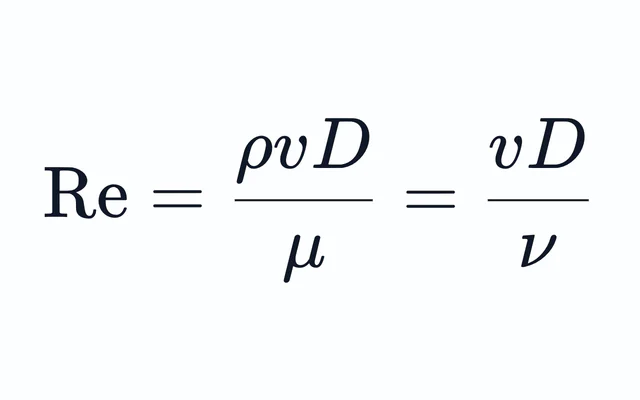
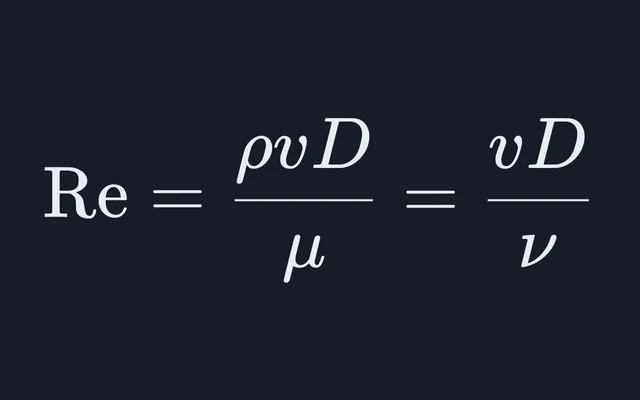
meter turns a pressure reading into a flow rate. Whether the flow is smooth or turbulent at
a given speed is a separate question, answered by the
Reynolds number, and a pressure difference
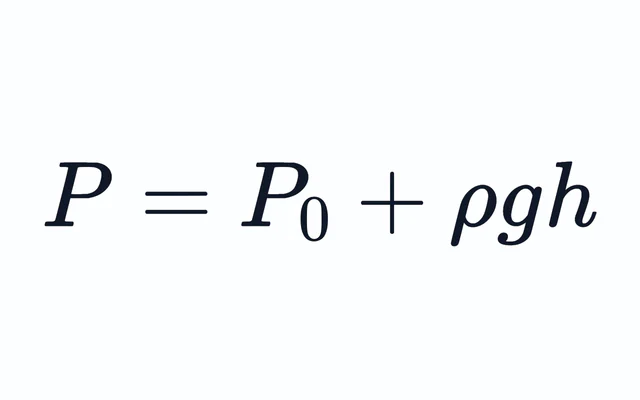
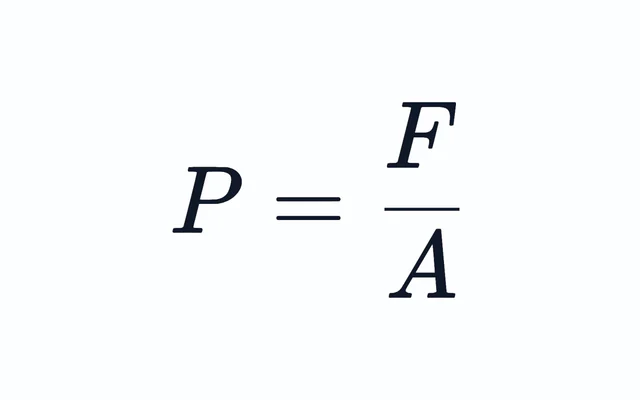
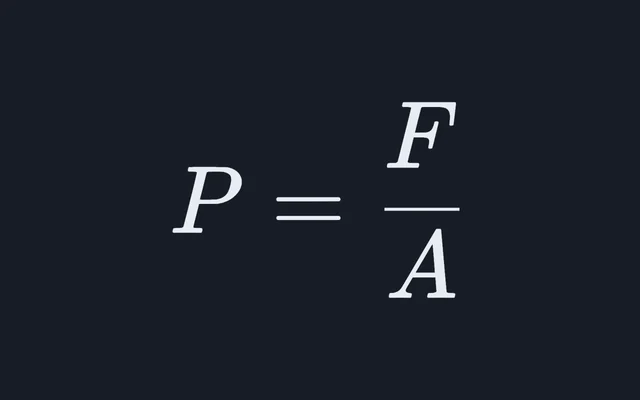
becomes a force on a surface through F = PA in the
pressure calculator.
Common mistakes
- Using the diameter ratio instead of its square. A pipe half as wide has a quarter of the area, not half, so the flow in it is four times faster, not twice.
- Mixing cm² and m². 1 m² is 10,000 cm², not 100. The area menus convert both fields, and the speed ratio needs no conversion at all, since the units of the two areas cancel.
- Applying it to a fast gas. A gas compressed or expanded along the flow
changes density, and then
ρAvis conserved, notAv. - Using the speed on the pipe’s axis. The equation needs the mean speed over the section. In smooth, laminar pipe flow the speed on the axis is twice the mean.
Converting units first? Use the area and speed conversion tables.
How to calculate flow speed with the continuity equation
- Write down the formula:
v₂ = A₁v₁ ÷ A₂ -
Gather the values it needs. The calculator above starts with these:
- Cross-sectional area at 1: A₁ = 20 cm²
- Flow speed at 1: v₁ = 1.5 m/s
- Cross-sectional area at 2: A₂ = 5 cm²
-
Substitute them and work through the arithmetic:
- v2 = A1 x v1 / A2
- = 0.002 m2 x 1.5 m/s / 0.0005 m2
- = 0.003 m3/s / 0.0005 m2
- = 6 m/s
-
To find one of the other values instead, rearrange the formula for it:
- Cross-sectional area at 1:
A₁ = A₂v₂ ÷ v₁ - Flow speed at 1:
v₁ = A₂v₂ ÷ A₁ - Cross-sectional area at 2:
A₂ = A₁v₁ ÷ v₂
- Cross-sectional area at 1:
Worked examples
Each one runs through the calculator above, so the arithmetic here is the arithmetic it does.
How fast does water leave a 0.5 in² nozzle fed by a 3 in² hose at 4 ft/s?
- v2 = A1 x v1 / A2
- = 0.0019355 m2 x 1.2192 m/s / 0.00032258 m2
- = 0.0023597 m3/s / 0.00032258 m2
- = 7.3152 m/s
24 ft/s, six times faster, because the nozzle has a sixth of the area. Only the ratio of the areas matters, so they can stay in square inches. The flow rate is another matter: it needs real units, and comes to 37.4 US gal/min, 2.36 L/s.
What nozzle area turns a 1 m/s flow through 10 cm² into a 15 m/s jet?
- A2 = A1 x v1 / v2
- = 0.001 m2 x 1 m/s / 15 m/s
- = 0.001 m3/s / 15 m/s
- = 6.6667 × 10⁻⁵ m2 = 0.66667 cm2
0.667 cm², a round nozzle 9.2 mm across. The area falls in proportion to the speed, but the diameter only with its square root: fifteen times the speed needs a bore about 3.9 times narrower, √15, not fifteen times narrower.
Practise this with Mechanics Practice Problems, questions generated from this calculator and 18 other calculators in Mechanics.
Common questions
How do I find the flow speed from a flow rate?
Divide the flow rate by the area, v = Q/A, with both in SI units. 1 L/s through a 5 cm² pipe is 0.001 m³/s over 0.0005 m², which is 2 m/s. In US units, 10 gallons per minute through a 1 in bore, 0.785 in², is about 4.08 ft/s. The calculator reads Q off the speed and area at the first section, so to start from a flow rate, find v₁ this way first.
Does the continuity equation work for gases?
In the form ρ₁A₁v₁ = ρ₂A₂v₂ it always does, since that is conservation of mass. The simpler A₁v₁ = A₂v₂ needs the density to stay the same, which for air is a good approximation below about 100 m/s and fails where the gas is strongly compressed or expands, as in a rocket nozzle or a jet engine. Air in a ventilation duct is well inside the simple form.
What is the difference between volume flow rate and mass flow rate?
Volume flow rate, Q = Av, is the volume passing a section each second, in m³/s or L/s. Mass flow rate is the mass per second, ρQ, in kg/s. For water at 20 °C, 998 kg/m³, 1 L/s is 0.998 kg/s, so for water the two numbers nearly match when Q is in L/s. For a gas they differ widely, and it is the mass flow rate that stays the same along a pipe.