Mammillary body
The mammillary bodies lie on the underside of the brain and mark the posterior boundary of the hypothalamus. (Neuroscience Online, Hypothalamus: Structural Organization)
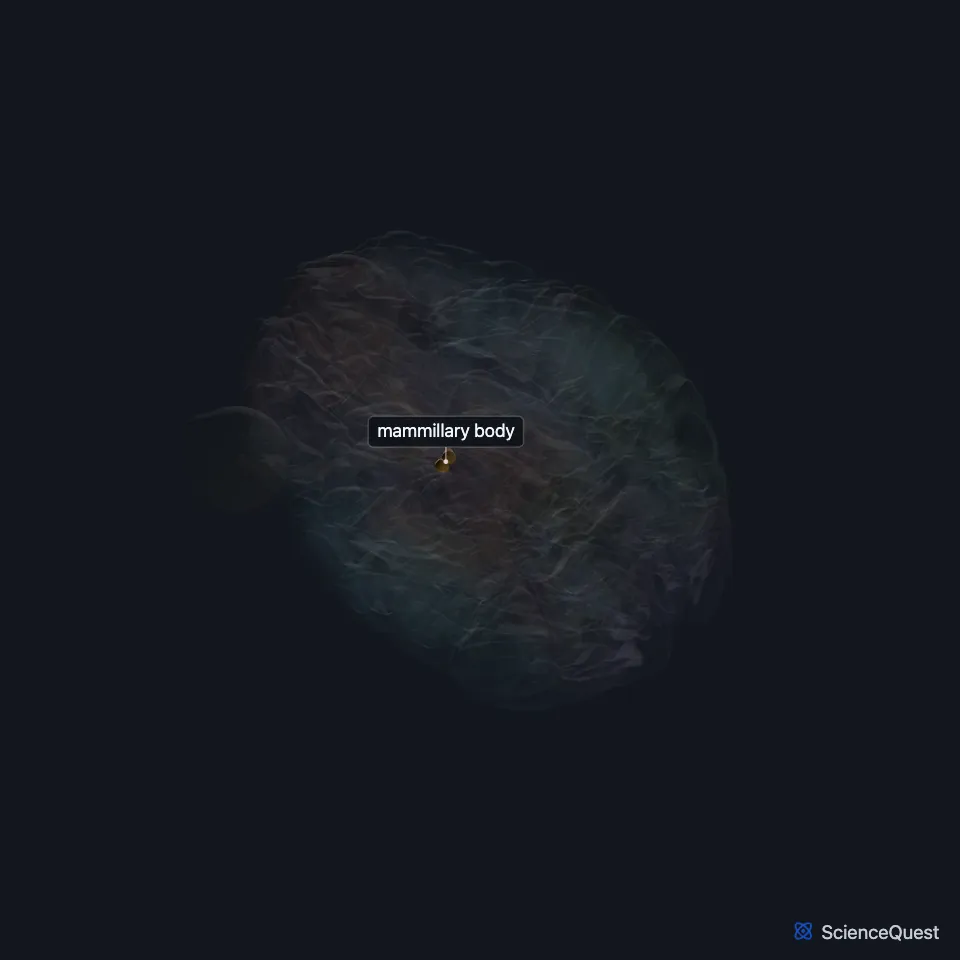
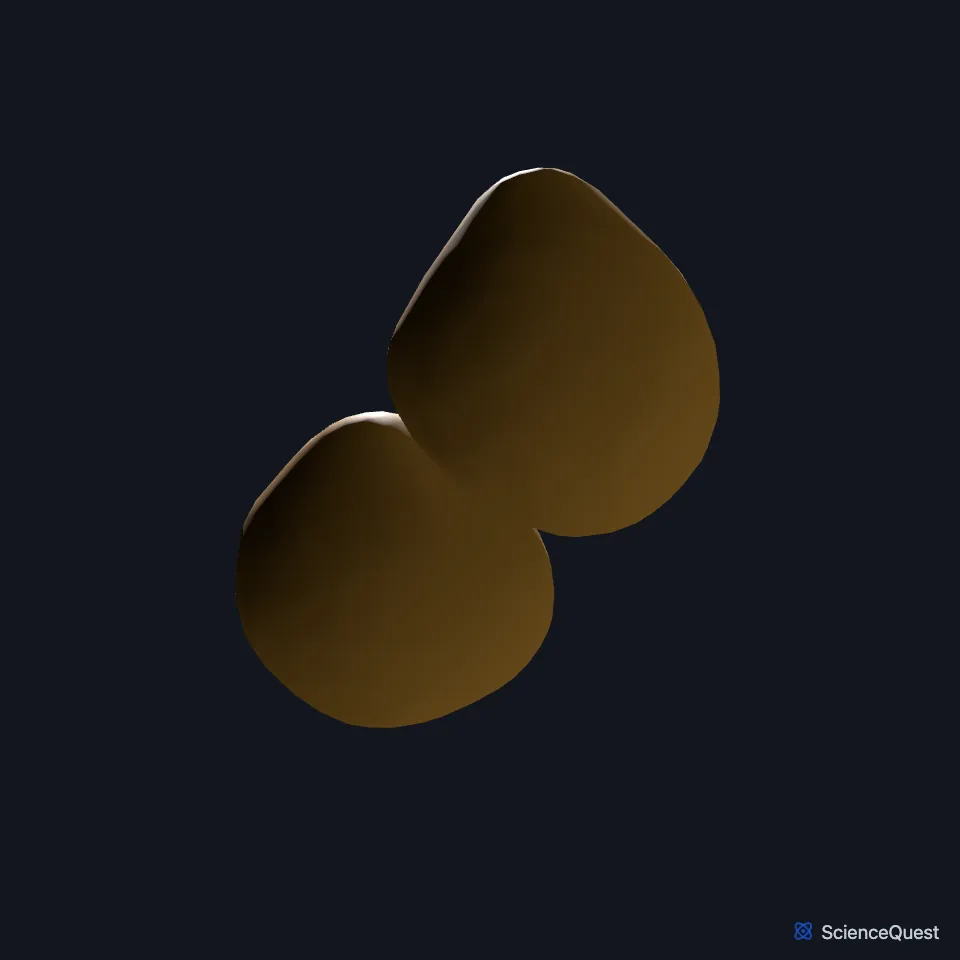
Where are the mammillary bodies?
On the ventral surface, the optic chiasm marks the front of the hypothalamus and the mammillary bodies its back. Between them, the tuber cinereum bulges from the floor of the third ventricle. (Neuroscience Online, Hypothalamus: Structural Organization)
The posterior region of the hypothalamus is the area above and including the mammillary bodies. (Neuroscience Online, Hypothalamus: Structural Organization)
What do the mammillary bodies do?
Neuroscience Online lists the mammillary nucleus, in the medial zone of the posterior hypothalamus, with emotion and short-term memory. (Neuroscience Online, Hypothalamus: Structural Organization)
They are a major part of the original Papez circuit, a loop involved in learning and memory, emotion and social behavior. (Neuroscience Online, Limbic System: Hippocampus)
Korsakoff’s syndrome, caused by thiamine deficiency, most often in people with alcohol use disorder, destroys the mammillary bodies. People with it have great difficulty forming new memories and also lose some older ones. Its amnesia has the strongest link to that damage, though imaging also shows wider damage in the brain. (Neuroscience Online, Limbic System: Hippocampus; OpenStax Behavioral Neuroscience, 18.1; StatPearls, Wernicke-Korsakoff Syndrome)
What connects to the mammillary bodies?
The postcommissural fornix brings output from the hippocampus to them, and the hippocampus also receives input from them along the same branch. (Neuroscience Online, Limbic System: Hippocampus)
The mammillothalamic tract runs on to the anterior thalamic nucleus, which connects to the cingulate cortex. (Neuroscience Online, Limbic System: Hippocampus)
The mammillotegmental tract starts in the mammillary nucleus and projects to the reticular formation of the midbrain and pons, which influences the brainstem’s autonomic nuclei. (Neuroscience Online, Central Control of the Autonomic Nervous System and Thermoregulation)
Touches in this model
Measured on the BodyParts3D meshes: surfaces within 2 mm of the mammillary body, nearest first.
- Hypothalamus in contact
- Interpeduncular fossa in contact
- Left fornix of forebrain in contact
- Midbrain in contact
- Peduncle of midbrain in contact
- Right fornix of forebrain in contact
- Tuber cinereum in contact
- Third ventricle 0.6 mm away
Sources
- Neuroscience Online, McGovern Medical School, Section 4, Chapter 1, Hypothalamus: Structural Organization. Patrick Dougherty, Ph.D.. Last update Last Review 20 July 2026. Open access; no reuse licence stated. Read 2026-10-25.
- Neuroscience Online, McGovern Medical School, Section 4, Chapter 5, Limbic System: Hippocampus. Anthony Wright, Ph.D.. Last update Revised 07 July 2026. Open access; no reuse licence stated. Read 2026-10-25.
- OpenStax Introduction to Behavioral Neuroscience, section 18.1, Memory is Classified Based on Time Course and Type of Information Stored. CC BY-NC-SA 4.0. Read 2026-10-25.
- StatPearls, Wernicke-Korsakoff Syndrome. Jagkirat Singh; Angela C. Regina. Last update September 8, 2026. CC BY-NC-ND 4.0. Read 2026-10-25.
- Neuroscience Online, McGovern Medical School, Section 4, Chapter 3, Central Control of the Autonomic Nervous System and Thermoregulation. Patrick Dougherty, Ph.D.. Last update Review 20 July 2026. Open access; no reuse licence stated. Read 2026-10-25.
The values are facts and free to use; this page’s selection and presentation are © 2026 ScienceQuest.