Levator ani
The levator ani is a funnel-shaped sheet, mostly of striated muscle, on each side of the lower pelvis. It supports and raises the pelvic floor and lets structures pass through it: the urethra, the anal canal and, in females, the vagina. (StatPearls, Levator Ani Muscle; OpenStax A&P 2e, 11.4)
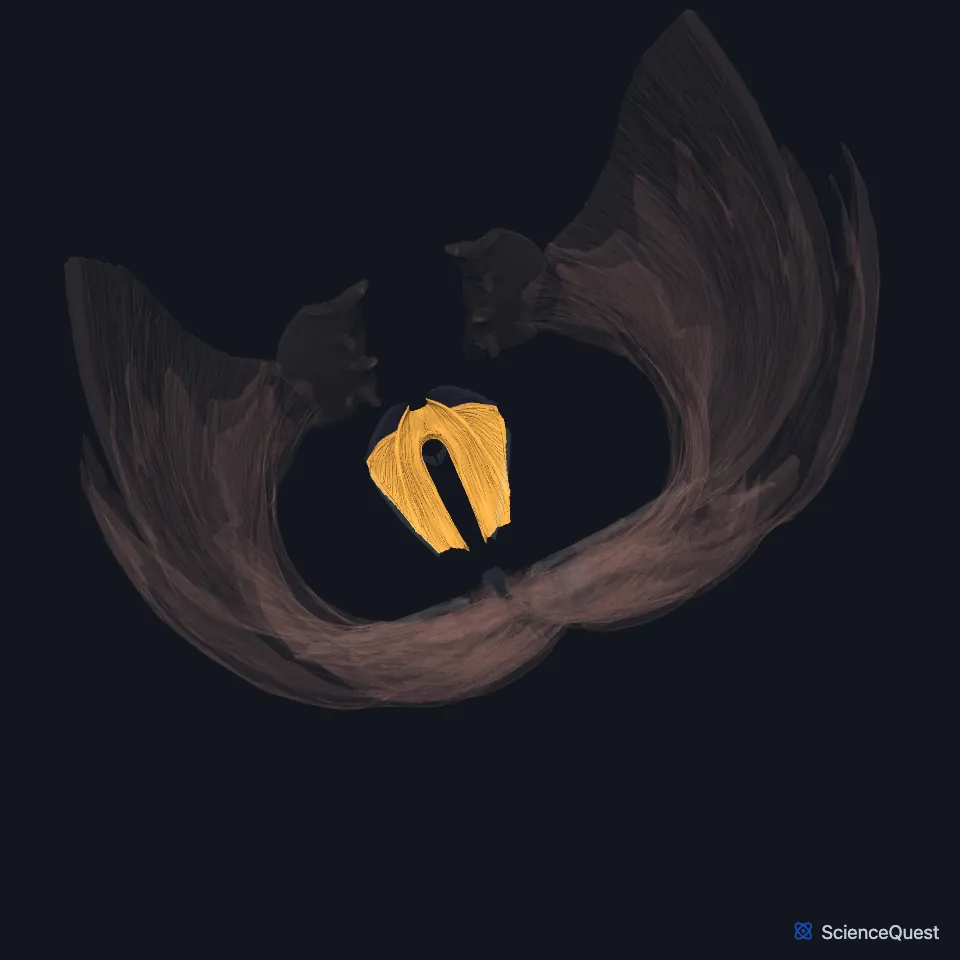
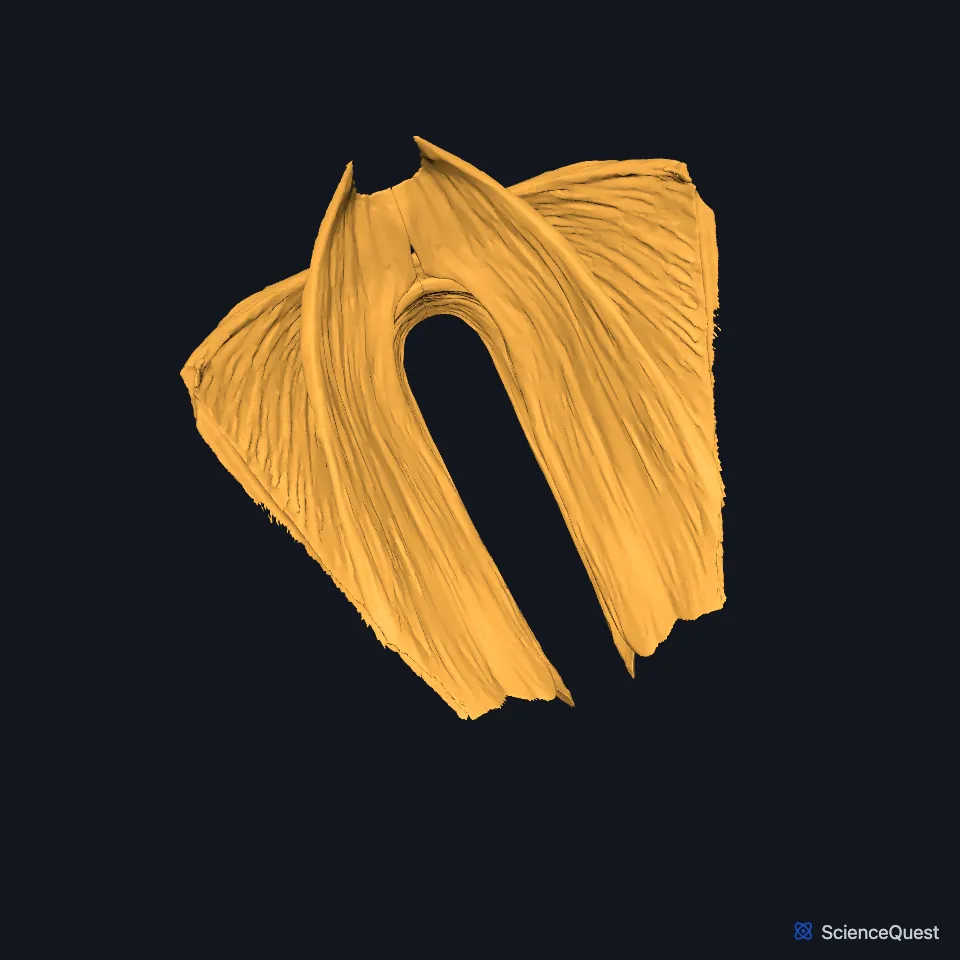
Open it in the Abdominal Muscles Explorer See it alone in 3D
Where is the levator ani?
With the coccygeus (ischiococcygeus) it forms the pelvic diaphragm, which makes up most of the floor of the pelvic cavity. Its fibers reach from the pubis in front back to the coccyx. (OpenStax A&P 2e, 11.4; StatPearls, Pelvic Floor; Gray 1918, 6e. Muscles of the Pelvis)
Just below it lies the perineum, the diamond-shaped region at the outlet of the pelvis. Its deep boundaries are the pubic arch in front, the tip of the coccyx behind, and on each side the rami of the pubis and ischium and the sacrotuberous ligament. (OpenStax A&P 2e, 11.4; Gray 1918, Muscles of the Perineum; StatPearls, Pelvic Floor)
What are the parts of the levator ani?
StatPearls describes three muscles that merge to form it: the puborectalis, the pubococcygeus and the iliococcygeus. (StatPearls, Levator Ani Muscle)
The iliococcygeus arises from the tendinous arch of the levator ani, a thickening of the fascia over the obturator internus. Its back fibers insert into the coccyx and its front fibers into the anococcygeal raphe. (StatPearls, Levator Ani Muscle)
The pubococcygeus arises from the back of the inferior pubic rami and the front of the obturator fascia and runs back to the anococcygeal raphe. The puborectalis arises from the lower pubic symphysis and loops behind the rectum to meet its partner, forming a sling. (StatPearls, Levator Ani Muscle)
What does the levator ani do?
Its main job is to support and raise the pelvic organs. It also helps hold intra-abdominal pressure and aids defecation and urination; part of it helps position the baby’s head in childbirth. (OpenStax A&P 2e, 11.4; StatPearls, Levator Ani Muscle; Gray 1918, 6e. Muscles of the Pelvis)
It narrows the lower end of the rectum and the vagina. The puborectalis sling works with the internal and external anal sphincters in defecation, and the pubococcygeus controls the flow of urine. (OpenStax A&P 2e, 11.4; StatPearls, Levator Ani Muscle; Gray 1918, 6e. Muscles of the Pelvis)
It moves with each breath, relaxing as you breathe in and contracting as you breathe out. The pelvic diaphragm drops as the respiratory diaphragm descends. (StatPearls, Levator Ani Muscle and Pelvic Floor)
Which nerves and vessels supply the levator ani?
Its main nerve supply comes from S3 and S4, with fibers from S2 and the coccygeal plexus. The nerve to levator ani, from the fourth sacral nerve, and the inferior rectal branch of the pudendal nerve both reach it. (StatPearls, Levator Ani Muscle)
Branches of the inferior gluteal, inferior vesical and internal pudendal arteries supply it. A 2012 study found a band of connective tissue in the ischioanal fossa that joins it to the gluteus maximus. (StatPearls, Levator Ani Muscle; FMA, Internal pudendal artery)
How does the levator ani vary?
MRI studies in women have found parts of it thinned or missing. With age in women, the genital hiatus widens and the back of the puborectalis thins. (StatPearls, Levator Ani Muscle and Pelvic Floor)
Where the sources differ
OpenStax describes the levator ani as two muscles, the pubococcygeus and the iliococcygeus. StatPearls’ levator ani article counts three, adding the puborectalis, and its pelvic floor article puts the coccygeus in the same complex. (OpenStax A&P 2e, 11.4; StatPearls, Levator Ani Muscle and Pelvic Floor)
StatPearls’ levator ani article has the iliococcygeus arising from the tendinous arch of the levator ani, the pubococcygeus from the back of the inferior pubic rami and the obturator fascia, and the puborectalis from the lower pubic symphysis, with insertion on the coccyx and anococcygeal raphe. Its pelvic floor article has the iliococcygeus and pubococcygeus arising from the pectineal line of the pubis and the obturator internus fascia and the puborectalis from the inferior pubic ramus. It gives the insertion as the coccyx, ischial spine, sacrum and urogenital diaphragm. (StatPearls, Levator Ani Muscle and Pelvic Floor)
| Feature | Detail and source |
|---|---|
| Parts | Puborectalis, pubococcygeus and iliococcygeus (StatPearls, Levator Ani Muscle) |
| Origin | Back of the pubis and pubic symphysis; obturator fascia; tendinous arch of the levator ani (StatPearls, Levator Ani Muscle) |
| Insertion | Coccyx and anococcygeal raphe; the puborectalis loops around the rectum (StatPearls, Levator Ani Muscle) |
| Action | Supports and raises the pelvic floor (StatPearls, Levator Ani Muscle) |
| Nerve | S3 and S4: nerve to levator ani; inferior rectal nerve (pudendal) (StatPearls, Levator Ani Muscle) |
Touches in this model
Measured on the BodyParts3D meshes: surfaces within 2 mm of the levator ani, nearest first, 12 of 22.
- External anal sphincter in contact
- Left coccygeus in contact
- Right coccygeus in contact
- Tendinous arch of levator ani in contact
- Corpus cavernosum of penis in contact
- Left gluteus maximus in contact
- Left hip bone in contact
- Left obturator internus in contact
- Left seminal vesicle in contact
- Prostate in contact
- Rectum in contact
- Right gluteus maximus in contact
Sources
- StatPearls, Anatomy, Abdomen and Pelvis: Levator Ani Muscle. Supreeth N. Gowda; Bruno Bordoni. Last update October 26, 2022. CC BY-NC-ND 4.0. Read 2026-10-25.
- OpenStax Anatomy and Physiology 2e, section 11.4, Axial Muscles of the Abdominal Wall, and Thorax. CC BY-NC-SA 4.0. Read 2026-10-25.
- StatPearls, Anatomy, Abdomen and Pelvis: Pelvic Floor. Bruno Bordoni; Kavin Sugumar; Stephen W. Leslie. Last update May 13, 2026. CC BY-NC-ND 4.0. Read 2026-10-25.
- Gray’s Anatomy of the Human Body, 20th US edition (1918), IV. Myology, 6e. The Muscles and Fasciae of the Pelvis (1918 terms: Levatores ani and Coccygei for the paired muscles). Henry Gray. Public domain. Read 2026-10-25.
- Gray’s Anatomy of the Human Body, 20th US edition (1918), IV. Myology, The Muscles and Fasciae of the Perineum (section numbered 1F on the Bartleby page). Henry Gray. Public domain. Read 2026-10-25.
- Foundational Model of Anatomy, FMA18835, Internal pudendal artery (read on EBI OLS). FMA release terms, University of Washington. Read 2026-10-25.
The values are facts and free to use; this page’s selection and presentation are © 2026 ScienceQuest.